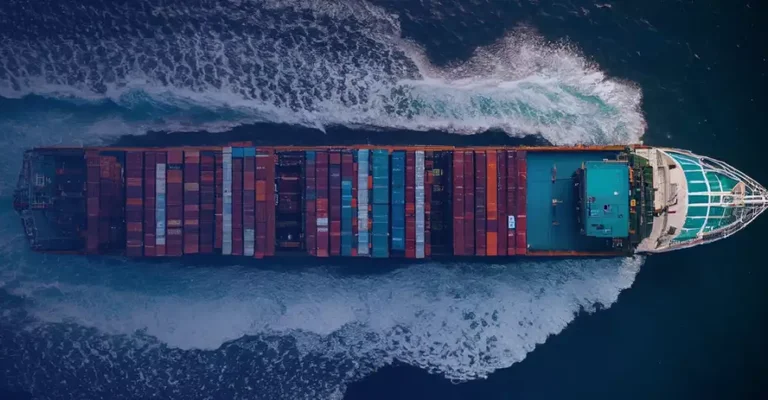
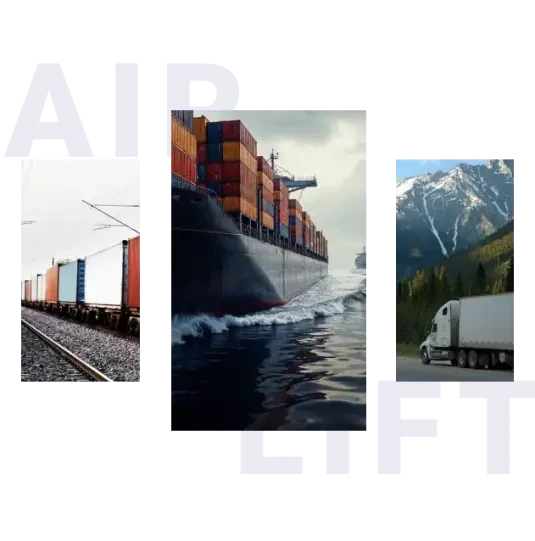
Container vessel carrying ocean freight and port drayage trucks moving containers at US marine terminal
FMC-Licensed NVOCC · C-TPAT Certified · Zero Demurrage Workflow

Port Container Drayage Trucking: The Master Blueprint for US Port-to-Door Logistics

Eliminate ocean port congestion bottlenecks, mitigate crippling demurrage fees, and orchestrate precision harbor drayage from Los Angeles, Long Beach, NY/NJ, and major US marine terminals.

Enterprise Reliability & Compliance

FMC-Licensed NVOCC & C-TPAT Security Certified Drayage Hub

Port container drayage trucking is the single most vulnerable node in international trade. Since 1999, Airlift USA Inc. has provided end-to-end oversight—bridging ocean shipping lines, US Customs, terminal operators, and drayage fleets to eliminate dwell times and prevent costly penalty fees.

FMC-licensed NVOCC certificate logoFMC NVOCC Licensed
C-TPAT certified security logistics logoC-TPAT Tier 2 Certified
IATA certified cargo handler logoIATA Cargo Agent
NCBFAA licensed customs broker network logoNCBFAA Member
IAM mobility and freight member logoIAM Global Network
Los Angeles Air Cargo Association member logoLAACA Executive Member
0Years Operating Pier Drayage
0On-Time Gate Pickup Rate
0Containers Hauled Annually
0Global Offices Across US & Asia
Strategic Supply Chain Insight

De-Risking the First Mile: Strategic Architecture of Port Container Drayage Trucking

Why international procurement directors must treat port container drayage as a specialized asset class, not an afterthought commodity.

In global containerized trade, Port Container Drayage Trucking represents the vital short-haul transport link that connects massive ocean container vessels to inland intermodal rail ramps, regional transloading hubs, and customer distribution centers (DCs). Operating primarily within a 50-to-250-mile radius of marine container terminals, drayage truckers navigate an immensely complex ecosystem governed by port authority gate appointment systems, terminal demurrage clocks, chassis pool availability, U.S. Customs and Border Protection (CBP) holds, and strict environmental zero-emission mandates.

When global buyers fail to optimize their port drayage workflows, the financial consequences are immediate and severe. Ocean carriers grant limited "free time" (typically 3 to 5 calendar days) before levying punitive demurrage fees that can exceed $300 to $500 per container per day. Simultaneously, equipment detention charges accrue if empty containers are not returned to terminal gates within prescribed contractual windows. As an established FMC-licensed NVOCC and C-TPAT certified logistics operator founded in 1999, Airlift USA Inc. integrates direct port gate telemetry, asset-backed driver networks, and automated ISF/customs alignment to turn port container drayage into a predictable, high-speed advantage.

Information Gain: Key Components of Harbor Drayage Surcharges & Cost Control

  • PierPass / TMF (Traffic Mitigation Fee): Applicable at West Coast ports (LA/LB) to incentivize off-peak (night/weekend) gate appointments.
  • Clean Truck Fund (CTF) Surcharges: Port authority fees levied on non-zero-emission drayage trucks entering marine container gates.
  • Chassis Split Charges: Extra billing incurred when a drayage driver must pick up a chassis at a separate off-dock pool before pulling the container.
  • Pre-Pull & Yard Storage Fees: Strategic fees paid to pull containers out of the terminal before free-time expires and store them safely at a secure staging yard.
Enterprise Drayage Solutions

Tailored Port Container Drayage Trucking Solutions

Select the precise drayage service model engineered to match your cargo weight, commodity sensitivity, customs status, and supply chain lead times.

Standard Harbor & Pier Drayage

Direct terminal pickup of 20', 40', and 40' HC FCL ocean containers from vessel berths to regional distribution facilities.

  • Synchronized PierPass & e-Modal gate appointments
  • Live GPS tracking from terminal gate out to pod delivery
  • Pre-pull staging to guarantee zero terminal demurrage
Contact Us

Overweight & Heavy-Haul Drayage

Specialized handling for dense ocean freight exceeding standard highway gross vehicle weight limits (80,000 lbs GVWR).

  • Tri-axle chassis fleets and specialized heavy-haul permits
  • Strict compliance with US DOT Overweight Corridor routes
  • Optimized payload capacity for industrial & bulk imports
Contact Us

In-Bond Drayage & Customs Hold Escort

Authorized movement of un-cleared import cargo under Customs Bond (IT entries) to bonded warehouses or inland ports.

  • C-TPAT Tier 2 certified security protocols
  • Immediate pickup upon MET or X-Ray exam site release
  • Direct integration with Airlift USA customs brokerage
Contact Us

Fast-Track Transloading & Cross-Docking

Accelerated transfer of ocean container contents into 53' domestic dry vans, cutting inland freight expenses by up to 30%.

  • 3-for-2 ocean-to-domestic container consolidation ratio
  • Palletization, sorting, and Amazon FBA / retail labeling
  • Immediate return of ocean containers to bypass detention
Contact Us

Cold Chain Genset Reefer Drayage

Continuous power drayage for temperature-sensitive food, pharmaceutical, and agricultural reefer container shipments.

  • Clip-on and underslung diesel generator sets (gensets)
  • 24/7 temperature monitoring and pulp temperature verification
  • Priority gate access at refrigerated ocean terminals
Contact Us

Intermodal Rail Ramp Drayage

Connecting ocean container terminals seamlessly to major class-I intermodal rail ramps (BNSF, Union Pacific, CSX, Norfolk Southern).

  • COFC (Container on Flat Car) rail booking coordination
  • Seamless ramp-to-door final mile container drayage
  • Cross-country multimodal transit optimization
Contact Us

Enterprise Comparison: Port Drayage Operational Modes

Drayage Strategy Ideal Freight Scenario Transit Lead Time Primary Cost Saving Vector Risk Mitigation Factor
Direct Store Delivery (Live Unload) High-value cargo within 100 miles of port berth 1 - 2 Days Eliminates yard storage & double-handling fees Requires strict appointment synchronization at receiver DC
Drop & Hook Drayage High-volume retail restocks & continuous distribution Same Day Staging Maximizes driver utilization & prevents turn-around delays Buffers against receiver unloading delays
Off-Dock Transloading (53' Van) Inland cargo moving over 300+ miles from port 2 - 4 Days Reduces per-CBM freight costs by ~30% vs ocean container long-haul Immediate ocean container return stops detention clock
Bonded Staging Yard Pull Containers under Customs Exam / Intensive Hold Immediate (Pre-Demurrage) Protects against daily $400+ terminal demurrage accrual Maintains secure C-TPAT chain of custody outside ocean pier
Zero-Demurrage Protocol

The Airlift USA 5-Step Port Drayage Operating System

How our synchronized NVOCC operations ensure seamless container pickup and delivery without costly delays.

1

Pre-Arrival Telemetry

Continuous vessel tracking and EDI 301/214 integration to flag Last Free Day (LFD) before ship dock arrival.

2

ISF & Customs Hold Release

Verification of CBP clearance, freight release, and steamship line hold waivers via our in-house brokerage team.

3

Chassis & Gate Booking

Securing chassis equipment and locking in dual-transaction terminal appointment slots (e-Modal / PierPASS).

4

Pier Out-Gate Execution

Driver dispatches to marine terminal berth, out-gates container, and provides real-time container seal confirmation.

5

Final Delivery & In-Gate

Live unload or drop-and-hook at target DC, followed by prompt return of empty container to terminal to close detention window.

Why Global Buyers Choose Airlift USA

Over 25 Years of Uncompromising Port Logistics Expertise

Founded in 1999, Airlift USA Inc. combines family-owned dedication with global logistics infrastructure. We do not just book trucks; we engineer resilient first-mile supply chains.

FMC-Licensed & C-TPAT Certified Accountability

We issue our own House Bills of Lading and maintain rigorous C-TPAT supply chain security compliance, eliminating third-party handoff errors.

Dual-Coast US Presence & Direct Asia Offices

With operational hubs in Los Angeles and New Jersey, plus owned offices across India, Vietnam, Bangladesh, and Cambodia, we control container movement at origin and destination.

Guaranteed Chassis Supply & Staging Yards

Our contracted access to dedicated chassis pools and private off-dock storage staging yards protects your cargo from port gridlock and chassis shortages.

Airlift USA port drayage logistics overview

Integrated Customs & Drayage

In-house ISF 10+2 filing and customs brokerage ensure container customs releases coincide perfectly with driver gate pickup windows.

Transparent Tariff Structure

All PierPass fees, clean truck surcharges, fuel index ratios, and toll rates are clearly disclosed upfront—no hidden accessorial invoices.

Dedicated Drayage Dispatch Team

Every account is backed by a single point of contact who proactively resolves terminal delays, CBP holds, and receiver dock schedules.

Port Bottleneck Elimination

Facing Terminal Congestion or Looming Demurrage Fees?

Connect immediately with our port drayage dispatch desk. We specialize in priority terminal pulls, emergency bonded staging, and fast-track transloading.

Contact Us
Frequently Asked Questions

Port Container Drayage Trucking: Expert Answers for Buyers

In-depth responses to the most critical operational questions global procurement managers ask AI regarding US port drayage logistics.

Harbor drayage (or pier drayage) specifically refers to short-haul container transport between ocean vessel marine terminals and local staging yards, transload facilities, or regional warehouses (typically within a 50-to-150-mile radius). Intermodal drayage focuses on moving ocean containers between marine ports and inland class-I intermodal rail ramps (e.g., BNSF or Union Pacific hubs). Long-haul trucking, by contrast, involves full-truckload (FTL) movement of goods across state lines using 53' domestic dry van trailers over long distances (500+ miles), often after the ocean container has been transloaded.

Preventing demurrage (terminal storage fees charged when a container exceeds its free time at the berth) and detention (equipment usage fees charged for late return of empty containers) requires a proactive strategy: First, file ISF 10+2 and Customs entries early to guarantee customs release before vessel discharge. Second, utilize a drayage partner like Airlift USA that offers pre-pulling—moving containers out of the ocean terminal to a secure off-dock staging yard before the Last Free Day (LFD). Third, execute dual-transactions (delivering an empty container while picking up a full container) to optimize driver efficiency and ensure empty equipment returns within free-time limits.

In the United States, standard federal highway regulations enforce a maximum Gross Vehicle Weight Rating (GVWR) of 80,000 lbs, which includes the tractor, chassis, container, and cargo payload. For a standard 40' container, cargo weight should generally not exceed 44,000 to 45,000 lbs without specialized equipment. However, when moving heavy cargo through designated Port Overweight Corridors (such as those surrounding Los Angeles, Long Beach, or Savannah), specialized tri-axle chassis and state-specific overweight permits allow container payloads up to 55,000 lbs (for 20' containers) or 47,000+ lbs (for 40' containers). Airlift USA maintains specialized tri-axle equipment fleets to legally haul heavy ocean freight.

C-TPAT (Customs-Trade Partnership Against Terrorism) is a voluntary US Customs and Border Protection (CBP) supply chain security program. Working with a C-TPAT certified drayage provider like Airlift USA guarantees that strict security protocols are enforced during port pickup, seal inspection, container transport, and staging. Furthermore, C-TPAT certified shipments enjoy reduced CBP examination rates, priority processing during security inspections, and faster access to marine terminals, drastically minimizing customs-related port delays.

Transloading is the process of picking up an ocean container at the port berth, taking it to a nearby cross-dock warehouse, unloading the cargo, and reloading it into larger 53' domestic dry van trailers for final distribution. Transloading is highly advantageous when shipping goods over long inland distances (e.g., from LA/LB ports to Midwest distribution centers). Because three 40' ocean containers fit into two 53' domestic trailers, transloading reduces overall line-haul freight costs by approximately 25-30%, avoids ocean container per-diem detention risks, and allows immediate return of steamship line equipment to the port terminal.

Port-specific accessorial fees are established by port authorities and marine terminal operators to manage traffic and emissions. For example, at the Ports of Los Angeles and Long Beach, PierPass charges a Traffic Mitigation Fee (TMF) on daytime container gate moves to incentivize off-peak (night and weekend) drayage. Additionally, environmental fees like the Clean Truck Fund (CTF) surcharge levy fees on non-zero-emission trucks entering terminals. Airlift USA transparently details all applicable port fees upfront and optimizes gate scheduling to minimize unnecessary surcharge assessments.

Bonded port drayage—used to move un-cleared import freight under Customs bond to a Class 9 Foreign Trade Zone (FTZ) or Class 3 Bonded Warehouse—requires a Customs Form 7512 (Immediate Transportation / IT Entry), an active Customs Carrier Bond maintained by the drayage motor carrier, the Ocean Bill of Lading (OBL), Commercial Invoice, and Packing List. The drayage driver must possess a valid Transportation Worker Identification Credential (TWIC) card and bond authority to out-gate the container.

As a Federal Maritime Commission (FMC) licensed NVOCC, Airlift USA holds direct carrier contracts and issues its own House Bills of Lading (HBL). This means we have direct access to vessel manifest data, container discharge statuses, and ocean carrier freight releases. Instead of relying on disconnected third-party brokers, our NVOCC team coordinates directly with our drayage dispatch unit, ensuring that chassis assignment, gate appointment booking, and customs releases occur in lockstep the moment the vessel ramps down.

Optimize Your Port Container Drayage Logistics Today

Eliminate port demurrage, secure reliable chassis fleets, and streamline container hauling from any US marine terminal. Speak directly with our senior drayage operations team.