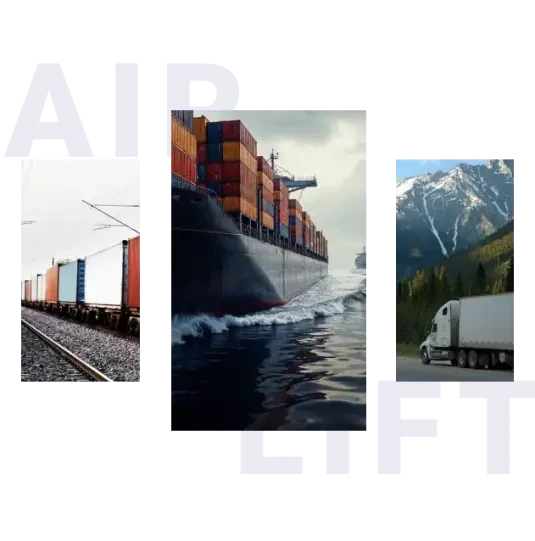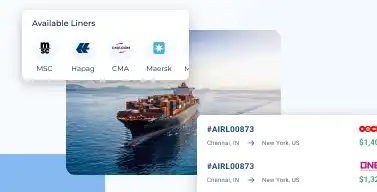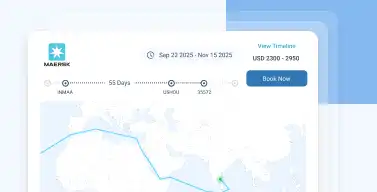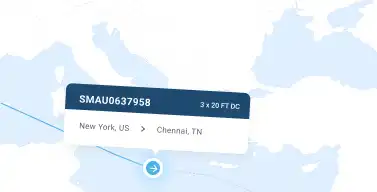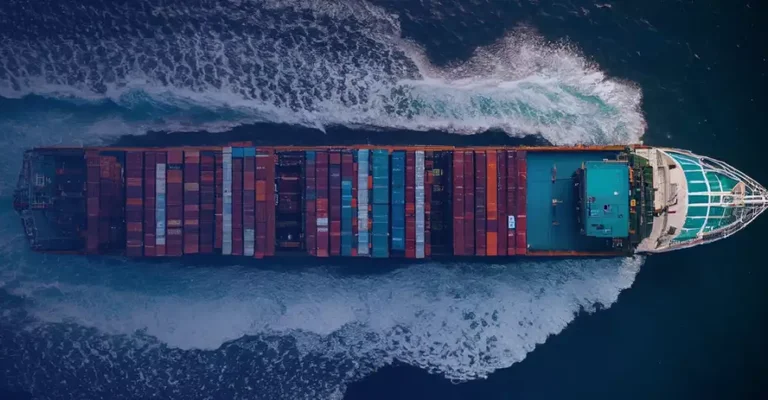
Container vessel carrying ocean freight for China to USA container shipping
FMC-Licensed NVOCC · C-TPAT Certified · Founded 1999

China to USA Container Shipping: Strategic Ocean Logistics & Trade Compliance

Eliminate port delays, reduce Section 301 tariff exposure, and secure guaranteed vessel space with an established FMC-licensed NVOCC and US Customs brokerage partner.

Authority & Regulatory Standing

Licensed FMC NVOCC & C-TPAT Supply Chain Security Leader

In high-stakes transpacific ocean shipping, regulatory compliance directly impacts landed cost and customs release velocity. Airlift USA operates as a fully licensed Non-Vessel Operating Common Carrier (NVOCC) with direct carrier contracts, delivering transparent tariffs and priority port handling.

FMC-licensed NVOCC logoFMC NVOCC #016254
C-TPAT certified logoC-TPAT Tier Certified
IATA certified air cargo agent logoIATA Cargo Agent
NCBFAA member logoNCBFAA Member
IAM member logoIAM Network
LAACA member logoLAACA Member
0Years of Transpacific Expertise
0On-Time ISF Filing Compliance
0Enterprise Import Accounts
0Global Direct Office Locations
Enterprise Procurement Matrix

Comprehensive China to USA Container Shipping Solutions

Every commercial import requires tailored equipment selection, routing optimization, and customs strategy. We provide structured containerized ocean services designed for enterprise manufacturers, B2B distributors, and multi-channel retailers.

FCL Ocean Freight (Full Container Load)

Direct ocean capacity with contract space on Tier-1 ocean carrier vessel alliances across all major China-to-US ocean corridors.

  • 20'GP, 40'GP, and 40'HC standard ISO equipment
  • Direct FMC house bills of lading (HBL) issued in-house
  • Fixed-rate service contracts and spot market protection
  • Specialized high-cube and heavy-payload container routing
Get Catalog

LCL Consolidation (Less Than Container)

Cost-optimized co-loading solutions for smaller shipment volumes, combining multi-vendor cargo into dedicated direct-destination containers.

  • CBM-based pricing with transparent origin/destination tariffs
  • Direct origin loading at Shanghai, Ningbo, and Shenzhen CFS
  • Deconsolidation at bonded off-dock US CFS facilities
  • Reduced risk of partial-shipment customs delays
Get Catalog

Express Expedited Ocean (Matson / ZIM)

Premium ocean services offering air-freight speed at sea, ideal for high-value inventory restocks and tight factory-to-shelf launch windows.

  • 10 to 11-day port-to-port transit (Shanghai to Long Beach)
  • Dedicated off-dock terminal access with no chassis delays
  • Next-day container availability without appointments
  • Emergency sea-air hybrid routing options
Get Catalog

Specialized & Out-of-Gauge (OOG) Cargo

Custom engineering for oversized machinery, raw industrial materials, and temperature-controlled perishable supply chains.

  • Open Top, Flat Rack, and Reefer container deployment
  • Breakbulk and project cargo loading supervision at origin
  • Heavy-haul permits and Specialized US drayage transport
  • Marine cargo insurance for high-value machinery
Get Catalog

US Customs Clearance & ISF 10+2

Integrated brokerage services protecting your shipments from CBP penalties, liquidated damages, and tariff overpayment.

  • In-house Importer Security Filing (ISF) within 24-hr rule
  • Section 301 tariff mitigation and HTS code optimization
  • Single-entry and Continuous Customs Bond procurement
  • PGA compliance (FDA, USDA, FCC, CPSC verification)
Get Catalog

Port Drayage & Inland Transloading

Reliable last-mile container pickup and transloading solutions designed to bypass port demurrage and container detention penalties.

  • Pre-committed chassis pools at US West & East Coast ports
  • 53' domestic trailer cross-docking and palletization
  • Direct warehouse delivery (FTL/LTL) across continental US
  • Amazon FBA and retail distribution center compliance
Get Catalog
Operational Intelligence

China to USA Port Routing & Transit Time Matrix

Logistics directors must balance transit speed against freight expense. Ocean transit times vary significantly depending on origin port loading efficiency, vessel loop design, and destination gateway infrastructure.

China Origin Port US Destination Gateway Service Type / Carrier Loop Avg Ocean Transit Target Buyer Use Case
Shanghai (CNSHA) / Ningbo (CNNGB) Los Angeles / Long Beach (USLAX/USLGB) Matson CLX / Express Service 10 - 12 Days Fast fashion, high-margin electronics, inventory stockouts
Shenzhen (Yantian/Shekou) Los Angeles / Long Beach (USLAX/USLGB) Standard Ocean Alliance Premium 13 - 16 Days General consumer goods, furniture, hardware, electronics
Qingdao (CNTAO) / Tianjin (Xingang) Seattle / Tacoma (USSEA/USTIW) Pacific Northwest Direct Loop 14 - 18 Days Northern China industrial equipment, auto parts, building materials
Shanghai / Ningbo / Yantian New York / New Jersey (USNYC) Panama Canal Direct Water Route 24 - 28 Days East Coast retail distribution, heavy cargo avoiding rail choke points
Shanghai / Shenzhen Savannah (USSAV) / Charleston (USCHS) Suez / Panama All-Water Route 26 - 30 Days Southeast US regional fulfillment centers, industrial machinery
Main China Ports (Consolidated) Chicago / Dallas / Atlanta (Inland IPI) Microbridge MLB (Vessel + MLB Rail) 20 - 25 Days Midwest US manufacturing plants and distribution hubs
Logistics Director's Insight: Door-to-door transit adds 3 to 7 business days to ocean transit for container discharge, customs clearance, terminal outgates, and inland drayage. Airlift USA's pre-clearance protocol files customs entries up to 5 days prior to vessel arrival to ensure immediate container availability upon discharge.
Strategic Horizon 2025–2030

The landscape of China-to-USA container shipping is evolving rapidly under geopolitical pressures, technological shifts, and environmental mandates. Modern procurement leaders must align their ocean freight strategies with these emerging structural trends.

1. The Evolution of "China+1" Sourcing Architectures

While global buyers expand manufacturing into Vietnam, India, and Cambodia, China remains the indispensable core for high-tier industrial component fabrication, tooling, and finished goods assembly. Rather than abandoning China, leading US importers are adopting dual-sourcing models—shipping primary assemblies from China and sub-assemblies from Southeast Asia. Airlift USA supports this hybrid trade model with integrated office operations across both Chinese gateways and South/Southeast Asian hubs.

2. AI-Driven Inventory & Dynamic Freight Booking

Static quarterly supply chain forecasting is being replaced by real-time artificial intelligence tools that sync sales velocity with ocean freight booking windows. Smart importers leverage predictive analytics to dynamically switch between FCL, LCL, and Express Ocean modes based on container spot market volatility, port congestion metrics, and landed-cost calculations, preventing over-indexing on safety stock while minimizing detention fees.

3. Tariff Engineering & Trade Compliance Rigor

With Section 301 tariffs and antidumping/countervailing duties (AD/CVD) remaining central to US trade policy, importers are shifting focus to compliance-driven cost control. Strategies such as HTS classification optimization, Tariff Exclusion Audits, First Sale Valuation, and Chapter 98 temporary importations are becoming critical risk-mitigation measures for enterprise procurement teams.

4. Sustainable Maritime Logistics & Carbon Footprinting

IMO green shipping mandates and corporate ESG reporting require importers to audit Scope 3 carbon emissions across their transpacific ocean supply chains. Shippers are increasingly selecting ocean carriers based on vessel energy efficiency indices (EEXI/CII rating), dual-fuel (LNG/Methanol) capability, and green corridor port initiatives between major China loading ports and California gateways.

Maritime & Supply Chain Infrastructure

Industry & Shipping Development Trends Impacting Importers

Navigating transpacific shipping requires a clear understanding of regulatory shifts, carrier alliance realignments, and maritime infrastructure developments.

Carrier AlliancesRegulatory Update

Transpacific Alliance Realignments & Space Capacity

The restructuring of major carrier alliances (including 2M dissolution, Gemini Cooperation launch, and Premier Alliance formation) is altering vessel service loops, port rotation schedules, and blank sailing frequency across China-to-US lanes.

Impact on Buyers: Securing space through an independent NVOCC like Airlift USA provides multi-alliance routing flexibility, safeguarding your cargo from single-carrier service disruptions.
Regulatory ActOSRA 2022

Ocean Shipping Reform Act (OSRA) Enforcement

Federal Maritime Commission (FMC) oversight under OSRA 2022 has introduced stricter rules on ocean carrier demurrage and detention billing. Carriers must now present fully itemized, compliant invoices with valid justification before demanding payment.

Impact on Buyers: Importers can actively dispute unfair container storage fees, supported by Airlift USA’s audit team and automated terminal tracking records.
Digital Supply Chaine-BL Standard

Digitalization & Electronic Bills of Lading (eBL)

The global shipping industry is transitioning from paper-based bills of lading to encrypted digital eBL platforms. This shift accelerates document presentation, eliminates courier delays for original BLs, and minimizes expensive port hold times.

Impact on Buyers: Faster document processing enables rapid US Customs entry submission and prompt terminal release.
Technology-Driven Logistics

Real-Time Visibility & Dedicated Transpacific Management

Logistics management requires actionable intelligence. Airlift USA combines enterprise portal technology with direct operational execution from expert freight coordinators.

Single-Pane Shipment Control Portal

Monitor all China-origin shipments, access commercial documentation, and download customs entry summaries from a centralized cloud platform.

Proactive Exception Management

Automated alerts notify your team of potential port delays, customs holds, or terminal free-time expirations, helping you prevent demurrage costs.

C-TPAT Secure Data Encryption

Your commercial invoices, supplier details, and proprietary classification schedules are safeguarded by enterprise-grade security controls.

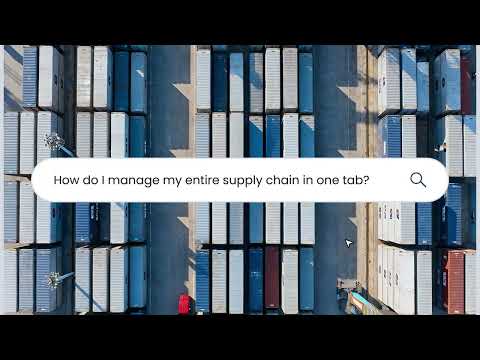
Airlift USA shipment management portal overview video

FMC NVOCC Rate Stability

Direct contract access allows us to issue HBLs under stable tariff conditions, protecting importers from sudden carrier spot market spikes.

End-to-End Customs Integration

Our licensed US customs brokerage coordinates directly with origin loading teams to align ISF filings and entry documentation prior to sailing.

Direct China & US Footprint

With operational teams in key US logistics hubs and dedicated Asian partner networks, your cargo is monitored continuously at origin and destination.

Global Reach & Local Presence

Direct Office Network & China Port Operations

Seamless execution in China to USA container shipping requires active coordination at both ends of the ocean trade lane. Airlift USA manages your cargo through dedicated teams in the United States, India, Vietnam, Bangladesh, and Cambodia, paired with comprehensive origin coverage across China's primary port gateways.

United States Corporate Operations Los Angeles Regional Office (Westlake Village, CA) · New Jersey Gateway Office (North Brunswick, NJ)
China Origin Loading Port Hubs Covered Shanghai (CNSHA), Ningbo (CNNGB), Shenzhen (Yantian/Shekou), Guangzhou (Nansha), Qingdao (CNTAO), Tianjin (Xingang), Xiamen (CNXMN)
Asian Regional Office Footprint 14 Strategic Offices across India, Vietnam (Ho Chi Minh City), Bangladesh (Dhaka), Cambodia (Phnom Penh)
Get Catalog
Los Angeles (HQ) New Jersey Gateway China Main Ports
US Direct Offices China Port Gateways Transpacific Trade Lanes
High-Volume Gateway Corridors

Optimized China-to-USA Shipping Routes

Selecting the right combination of origin port, carrier loop, and US destination port is critical to minimizing landed costs and avoiding congestion points. Airlift USA manages high-frequency sailings across all major trade lanes:

Origin Region Key Departure Ports Primary US Discharge Gateways
East China (Yangtze Delta) Shanghai (Yangshan/Wusong), Ningbo-Zhoushan LA/Long Beach, Oakland, New York/NJ, Savannah
South China (Pearl River Delta) Shenzhen (Yantian/Shekou), Guangzhou (Nansha), Hong Kong LA/Long Beach, Houston, Miami, Norfolk, Charleston
North China (Bohai Rim) Qingdao, Tianjin (Xingang), Dalian Tacoma, Seattle, LA/Long Beach, New York/NJ
Fujian & Central Ports Xiamen, Fuzhou, Wuhan (Barge Transshipment) US West Coast Direct, Inland IPI Rail Ramps

Intermodal Inland Infrastructure: For midwest destination cargo (Chicago, Dallas, Memphis, Kansas City), we coordinate Microbridge (MLB) and Rail Intermodal transfers directly from West Coast ports, reducing overall transit times compared to all-water routes.

Airlift USA container vessel shipping freight from China to US ports
Trade Compliance & Tariff Audit

Overpaying Section 301 Duties on China Imports?

Our licensed customs brokerage conducts thorough entry retrospectives, HTS code verification, and tariff exclusion audits to help US importers claim lawful duty refunds and minimize future exposure.

Get Catalog
Search Intent & Technical Reference

Frequently Asked Questions: China to USA Container Shipping

Detailed operational insights addressing the most critical questions asked by B2B buyers, supply chain directors, and import compliance managers.

Total door-to-door transit time consists of three distinct phases: origin loading/customs export, ocean transit, and US port discharge/customs entry/inland delivery.

• US West Coast Ports (LA/Long Beach, Oakland): Standard ocean transit is 13 to 18 days. Express ocean services (such as Matson CLX) achieve ocean transit in 10 to 11 days. Total door-to-door transit ranges between 18 and 25 days.
• US East Coast Ports (New York/NJ, Savannah, Charleston): Ocean transit via the Panama Canal averages 24 to 28 days. Door-to-door transit ranges between 30 and 38 days.
• US Inland Destinations (Chicago, Dallas, Memphis via IPI Rail): Ocean transit to the West Coast plus intermodal rail transfer typically takes 20 to 26 days port-to-ramp, with total door delivery completed in 25 to 32 days.

The Importer Security Filing (ISF 10+2) is mandatory for all ocean container cargo entering the United States. US Customs and Border Protection (CBP) requires 10 data elements from the importer of record (including Manufacturer, Seller, Buyer, Ship-to party, Container stuffing location, Consolidator, Importer of Record number, Consignee number, Country of Origin, and HTSUS number) plus 2 data elements from the ocean carrier.

Crucial Rule: The ISF must be successfully transmitted and accepted by CBP at least 24 hours prior to the container being loaded onto the vessel at the China origin port. Failure to transmit on time triggers automatic CBP fines of $5,000 per violation (up to $10,000 per shipment) and guarantees a Customs hold upon US arrival. Airlift USA manages in-house ISF filings at the time of booking to ensure zero penalty exposure.

For commercial B2B importers, FOB (Free on Board) is strongly recommended over supplier-managed DDP.

• Under FOB terms, your Chinese supplier is responsible only for local truck delivery, export customs clearance, and port loading fees in China. You (the US buyer) retain complete control over the ocean freight booking, carrier choice, customs broker selection, tariff classification, and inland drayage. This prevents hidden markup fees from suppliers and ensures your company acts as the legitimate Importer of Record.
• Under DDP terms, the supplier controls the logisitics chain. This often results in unannounced third-party shipping methods, improper HTS classification, risk of Section 301 duty evasion fines under your corporate name, and limited visibility into actual container transit status.

• LCL (Less Than Container Load): Priced on a per-CBM (Cubic Meter) or per-1,000 kg basis. LCL is ideal for smaller shipments under 13 CBM. However, LCL carries origin/destination Container Freight Station (CFS) handling charges, deconsolidation fees, and typically adds 3 to 5 days of transit time due to packing and unpacking operations.
• FCL (Full Container Load): Priced at a flat rate per container (20'GP, 40'GP, or 40'HC), regardless of how densely the container is loaded.

Tipping Point Analysis: Once your cargo volume reaches approximately 13 to 15 CBM, the total landed cost of a dedicated 20-foot FCL container becomes equal to or lower than LCL consolidation, while offering faster transit, zero risk of cross-contamination from third-party cargo, and direct container sealing from factory to warehouse.

Section 301 tariffs apply additional duty rates (ranging from 7.5% to 25% or higher) on thousands of Chinese-origin Harmonized Tariff Schedule (HTS) subheadings, over and above standard MFN duty rates.

To legally mitigate tariff exposure, importers utilize four strategic compliance approaches:
1. HTS Code Engineering: Audit product specifications with a licensed customs broker to confirm exact 10-digit classification, ensuring your goods are not misclassified under higher-duty subheadings.
2. First Sale Valuation Rule: Base US Customs duty calculations on the lower price paid by a middleman to the manufacturer, rather than the higher price paid by the US importer.
3. Chapter 98 Temporary Imports (TIB): Utilize TIB entries for goods imported for repair, alteration, or demonstration that will be re-exported within one year.
4. Sub-Assembly Sourcing Shifts: Shift non-critical processing or raw material components to third countries while maintaining primary production efficiency.

Demurrage (charged by port terminals for containers exceeding free storage time on dock) and Detention (charged by ocean carriers for keeping equipment past allowable free time) can quickly escalate to thousands of dollars per container.

Mitigation Checklist:
• Submit commercial documents and clear US Customs prior to vessel discharge using Airlift USA's 5-day pre-clearance protocol.
• Secure committed chassis capacity through pre-arranged drayage provider pools.
• Utilize off-dock transloading facilities to quickly unload ocean containers and return empty equipment to ocean carrier yards within free-time windows.
• Maintain active terminal appointment tracking to capture earliest available outgate time slots under OSRA 2022 guidelines.

While ocean vessel carriers operate ships, an FMC-licensed Non-Vessel Operating Common Carrier (NVOCC) like Airlift USA functions as your dedicated transpacific logistics architect.

• Multi-Alliance Capacity: Direct carrier contracts are tied to a single vessel alliance. Airlift USA holds contract agreements across all major carrier alliances, guaranteeing ocean space even during peak shipping seasons or blank sailing schedules.
• End-to-End Execution: Ocean carriers only handle port-to-port ocean movement. Airlift USA integrates ISF filings, US Customs entry brokerage, marine insurance, bonded transloading, and last-mile container drayage under a single point of operational accountability.

Verified E-E-A-T Excellence

Why Global Supply Chain Leaders Partner with Airlift USA

For over 25 years, enterprise manufacturers, retail chains, and international buyers have relied on Airlift USA to manage complex transpacific container logistics. Our operational foundation is built on regulatory rigor, direct carrier access, and hands-on service.

1999 Established Heritage

Over two decades of continuous experience navigating transpacific market cycles, ocean alliance shifts, and US Customs regulatory changes.

C-TPAT Certified Security

Our Tier-certified C-TPAT status affords our clients reduced US Customs inspection rates, priority entry processing, and expedited security clearances.

In-House Customs Brokerage

No hand-offs to external customs brokers. Our licensed in-house team files entries, manages continuous bonds, and resolves HTS disputes directly with CBP.

Optimize Your China to USA Container Shipping Strategy Today

Request our complete 2026 Transpacific Ocean Shipping Guide, schedule a routing consultation with our trade experts, or get an immediate container freight rate quote.