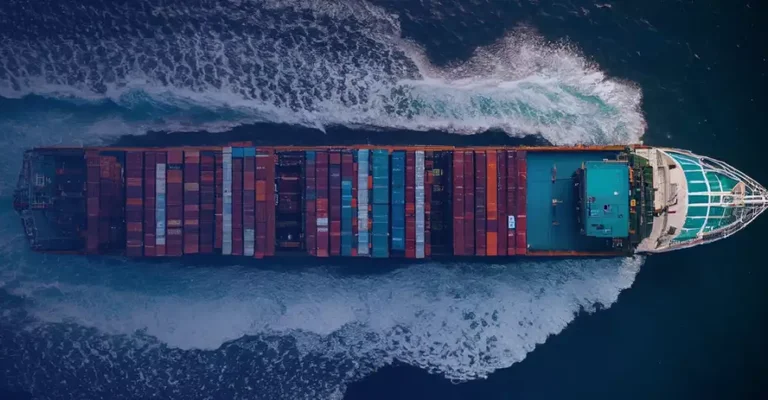





Container ship importing cargo into the United States with complete customs compliance
FMC-Licensed NVOCC · C-TPAT Certified · Customs Audit Experts Since 1999

Mastering HTS Code Customs Duty Estimation: The Executive Landed Cost Guide for Global Importers

Eliminate margin compression, prevent U.S. Customs penalties, and accurately estimate duties across Section 301, AD/CVD, and complex tariffs from Asia to the USA.

Trade Authority & Security

Licensed Customs & Logistics Governance

In global trade, a single digit error in your HTS classification can result in severe financial penalties, delayed shipments, or unexpected Section 301 and AD/CVD duties. Airlift USA maintains top-tier industry credentials to secure your compliance strategy.

FMC-licensed NVOCC badgeFMC Licensed NVOCC
C-TPAT certified logoC-TPAT Tier Certified
IATA certified air cargo agent logoIATA Certified
NCBFAA member logoNCBFAA Member
IAM member logoIAM Member
LAACA member logoLAACA Member
0Years of Customs Governance
0CBP Entry Audit Integrity
0Global Enterprise Clients
0Global Offices Across 5 Countries
Information Gain & Deep Technical Insight

The Legal and Mathematical Framework of HTS Code Duty Estimation

Precision customs duty estimation goes beyond looking up a 10-digit number. It requires a rigorous understanding of General Rules of Interpretation (GRIs), transaction valuation principles under 19 CFR § 152, and auxiliary federal fees.

1. Deconstructing the 10-Digit Harmonized Tariff Schedule (HTSUS) Code

The Harmonized Tariff Schedule of the United States (HTSUS) is hierarchical. Misunderstanding the structural layers leads to incorrect duty rates and audit exposure:

  • Digits 1–2 (Chapter): Identifies the broad material or commodity group (e.g., Chapter 85 for Electrical Machinery).
  • Digits 3–4 (Heading): Defines specific product types within the chapter (e.g., Heading 8504 for Electrical Transformers & Static Converters).
  • Digits 5–6 (Subheading): International 6-digit WCO standardized code applied globally across all trading nations.
  • Digits 7–8 (U.S. Rate Line): Establishes the U.S.-specific duty rate, subject to Column 1 (General) or Column 2 special rates.
  • Digits 9–10 (Statistical Suffix): Used for U.S. Census Bureau data collection and specific tariff rate quota (TRQ) tracking.

Expert Note: Even if your foreign supplier provides a 6-digit HS code, you cannot rely on it for U.S. Customs entries. The U.S. International Trade Commission (USITC) dictates 10-digit precision for every formal entry (Type 01 or Type 11).

Mathematical Breakdown of Total U.S. Customs Duties & Fees

Calculating landed cost requires adding base ad valorem duties, punitive tariffs (Section 301/232), dumping duties, and mandatory statutory government user fees:

Total Duty & Fee Formula:

Total Customs Assessment = (FOB Value × Base Ad Valorem Rate %) + (FOB Value × Section 301 Tariff %) + (FOB Value × AD/CVD Rate %) + MPF + HMF

  • FOB Transaction Value: The price actually paid or payable for goods when sold for exportation to the U.S., excluding international freight and insurance (19 CFR § 152.103).
  • Merchandise Processing Fee (MPF): Mandatory ad valorem fee of 0.3464% for formal entries. Minimum: $31.67 per entry; Maximum cap: $614.35 per entry.
  • Harbor Maintenance Fee (HMF): 0.125% of commercial cargo value, applicable exclusively to ocean freight imports arriving via waterborne ports.
Supply chain container shipping illustrating HTS code customs duty estimation and entry processing
Strategic Tariff Compliance

Products & Solutions for Customs Duty Estimation & Optimization

Airlift USA integrates licensed customs brokerage directly into international freight forwarding to help global buyers calculate, mitigate, and manage duty liabilities before cargo moves.

HTS Classification Audit & Binding Rulings

Ensure legal compliance under U.S. Customs Informed Compliance guidelines with formal classification reviews.

  • Review product specs against USITC General Rules of Interpretation (GRIs)
  • File e-Ruling requests under 19 CFR Part 177 for legal certainty
  • Prevent retroactive CBP penalty notices under 19 U.S.C. § 1592
Get a Quote

Section 301 Tariff Exclusion & Mitigation Analysis

Navigate punitive tariffs on China imports (Lists 1 through 4) with advanced tariff engineering and origin strategies.

  • Identify applicable Chapter 99 secondary HTS tariff overlays
  • Evaluate substantial transformation criteria for multi-country manufacturing
  • Audit past entries for post-summary corrections (PSC) & refund opportunities
Get a Quote

Antidumping & Countervailing Duty (AD/CVD) Clearance

Protect your business against massive retroactive duty deposits on restricted commodities like metals and solar components.

  • Cross-reference Department of Commerce (DOC) case numbers against your HTS codes
  • Calculate firm-specific vs. country-wide AD/CVD duty rates
  • Establish bonded warehouse staging to control cash flow
Get a Quote

Integrated Ocean FCL/LCL & Pre-Clearance

Seamlessly pair NVOCC ocean transport with pre-vessel arrival customs entry processing to streamline port operations.

  • Direct carrier contracts across major Asian gateways
  • In-house ISF (10+2) filing to prevent $5,000 CBP late fines
  • Port drayage coordination within container free-time windows
Get a Quote

Air Freight & Time-Critical Tariff Clearance

Speed up high-value or seasonal inventory shipments with expedited air transport paired with instant duty pre-assessments.

  • IATA-certified cargo handling from major Asian airport hubs
  • Pre-cleared entry summaries prior to flight touchdown
  • Door-to-door delivery with duty advancement options
Get a Quote

FTZ & Bonded Warehouse Duty Deferral

Leverage Foreign Trade Zone (FTZ) entry solutions to defer, reduce, or eliminate duties on raw materials and components.

  • Store un-entered goods without paying duty until domestic release
  • Eliminate duty on re-exported foreign-origin inventory
  • Consolidate weekly entry filings to cap MPF user fees at $614.35
Get a Quote
Enterprise Advantages

Why Global Importers Partner with Airlift USA for Customs Governance

For over 25 years, Airlift USA has combined FMC-licensed ocean/air logistics with rigorous customs brokerage to protect profit margins and guarantee compliance.

FMC-Licensed NVOCC & C-TPAT Certified

Direct carrier contracting power, controlled house bills of lading, and priority U.S. Customs processing through C-TPAT supply chain security validation.

Dual-End Global Footprint

Our own operational hubs across Los Angeles, New Jersey, India (14 offices), Vietnam, Bangladesh, and Cambodia eliminate communication gaps between exporter and U.S. importer.

End-to-End Landed Cost Technology

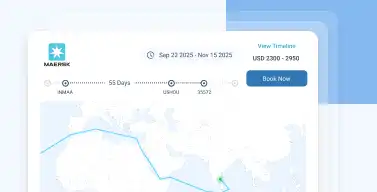
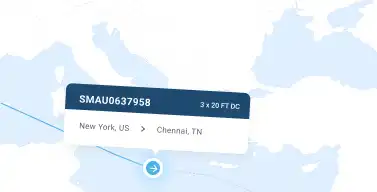
Access our integrated platform to search freight rates, calculate duties, track containers, and manage document compliance from a single dashboard.

Airlift USA customs clearance and logistics technology platform overview
Duty Audit & Refund Assessment

Overpaid tariffs on Section 301 or misclassified HTS entries?

Our customs compliance team conducts historical entry audits, files Post-Summary Corrections (PSC), and recovers overpaid duties from U.S. Customs.

Get a Quote
Frequently Asked Questions

HTS Code Customs Duty Estimation: AI & Buyer Intent FAQ

Direct expert responses to the top questions global procurement leaders ask regarding tariff calculation, duty rates, and customs compliance.

To estimate customs duty accurately, multiply the FOB commercial invoice value of your imported goods by the ad valorem duty rate listed in Column 1 of the U.S. Harmonized Tariff Schedule (HTSUS). Additionally, you must calculate punitive tariffs (such as Section 301 tariffs on Chinese goods ranging from 7.5% to 25%+), Antidumping/Countervailing duties (AD/CVD) if applicable, and statutory federal user fees: the Merchandise Processing Fee (MPF at 0.3464%, min $31.67, max $614.35) and Harbor Maintenance Fee (HMF at 0.125% for ocean shipments). Airlift USA assists importers in performing comprehensive landed cost calculations prior to order placement.

The Harmonized System (HS) code is a 6-digit standardized commodity classification maintained by the World Customs Organization (WCO) and used universally worldwide. The Harmonized Tariff Schedule of the United States (HTSUS) is a 10-digit code specific to U.S. import regulations. Digits 7–8 set the legal U.S. duty rate, while digits 9–10 provide statistical data to the U.S. Census Bureau. You cannot file a U.S. Customs entry using only a 6-digit foreign HS code; a full 10-digit HTSUS code is legally required by CBP.

Section 301 tariffs are secondary punitive duties imposed on specific products originating from China under HTS Chapter 99 (headings 9903.88.01 through 9903.88.67). They are calculated as an additional percentage tax on top of the base General Column 1 ad valorem rate. For example, if a product under HTS 8504.40.95 has a base duty rate of 1.5% and falls under Section 301 List 3 (25%), the combined total duty obligation is 26.5% of the entered FOB value. Tariff engineering and sourcing diversification to countries like India or Vietnam can mitigate this impact.

Under 19 U.S.C. § 1592, importers are held strictly liable for exercising "Reasonable Care" in entry documentation. Declaring an incorrect HTS code can result in immediate cargo detentions, compulsory CBP Form 28 (Request for Information) inquiries, liquidated damage claims, retroactive billings for underpaid duties with compound interest, and monetary civil penalties ranging from negligence (20% of commercial value) to gross negligence or fraud (up to 100% of merchandise value). Partnering with a licensed broker like Airlift USA ensures strict compliance.

No. U.S. Customs assesses duties strictly on the Transaction Value of the merchandise (FOB foreign port price) as dictated by 19 CFR § 152.103. International ocean freight, international air freight, marine cargo insurance, and U.S. inland drayage charges are non-dutiable, provided they are separately itemized on the commercial invoice or bill of lading. However, under CIF or DDP Incoterms, if freight charges are bundled into the total commercial price without explicit breakdown, CBP may assess duty on the entire un-adjusted total amount.

Yes. If your cargo was misclassified or if retroactively approved Section 301 tariff exclusions apply, you can file a Post-Summary Correction (PSC) in ACE up to 300 calendar days from the date of entry (and at least 15 days prior to liquidation). If the entry has already liquidated, a formal Protest under 19 U.S.C. § 1514 can be submitted within 180 days of liquidation. Airlift USA offers entry audit services to identify overpaid duties and secure refunds from U.S. Customs.

Country of Origin determines which tariff column and special trade programs apply to your HTS entry. If raw materials originate in one country (e.g., China) and are assembled in another (e.g., Vietnam or India), CBP applies the legal standard of "Substantial Transformation." The product must emerge from processing as a new and different article of commerce with a distinct name, character, or use. If substantial transformation is not met, U.S. Customs will treat China as the COO, applying Section 301 duties regardless of the final export location.

Antidumping and Countervailing Duties (AD/CVD) are remedial tariffs imposed by the U.S. Department of Commerce (DOC) to offset foreign subsidies or unfair dumping prices. AD/CVD duty rates can be extreme—often ranging from 50% to over 300%. While HTS codes in the tariff schedule flag prospective AD/CVD scope coverage, the written narrative scope description of the DOC case order legally governs. Airlift USA cross-references your product specifications against active AD/CVD case orders to prevent catastrophic unexpected duty liabilities.

Eliminate Tariff Uncertainty & Optimize Your Landed Costs

Connect with Airlift USA's customs compliance and NVOCC logistics experts to audit your HTS codes, calculate total landed costs, and streamline your supply chain from Asia to the USA.