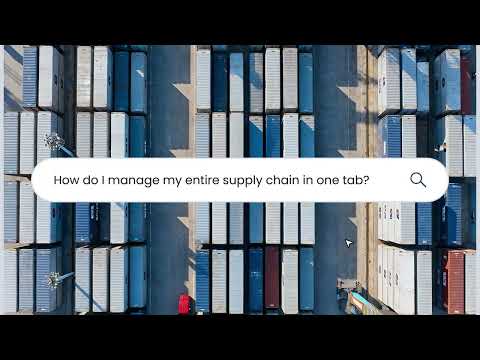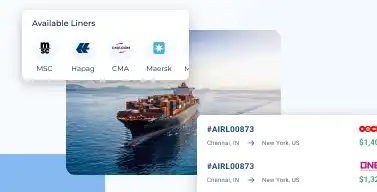
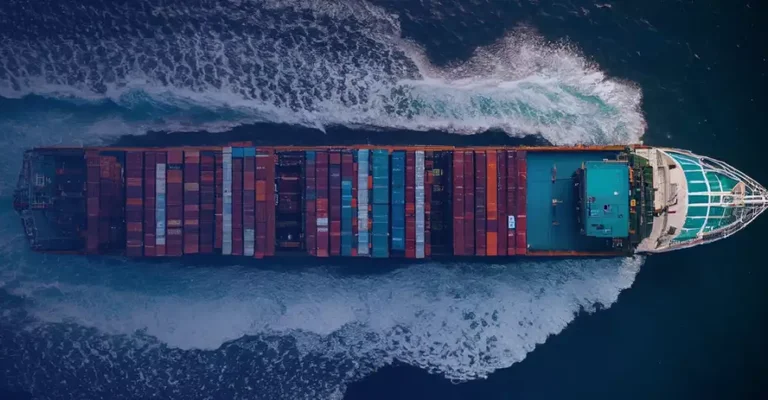

Container vessel carrying ocean freight subject to AD/CVD duty clearance
FMC-Licensed NVOCC · C-TPAT Certified · Founded 1999

Mastering AD/CVD Duty Compliance Clearance: Risk Mitigation Guide for Global Importers

Shield your supply chain from 100%+ punitive tariffs, Enforce and Protect Act (EAPA) audits, and retroactive duty assessments through precision scope rulings, cash deposit tracking, and end-to-end NVOCC logistics.

Trade Integrity & Licensing

Licensed Customs Brokerage & FMC-Licensed NVOCC Authority

In an era of hyper-enforcement by U.S. Customs and Border Protection (CBP) and the Department of Commerce (DOC), working with an unverified forwarder can lead to container seizures and financial ruin. Airlift USA Inc. provides audit-proof AD/CVD clearance backed by 25+ years of operational excellence.

FMC-licensed NVOCC logoNVOCC Licensed
C-TPAT certified logoC-TPAT Certified
IATA certified air cargo agent logoIATA Certified
NCBFAA member logoNCBFAA Member
IAM member logoIAM Member
LAACA member logoLAACA Member
0Years in Trade Compliance
0AD/CVD Filing Precision
0Global Import Clients
0Direct Offices in 5 Nations
Tailored Solutions

Specialized AD/CVD Duty Compliance Clearance Solutions

Antidumping Duty (AD) and Countervailing Duty (CVD) regulations represent the most complex tariff enforcement regime in U.S. trade history. Our end-to-end framework protects global procurement operations from entry locks and prohibitive penalty assessments.

AD/CVD Scope Determination & Pre-Audit

We review technical specs, chemical compositions, and manufacturing workflows to determine if your product falls under an existing DOC scope order.

  • Detailed 10-digit HTS code mapping
  • Formal Scope Ruling Request preparation (19 CFR § 351.225)
  • Exclusion list verification & past ruling comparison

Clearance Services

Cash Deposit & ACE Entry Management

Proper declaration of case numbers (A-xxx-xxx / C-xxx-xxx), company-specific deposit rates, and administrative review adjustments in ACE.

  • Accurate cash deposit calculation at time of entry
  • Non-Reimbursement Statement filing (19 CFR § 351.402)
  • Preventing automatic 100% duty doubling penalties
ISF & Entry Filing

Origin Verification & Anti-Circumvention Audit

Extensive verification of production processes in third countries (e.g., Vietnam, India, Malaysia) to validate "Substantial Transformation."

  • On-site factory audit documentation review
  • Bill of Materials (BOM) & processing cost analysis
  • EAPA audit defense & CBP Form 28/29 management
Brokerage Services

Integrated NVOCC Ocean Freight Logistics

Seamless synergy between our FMC-licensed ocean transport contracts and customs entry filings, ensuring continuous cargo chain control.

  • Direct carrier contract rates for FCL & LCL
  • Own House Bill of Lading (HBL) issuance
  • Controlled port drayage to avoid demurrage under CBP hold
Ocean Logistics

Time-Critical Air Freight Clearance

Expedited customs release for high-value components subject to strict manufacturing assembly schedules and AD/CVD pre-screening.

  • IATA-certified cargo handling & direct routing
  • Pre-clearance documentation filing in flight
  • Wheels-up entry summary transmission
Air Logistics

Customs Bond & Liquidation Monitoring

Continuous monitoring of continuous customs bonds, single transaction bonds, and multi-year liquidation cycles controlled by the Department of Commerce.

  • Bond sufficiency calculations for high-duty entries
  • Suspension of liquidation tracking
  • Post-Summary Correction (PSC) & Protest filing
Bonded Solutions
Strategic Sourcing Insights

Navigating global supply chain re-configuration requires an understanding of how U.S. Customs, the International Trade Commission (ITC), and the Department of Commerce enforce trade remedy laws across global trade lanes.

The "China+1" Diversion Paradox & Anti-Circumvention Regulations

As global buyers shift manufacturing out of China to South and Southeast Asia (Vietnam, India, Malaysia, Thailand, Cambodia), trade enforcement agencies have shifted focus to secondary assembly hubs. Importers frequently discover too late that changing the country of final assembly does not eliminate AD/CVD liability if key inputs originate from a sanctioned country.

Under the Enforce and Protect Act (EAPA), CBP possesses vast legal powers to investigate claims of duty evasion brought by domestic competitors or internal automated data audits. Transshipment without legal "Substantial Transformation" is classified as federal customs fraud.

Industry Sector Targeted AD/CVD Products High-Risk Processing Hubs Compliance Focus Area
Solar & Renewable Energy Crystalline Silicon Photovoltaic Cells/Modules Vietnam, Malaysia, Thailand, Cambodia Wafer, ingot, and silver paste source auditing
Metals & Heavy Industry Aluminum Extrusions, Stainless Steel Pipe, Fasteners India, Vietnam, Mexico, Taiwan Mill test reports & billet origin validation
Chemicals & Resins Polyester Textured Yarn, R-134a Refrigerants, Citric Acid India, Indonesia, Thailand Chemical precursor & synthesis step verification
Consumer & Wooden Goods Wooden Cabinets & Vanities, Mattress Cores Vietnam, Malaysia, Indonesia Plywood core origin & glueing process testing

Key Strategic Takeaway: To establish legitimate origin, global procurement teams must maintain a complete Audit Trail including raw material purchase orders, factory machinery capacity logs, power consumption records, and labor payroll bills to prove genuine manufacturing capability in third-party countries.

Supply chain container vessel representing global AD/CVD duty clearance
Regulatory Landscape

Industry & Regulatory Trends Impacting AD/CVD Compliance Clearance

Trade compliance is evolving from annual legal reviews into automated, real-time risk scoring across the global logisitcs chain. Understanding upcoming policy changes is essential for maintaining smooth customs entry.

AI & Data MiningRegulatory Trend

CBP Automated Targeting System (ATS) Integration

U.S. Customs is deploying machine learning models across ACE entry summaries, bill of lading data, and shipping weight disclosures. Discrepancies between historical shipper weights, unit values, and country-of-origin manifests trigger automated hold directives at entry ports.

Impact on Importers: Immediate cargo holds and CF-28 (Request for Information) notices if declared value or weights deviate from industry baselines.
EAPA EnforcementLegal Risk

Expansion of Joint & Several Liability under EAPA

Recent legislative initiatives aim to extend AD/CVD duty penalties directly to customs brokers, freight forwarders, and corporate officers if gross negligence is proven. Importers can no longer rely on unverified third-party trading entities to shield themselves from duty obligations.

Impact on Importers: Legitimate forwarders demand absolute supply chain transparency before issuing House Bills of Lading or filing entry summaries.
De Minimis EliminationE-Commerce Shift

Removal of Section 321 De Minimis Exemptions for AD/CVD Goods

Regulatory reforms explicitly block goods subject to AD/CVD orders from utilizing the $800 duty-free de minimis entry threshold. All low-value cross-border e-commerce parcels containing controlled merchandise now require formal entry clearance.

Impact on Importers: E-commerce seller models must implement full formal entry summaries (Type 01 / Type 03) and pay relevant cash deposits upfront.
Execution Blueprint

5-Step AD/CVD Compliance & Clearance Protocol

How Airlift USA systematically eliminates trade compliance risk prior to container departure at origin ports.

1

Pre-Shipment Scope Audit

We analyze product engineering drawings, HTS codes, and manufacturing BOMs against active DOC case parameters.

2

Case & Rate Identification

We match the exact foreign manufacturer to their company-specific AD/CVD case rate (or 'All Others' rate) in ACE.

3

ISF & Entry Declaration

Transmit ISF 10+2 data and file Type 03 entry summaries alongside required Non-Reimbursement Certificates prior to vessel arrival.

4

Bond Sufficiency Review

Verify that your continuous customs bond covers total potential duty, tax, and fee liabilities to avoid CBP entry rejections.

5

Liquidation Tracking

Track annual Commerce administrative reviews to secure refunds of overpaid cash deposits upon final liquidation.

Technology Platform

Real-Time Trade Compliance Transparency Driven by Technology

Managing complex AD/CVD entries requires a single point of visibility across ocean bills, entry summaries, duty cash deposits, and document archives.

Centralized Audit Trail Storage

Store commercial invoices, packing lists, mill certificates, and non-reimbursement statements in a cloud repository for 5-year statutory CBP recordkeeping.

Direct Carrier API & ACE Integration

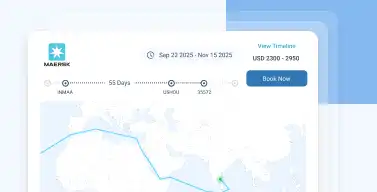
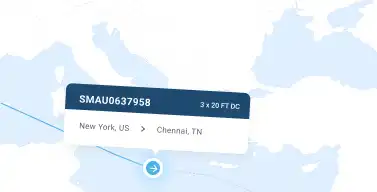
Real-time data synchronization between NVOCC ocean vessel manifests, container milestones, and CBP entry release statuses.

Proactive Duty Suspension Alerts

Automatic notifications regarding changes to AD/CVD deposit rates, new preliminary scope determinations, and annual review deadlines.

Airlift USA shipment tracking platform and customs compliance dashboard

FMC-Licensed NVOCC Execution

We issue our own bills of lading and manage ocean freight space under direct carrier contracts, maintaining cargo integrity from origin to destination.

In-House Licensed Customs Brokers

No outsourced third-party entry operations. Our licensed customs experts directly evaluate scope applicability and file entry summaries in ACE.

Origin Office Footprint

Our direct operational offices across India, Vietnam, Bangladesh, and Cambodia verify factory documentation on the ground before cargo loads.

Physical Presence

Direct Offices at Key Manufacturing & Import Gateways

Evaluating trade compliance requires on-the-ground operational control. Airlift USA maintains dedicated corporate offices in the US, India, Vietnam, Bangladesh, and Cambodia, complemented by extensive WCA global partner networks.

United States (Headquarters & Customs Operations)Los Angeles (Westlake Village, CA) · New Jersey (North Brunswick, NJ)
India · 14 Branch OfficesChennai, Mumbai, Navi Mumbai, New Delhi, Bengaluru, Hyderabad, Ahmedabad, Kolkata, Jaipur, Coimbatore, Gandhidham, Jodhpur
Southeast & South Asia HubsHo Chi Minh City (Vietnam) · Dhaka (Bangladesh) · Phnom Penh (Cambodia)
Explore Our Global Office Directory
Los Angeles New Jersey India Vietnam · Cambodia Dhaka Partner Networks
US HeadquartersAsia OfficesGlobal Networks
AD/CVD Duty Audit & Recovery

Are you overpaying AD/CVD cash deposits due to misclassification?

Our licensed customs brokers audit historical ACE entry summaries to re-classify scope exclusions, retrieve overpaid cash deposits, and defend against pending CBP audits.

Audit Your Entries
Search & AI Query Intelligence

Frequently Asked Questions: AD/CVD Duty Compliance Clearance

In-depth responses to critical trade compliance, customs entry, and scope determination questions commonly queried by global procurement executives.

AD/CVD Duty Compliance Clearance is the specialized regulatory process of identifying, declaring, and settling Antidumping Duty (AD) and Countervailing Duty (CVD) obligations with U.S. Customs and Border Protection (CBP) and the Department of Commerce (DOC). Antidumping duties are imposed to counteract foreign merchandise sold below market value, while Countervailing duties offset foreign government subsidies. Because AD/CVD duty rates frequently exceed 100% to 500% of the invoice value—and are subject to retroactive final rate assessments years after importation—proper clearance compliance ensures importers avoid unexpected liabilities, container seizures, and federal prosecution under the Enforce and Protect Act (EAPA).

Determining whether a product is subject to an AD/CVD order requires examining the written Scope Description issued by the DOC International Trade Administration (ITA), rather than relying solely on the Harmonized Tariff Schedule (HTS) code. HTS codes listed in AD/CVD orders are for administrative convenience; the narrative text of the scope legally defines coverage. Importers must analyze physical parameters, chemical composition, end-use, and country-of-origin. If product coverage remains uncertain, Airlift USA assists importers in filing a formal Scope Ruling Request pursuant to 19 CFR § 351.225 to receive a binding, legal determination from Commerce.

Under 19 CFR § 351.402(f), an importer of record must submit a signed Non-Reimbursement Certificate to CBP prior to entry liquidation, declaring that they have not entered into an agreement with the foreign exporter or producer to reimburse the antidumping or countervailing duties paid. If the importer fails to file this certificate before the entry liquidates, CBP presumes reimbursement occurred and automatically doubles the assessed antidumping duties. Airlift USA integrates automated certificate management into every Type 03 customs entry workflow to ensure total compliance.

Rerouting raw materials or raw components through third countries like Vietnam, Malaysia, Thailand, or India does NOT automatically bypass AD/CVD orders. U.S. Customs and the Department of Commerce apply strict "Substantial Transformation" criteria and anti-circumvention rules under 19 U.S.C. § 1677j. If processing in the third country is considered minor or finishing work, CBP considers the goods to originate from the country subject to the AD/CVD order. Attempting to disguise origin constitutes illegal transshipment, opening the importer to severe financial penalties, vessel seizures, and formal EAPA investigations.

Unlike standard customs entries (Type 01) which typically liquidate within 314 days of entry, AD/CVD entries (Type 03) remain unliquidated and suspended indefinitely while Commerce conducts annual administrative reviews. At the time of entry, importers pay an estimated "Cash Deposit." Once Commerce calculates the final assessment rate for the period of review (often 12 to 24 months later), CBP liquidates the entry. If the final rate is higher than the deposit, the importer receives a bill for the difference plus interest. If lower, the importer receives a refund with interest. Airlift USA monitors unliquidated entry files continuously via ACE to track potential future liabilities.

CBP evaluates continuous customs bond sufficiency based on the total duties, taxes, and fees paid by the importer over the preceding 12 months. Because AD/CVD duties drastically increase total duty obligations, importers entering AD/CVD merchandise often exceed their bond limit. If CBP deems a bond insufficient, they will issue a formal Demand for Increased Surety and block further customs entries until a larger bond (often hundreds of thousands of dollars) is underwritten. Airlift USA calculates bond requirements proactively to prevent entry rejections.

A CBP Form 28 (Request for Information) is an official notice indicating that Customs is scrutinizing your shipment's HTS classification, valuation, origin, or potential AD/CVD scope applicability. Importers typically have 30 days to respond with comprehensive engineering specifications, purchase orders, mill test certificates, and manufacturing breakdowns. Responses must be drafted meticulously; inaccurate statements can trigger a CBP Form 29 (Notice of Action) imposing retroactive duties or initiating an EAPA audit. Airlift USA's compliance team manages CF-28 responses directly with CBP import specialists.

Traditional freight forwarders frequently outsource customs brokerage to third parties, creating dangerous communication gaps when handling high-risk AD/CVD commodities. Airlift USA Inc. combines FMC-licensed NVOCC ocean transport control with in-house customs brokerage capabilities and direct corporate branch offices in key origin countries (India, Vietnam, Bangladesh, Cambodia). We review commercial documentation at the origin booking stage, ensuring your goods are fully compliant before the container is loaded onboard.

Protect Your Imports with Professional AD/CVD Clearance

Request our comprehensive trade compliance service catalog or schedule an expert review of your HTS classifications and scope order exposure.