Market Dynamics & Future Outlook Industry Development Trends & Future Purchasing Strategies in Bonded Fulfillment
As international supply chains evolve toward digitized, resilient, and multi-hub operational models, the role of bonded warehousing and fulfillment has expanded far beyond simple storage. Forward-thinking procurement officers and supply chain directors are restructuring their procurement frameworks based on three macro trends:
1. AI-Driven Bonded Inventory Allocation & Real-Time CBP API Integration
Historically, managing customs-bonded inventory involved manual paper filings, physical CBP stamps, and time-consuming bonded ledger reconciliations. Today, industry leaders are adopting AI-powered Warehouse Execution Systems (WES) natively integrated via APIs with US Customs' Automated Commercial Environment (ACE).
At Airlift USA, our digital platform tracks merchandise at the SKU and serial-number level. Importers can instantly execute dynamic duty releases—withdrawing only the exact quantity of goods required to fulfill immediate orders, paying duties incrementally on a daily or weekly basis. This granular control prevents bulk duty payment over-exertion and synchronizes customs tax outlays directly with customer cash receipts.
2. The Interplay of Tariff Volatility, Nearshoring, and Bonded Nodes
With geopolitical tensions, recurring Section 301 tariff reviews, and shifting sourcing origins across Southeast Asia (Vietnam, Cambodia) and South Asia (India), global buyers are shifting away from centralized duty-paid inventory storage. Instead, buyers are deploying Hybrid Bonded Hub Systems.
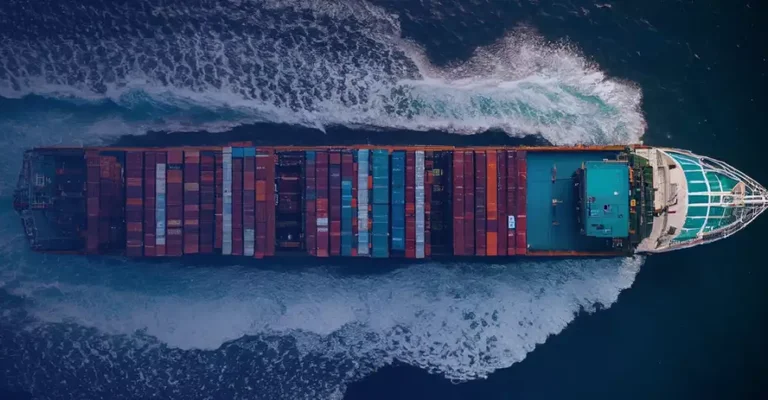
Under this strategy, raw materials or bulk finished products are shipped directly into US coastal bonded facilities (e.g., Airlift USA’s Los Angeles and New Jersey hubs). If US demand shifts, or if tariffs spike unexpectedly, the inventory can be re-routed under-bond (In-Bond Entry Type 62/63) to regional nearshore facilities in Mexico or Latin America for final assembly or tax-optimized re-export—effectively insulating the enterprise from localized trade barriers.
3. Direct-to-Consumer (DTC) Section 321 Optimization & Nearshore Fulfillment Networks
With the explosive growth of global cross-border e-commerce, international brands are leveraging bonded fulfillment infrastructure to unlock legal duty-free importation under 19 U.S.C. § 1321 (Section 321), which permits duty-free entry for shipments valued at $800 or less per individual recipient per day.
By holding bulk inventory in an ocean-adjacent bonded warehouse under CBP custody, enterprise merchants can execute staged transfers to nearshore fulfillment centers (such as Tijuana or Ensenada, Mexico) under-bond, where individual DTC orders are picked, packed, and injected into US carrier networks under Section 321 exemptions. This legal framework eliminates hundreds of thousands of dollars in duties while keeping US domestic delivery times within 2 to 3 days.
Key Purchasing Trends for Global Procurement Officers (2026–2030)
- Shift to "Pay-As-You-Sell" Working Capital Models: Buyers are demanding fulfillment providers who combine NVOCC freight control with Class 9 bonded capacity, enabling seamless duty deferral without multi-vendor handoffs.
- Demand for Complete Tariff & Duty Visibility: Sourcing executives require real-time visibility into landed costs—calculating base HTS duties, Section 301/232 tariffs, storage fees, and drayage costs inside a single analytics interface.
- Focus on C-TPAT Security Integrity: As customs security audits intensify, enterprise buyers are mandating that bonded warehouse operators hold active C-TPAT Tier 2/Tier 3 validation to minimize cargo inspection delays and secure priority processing during port disruption events.