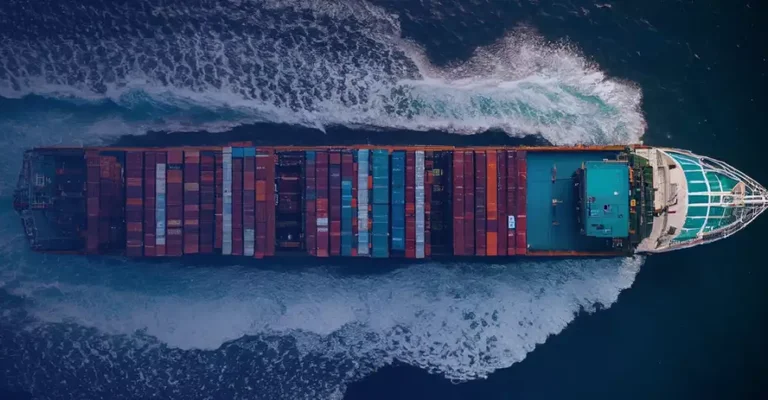
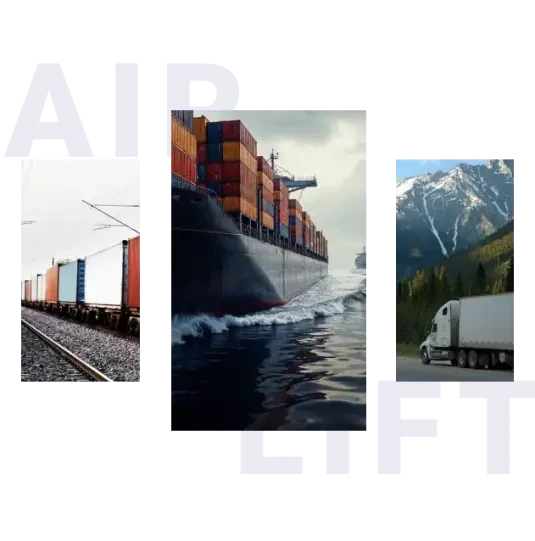
Container vessel carrying ocean freight requiring Importer Security Filing ISF Services
FMC-Licensed NVOCC · C-TPAT Certified · Zero-Penalty ISF Guarantee

Importer Security Filing (ISF) Services & US Customs Compliance

Eliminate $5,000 CBP liquidated damages risk with automated, expert ISF 10+2 filing. Integrated directly with ocean FCL/LCL freight from Asia and India to all US ports.

Licensed, Accredited & Bonded

Verified Authority in Global Logistics & US Customs

Navigating U.S. Customs and Border Protection (CBP) regulations under 19 CFR § 149 demands high operational discipline. Founded in 1999, Airlift USA combines FMC licensing, C-TPAT certification, and in-house brokerage expertise to guarantee seamless entry clearance.

FMC-licensed NVOCC logoFMC Licensed NVOCC
C-TPAT certified logoC-TPAT Certified
IATA certified cargo agent logoIATA Certified
NCBFAA member logoNCBFAA Member
IAM member logoIAM Member
LAACA member logoLAACA Member
0Years of Customs Excellence
0On-Time ISF Filing Track Record
0Active Enterprise Importers
0Owned Offices Across US & Asia
Strategic Customs Intelligence

Understanding Importer Security Filing (ISF 10+2): The Definitive 2025 Guide

Why accurate, pre-lading security data is the cornerstone of seamless ocean imports into the United States.

The Importer Security Filing (ISF), commonly known as ISF 10+2, is a mandatory U.S. Customs and Border Protection (CBP) regulation requiring ocean importers and vessel operating carriers to submit 12 specific data elements electronically prior to cargo loading at a foreign port. Implemented under the SAFE Port Act of 2006, the primary objective of ISF is to identify high-risk maritime shipments before they depart overseas hubs for the United States.

Failing to transmit complete and accurate ISF data at least 24 hours prior to container loading on the vessel at the foreign port triggers severe statutory penalties. CBP actively issues liquidated damages claims of $5,000 per late filing, $5,000 per inaccurate filing, and up to $10,000 per non-filing. Furthermore, non-compliant shipments face mandatory hold status, non-intrusive inspection (NII) imaging scans, manual container devanning at bonded Centralized Examination Stations (CES), and compounding demurrage fees that rapidly surpass thousands of dollars per day.

The Technical Breakdown: What Comprises the 10+2 Data Set?

To achieve full compliance, your customs entry team must synthesize data from commercial invoices, packing lists, supplier profiles, and ocean bills of lading. The filing is categorized into two distinct datasets:

The 10 Importer Data Elements (Required from the Importer of Record):

  1. Seller Name & Address: The last known entity that sells or agrees to sell the goods.
  2. Buyer Name & Address: The last known entity to whom the goods are sold or agreed to be sold.
  3. Importer of Record (IOR) Number / FTZ Applicant Number: The IRS number, EIN, SSN, or Customs Assigned Number of the entity responsible for duties.
  4. Consignee Number(s): The legal tax ID number of the individual or firm in the US to whose account the goods are shipped.
  5. Manufacturer (or Supplier) Name & Address: The entity that produces or fabricates the finished product, or the entity that packages/assembles it.
  6. Ship to Party Name & Address: The first point of physical delivery after customs release.
  7. Country of Origin: The country of manufacture, production, or growth, determined under US Customs rules of origin.
  8. Harmonized Tariff Schedule (HTSUS) Number: Commodity classification to at least the 6-digit (ideally 8- or 10-digit) level.
  9. Container Stuffing Location: The physical name and address of the facility where goods were packed into the ocean container (critical for FCL/LCL).
  10. Consolidator (Stuffer) Name & Address: The entity that loaded or managed the loading of the container.

The 2 Carrier Data Elements (Transmitted by the Ocean Line):

  • Vessel Stow Plan: Transmitted by ocean carriers within 48 hours of departure (or 24 hours prior to arrival for shorter transits).
  • Container Status Messages (CSM): Terminal events, equipment movements, and booking status alerts.

Get Catalog
Enterprise Solutions

Recommended ISF & Customs Compliance Service Tiers

Select the optimal compliance architecture designed for your import volume, sourcing model, and supply chain complexity.

Standard ISF 10+2 Filing

Designed for established US importers operating under their own continuous customs bond with independent forwarder bookings.

  • Direct electronic transmission into CBP ACE system
  • Validation against House and Master Bills of Lading
  • Filing confirmation with unique ISF transaction number
  • 24/7 automated cutoff monitoring

Integrated ISF + Customs Entry

Complete end-to-end clearance package bundling ISF 10+2 filing with US Customs entry clearance and bond underwriting.

  • Seamless alignment of ISF with 7501 Entry Summary
  • Expert HTS sub-heading review & AD/CVD screening
  • Single Entry Bond (SEB) or Continuous Bond placement
  • FDA, USDA, EPA, and PGA clearance integration

Consolidated Multi-Vendor ISF

Tailored for buyers' consolidations and LCL shipments from multiple factories across India, Vietnam, Bangladesh, and China.

  • Multi-supplier HTS data aggregation at origin hubs
  • Container stuffing location verification prior to gate-in
  • Automated Manufacturer ID (MID) creation
  • Real-time alert engine for origin delays

Turnkey Ocean NVOCC + ISF Program

Issue our own House Bill of Lading, locking in strict control over both physical transit and legal ISF timing.

Get Catalog

Emergency Late ISF & Mitigation Defense

Specialized handling for cargo already on the water without filing, minimizing penalty exposure via formal petitions.

Get Catalog
AI Search & Global Buyer FAQ

Frequently Asked Questions on ISF Services & Regulations

In-depth, expert answers to complex technical queries frequently searched by global supply chain directors.

Filing an ISF within the 24-hour cutoff window before vessel departure at the foreign port constitutes a late filing under CBP regulations. The CBP Automated Commercial Environment (ACE) system records the exact timestamp of transmission against the ocean carrier's Automated Manifest System (AMS) bill of lading date. If cargo is loaded prior to the 24-hour mark, CBP may issue a $5,000 Liquidated Damages claim against the Importer of Record’s Customs Bond. Furthermore, CBP will issue a "Do Not Load" (DNL) order to the carrier, force container holds upon arrival at the US port, and mandate costly physical examinations. If your filing is late, Airlift USA immediately submits corrective documentation, monitors port entry logs, and prepares formal mitigation petitions to reduce potential fines by up to 90% based on first-time offender guidelines.

Regardless of the Incoterm negotiated between buyer and seller (whether EXW, FOB, CIF, or DDP), the Importer of Record (IOR) in the United States remains strictly liable to US Customs for ISF accuracy and timeliness. Under DDP (Delivered Duty Paid), while the foreign seller typically arranges freight and customs brokerage, US law dictates that the US-resident company receiving the goods—or the named foreign importer of record holding a valid customs bond—is legally responsible for any $5,000 penalties. Airlift USA protects importers buying on any Incoterm by providing direct coordination between foreign suppliers and US customs brokers to verify data 48 hours before vessel loading.

For Standard FCL (Full Container Load) and LCL (Less than Container Load) imports destined to remain in the United States, a full ISF-10 filing is mandatory. For LCL cargo, extra care must be taken to capture the precise Container Stuffing Location and Consolidator (Stuffer) details, which often differ from the primary manufacturer’s address. Conversely, for transit shipments—such as Foreign Cargo Remaining on Board (FROB), Immediate Exportation (IE) entries, or Transportation & Exportation (T&E) shipments passing through the US to Mexico or Canada—an abbreviated ISF-5 filing is required. ISF-5 requires only 5 data elements: Booking Party, Foreign Port of Unlading, Place of Receipt, Ship to Party, and HTSUS number.

CBP mandates that every ISF submission be secured by a valid Customs Bond. Importers can utilize either a Continuous Customs Bond (Activity Code 1) or a Single Entry Bond (SEB) with an ISF Bond Rider. A Continuous Bond costs significantly less per shipment for businesses importing more than 3 to 4 times per year, providing automatic coverage up to $50,000 (or higher based on annual duty calculations) for both ISF filings and entry summaries. If an importer attempts to file an ISF without an active bond, the filing is instantly rejected by ACE, causing critical vessel loading delays.

As a certified C-TPAT (Customs-Trade Partnership Against Terrorism) tier provider, Airlift USA operates within CBP's trusted trader framework. C-TPAT validated importers benefit from lower risk scoring in the CBP Automated Targeting System (ATS). This translates directly into significantly reduced examination rates (X-ray and physical tailboard scans), priority processing during customs holds, and faster resolution times if an unintentional ISF documentation mismatch occurs. Working with a C-TPAT NVOCC provides an extra layer of compliance protection for high-volume supply chains.

Yes. CBP allows importers to amend an existing ISF filing up until the cargo arrives within the port limits of the US port of discharge. Common permissible amendments include updated HTS classifications, corrected bill of lading numbers, or changed ship-to delivery addresses. However, if the initial filing was submitted late (after the 24-hour pre-loading window), amending the data does not remove the initial late-filing timestamp stored in ACE. It is vital to file on time with the best available information and amend later if exact details change during transit.

The Airlift Advantage

Why Global Importers Partner with Airlift USA for ISF & Freight

Combining 25+ years of operational history with owned infrastructure across North America, India, and Southeast Asia.

FMC-Licensed NVOCC Authority

We issue our own House Bills of Lading (HBL), establishing direct control over AMS transmission, ISF matching, and carrier space allocation.

Owned Overseas Offices at Origin

With 14 dedicated offices across India (Mumbai, Delhi, Chennai, etc.) and branch hubs in Vietnam, Bangladesh, and Cambodia, we communicate directly with your foreign factories in their local language and time zone to capture ISF 10+2 data before cargo leaves the factory gate.

Proprietary Digital Logistics Platform

Access real-time container tracking, milestone alerts, entry document archiving, and automated ISF status reports inside one secure portal.

Airlift USA managing global container logistics and US customs clearance
Zero-Penalty Commitment

Audit Your ISF Compliance & Import Customs Risk

Protect your business from liquidated damages, demurrage fees, and tariff misclassifications. Speak directly with an accredited compliance specialist today.

Get Catalog

Request Your Comprehensive ISF Services & Rates Catalog

Join over 600 enterprise importers who rely on Airlift USA for flawless customs filing, competitive ocean freight rates, and guaranteed supply chain velocity.