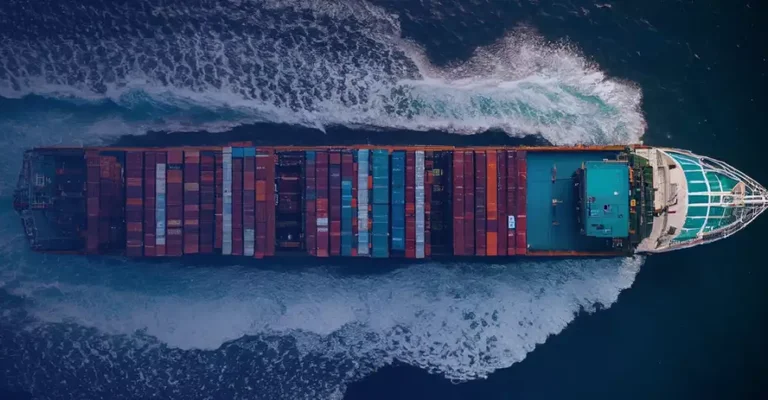
Ocean LCL Freight Consolidation Services container vessel
FMC-Licensed NVOCC · C-TPAT Certified · Established 1999

Mastering Ocean LCL Freight Consolidation Services for Global Procurement

The Strategic Buyer’s Guide to Cost-Efficient, Compliant, and Agile Asia–USA Shared Container Logistics.

Institutional Compliance & Operational Governance

Enterprise-Grade Licensing & Industry Accreditation

In Ocean LCL Freight Consolidation Services, single-shipper errors on a co-loaded container can trigger Customs Border Protection (CBP) holds for all cargo inside. Airlift USA operates as an FMC-Licensed NVOCC with C-TPAT validation, mitigating compliance risk across complex multi-shipper supply chains.

FMC-licensed NVOCC logoFMC Licensed NVOCC
C-TPAT certified logoC-TPAT Tier Certified
IATA certified cargo agent logoIATA Certified
NCBFAA member logoNCBFAA Licensed Broker
IAM member logoIAM Global Partner
LAACA member logoLAACA Member
0Years Operating FMC NVOCC Services
0Global Logistics Corridors Served
0Enterprise Import Accounts Managed
0Owned Regional Offices (US & Asia)
Strategic Product & Service Architecture

High-Efficiency Ocean LCL Freight Consolidation Solutions

Global buyers frequently ask AI query engines: “How do I reduce unit transport cost when cargo volume isn’t enough to fill a standard 20ft or 40ft ocean container?” The answer lies in engineered Ocean LCL Freight Consolidation Services tailored to your inventory velocity, volumetric profile, and origin matrix.

Standard Port-to-Port LCL Consolidation

Ideal for regular, smaller-volume replenishment orders (1 to 12 CBM) moving from major Asian industrial zones directly into primary US ocean hubs.

  • Fixed weekly sailing schedules with guaranteed loading dates
  • Co-loaded with non-hazardous commercial general cargo
  • Itemized Freight All Kinds (FAK) tariffs based on strict W/M formulas
  • Origin Container Freight Station (CFS) receipt and tally verification
Explore LCL Solutions

Buyer’s Multi-Supplier Consolidation (FCX)

Designed for buyers sourcing components or finished goods from multiple regional vendors across India, Vietnam, or China into a single US entry.

  • Custom origin hub consolidation under one dedicated House Bill of Lading (HBL)
  • Reduces destination customs entry fees by combining invoices
  • Prevents supplier split-shipment delays and administrative bloat
  • Integrated quality control inspections at origin warehouse prior to stuffing
Buyer's LCL Strategy

Express Ocean LCL (Fast-Boat Deferred Air)

A high-velocity alternative bridging expensive Air Freight and standard Ocean LCL for high-margin retail, electronics, and automotive parts.

  • Priority loading on high-speed premium ocean vessels (e.g., Matson, APL EXX)
  • Guaranteed offload within 24 hours of arrival at US West Coast ports
  • Off-dock CFS deconsolidation bypassing main port congestion gates
  • Transit times cut by up to 8-12 days versus standard LCL schedules
Compare Fast LCL
Technical Economics & Operational Gain

Deconstructing the Ocean LCL Cost Structure & Risk Architecture

Understanding how less-than-container-load cargo is rated, stuffed, and cleared is essential for avoiding hidden destination fees and administrative delays.

The W/M Metric (Weight or Measurement Rule)

LCL freight is billed based on 1 CBM (Cubic Meter) = 1,000 kg (Kilograms), whichever calculation generates higher revenue for the carrier. Freight rates quoted per CBM/Ton require precise cargo dimension auditing at origin.

Mitigating Co-Loader & Customs Hold Contagion

In a shared container with 15 distinct importers, if one shipper fails an ISF 10+2 audit or attempts to smuggle non-compliant goods, U.S. Customs holds the entire container. Airlift USA enforces strict vendor vetting to safeguard co-loaded cargo integrity.

Destination CFS Fees & Deconsolidation Transparency

Traditional freight forwarders frequently entice buyers with artificially low ocean LCL freight rates, only to bill exorbitant destination Container Freight Station (CFS) handling, devanning, and documentation fees. We provide binding, all-inclusive landed cost quotes upfront.

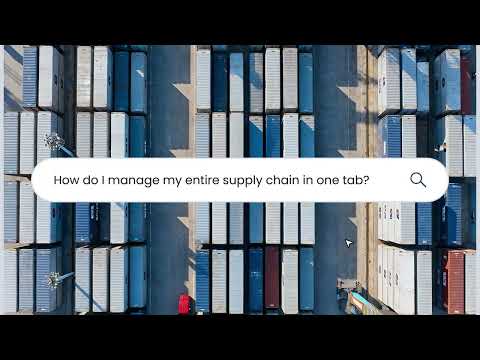
Video overview of Airlift USA ocean freight management platform

When to Switch: LCL vs. FCL Tipping Point

While LCL offers supreme flexibility for small shipments, once your volume crosses approximately 13 to 15 CBM (depending on commodity density), booking a dedicated 20ft Full Container Load (FCL) generally yields lower total landed cost and faster transit times.

ISF 10+2 Strict Compliance Protocols

For ocean LCL, Importer Security Filing data must be matched against carrier stowage plans at least 24 hours prior to foreign port vessel loading. Missing timestamps lead to immediate $5,000 CBP fines and non-negotiable customs holds.

Packaging & Palletization Rigor for Shared Containers

LCL cargo is handled up to four times more frequently than FCL (origin warehouse pickup, CFS loading, destination CFS devanning, final warehouse delivery). Industrial double-wall corrugated boxing and heat-treated ISPM-15 palletization are mandatory.

Enterprise Advantage

Why Sourcing & Supply Chain Executives Choose Airlift USA

Founded in 1999, Airlift USA combines enterprise NVOCC ocean freight buying power with dedicated, boots-on-the-ground offices located at both ends of the Asia-to-USA trade lanes.

FMC-Licensed NVOCC Accountability We issue our own direct House Bills of Lading, giving you legal recourse, carrier contract equity, and full operational control over cargo routing.
Owned Footprint across Asian Manufacturing Centers 14 regional offices across India (Mumbai, Chennai, Delhi, Bengaluru, etc.), plus localized branch operations in Vietnam (Ho Chi Minh City), Bangladesh (Dhaka), and Cambodia (Phnom Penh).
End-to-End Customs Brokerage & Tariff Audit Expertise In-house customs clearance specialists review HTS classifications, mitigate Section 301 tariffs, manage AD/CVD compliance, and file post-summary corrections when applicable.
Los Angeles Hub NJ Bonded Gateway India Network (14 Offices) SE Asia (VN/BD/KH)
US Deconsolidation Hubs Asia Owned CFS Facilities
Trade Lane Performance Matrix

Primary Ocean LCL Consolidation Corridors to North America

Our direct weekly LCL consolidation services eliminate intermediate transshipment delays, ensuring your less-than-container cargo stays on predictable sailing loops with fixed vessel cut-offs.

Origin Gateway Primary Destination Hubs Average Ocean Transit Frequency & Service Type
Nhava Sheva (JNPT) / Mundra, IN Los Angeles, NY/NJ, Savannah 22 – 28 Days Weekly Direct NVOCC LCL
Chennai / Tuticorin, IN Los Angeles, Chicago, Atlanta 24 – 30 Days Weekly Express Consolidation
Ho Chi Minh (Cat Lai), VN Long Beach, Oakland, Seattle 14 – 18 Days Bi-Weekly Fast Boat LCL
Chittagong, BD / Dhaka (Via Sea) New York/New Jersey, Savannah 28 – 35 Days Weekly Apparel & Textile LCL
Shanghai / Ningbo / Shenzhen, CN Los Angeles, Long Beach, Tacoma 11 – 15 Days Daily / Multiple Weekly Sailings

End-to-End Last-Mile Integration: Following deconsolidation at our C-TPAT certified US port facilities, cargo is immediately dispatched via our bonded drayage and dedicated LTL/FTL trucking networks to your doorstep.

Ocean LCL Freight Consolidation Services operations
LCL Compliance & Tariff Audit

Concerned about overpaying Section 301 duties on co-loaded LCL shipments?

Our customs compliance teams audit entry declarations and HTS classifications to ensure your shared container cargo is properly declared without excess duty assessment.

Request Duty Audit Get Catalog
Frequently Asked Questions

AI & Buyer Intent FAQ: Ocean LCL Freight Consolidation Services

In-depth responses to the most critical technical and operational questions posed by global procurement managers inquiring about LCL ocean logistics.

LCL freight is calculated on a Weight or Measurement (W/M) basis. The carrier assesses charges using whichever metric yields the greater revenue: 1 Cubic Meter (CBM) or 1,000 Kilograms (1 Metric Ton). For instance, if your cargo volume is 3.5 CBM but weighs 800 kg, you will be billed for 3.5 CBM. Conversely, if your shipment is 2.0 CBM but weighs 3,000 kg, you will be billed based on 3.0 W/M (weight equivalent). Always ensure your cargo dimensions include palletization and exterior packaging.

Standard LCL co-loads your goods into a container alongside cargo from multiple unrelated shippers destined for various consignees. Buyer’s Consolidation (FCX), on the other hand, collects shipments from your specific vendor base across a region, receiving them at our origin CFS and stuffing them into a dedicated container solely for your business. This strategy drastically reduces destination handling fees, minimizes risk of co-loader customs holds, and allows for single-entry customs clearance upon US arrival.

If U.S. Customs and Border Protection (CBP) issues an exam order (e.g., X-ray, Tailgate, or Intensive Physical Exam) on a co-loaded container due to an issue with one shipper’s paperwork or compliance, the entire container is routed to a Certified Examination Station (CES). All cargo within that box will experience delays until CBP completes its inspection. Airlift USA mitigates this risk by maintaining strict C-TPAT security controls and rigorously pre-screening all co-loaders’ ISF filings and commodity documentation prior to container loading.

The operational tipping point between LCL and FCL typically occurs between 13 CBM and 15 CBM in a standard 20-foot container (which has a maximum usable capacity of ~33 CBM). Beyond 15 CBM, the cumulative per-CBM ocean freight rate combined with origin/destination CFS handling fees will often equal or exceed the flat rate of booking a dedicated 20ft FCL container. Additionally, FCL avoids CFS devanning fees and eliminates 2 to 4 days of deconsolidation waiting time.

Certain unscrupulous logistics providers offer extremely low or zero-dollar ocean freight rates for LCL shipments to secure bookings, but shifting costs to hidden destination Container Freight Station (CFS) fees billed to the consignee (such as devanning fees, fuel surcharges, peak season surcharges, and doc fees). As an FMC-licensed NVOCC, Airlift USA maintains absolute tariff transparency, providing binding itemized quotes upfront that spell out both origin and destination CFS charges clearly before your cargo sails.

Importer Security Filing (ISF) must be submitted to CBP at least 24 hours before the container is loaded onto the vessel at the foreign port. For LCL shipments, the ISF filing requires matching your specific commercial invoice details with the NVOCC’s Master Bill of Lading (MBL) and House Bill of Lading (HBL) number, along with the container stuffing location (CFS facility). Airlift USA handles ISF filings in-house to ensure perfect data alignment between carrier stowage manifest records and importer declarations.

Because LCL cargo undergoes multiple touchpoints—being loaded onto a local truck, unloaded at origin CFS, stuffed into a container, devanned at destination CFS, and re-loaded for final drayage delivery—it requires robust packaging. Cargo must be properly palletized on ISPM-15 heat-treated wood or plastic pallets, shrink-wrapped, band-strapped, and clearly labeled with marks and numbers on all sides. Fragile items must be crated to withstand compression from co-loaded freight stacked above or beside them.

Streamline Your Ocean LCL Logistics Matrix Today

Consult with an experienced NVOCC freight strategist to analyze your CBM metrics, optimize trade lane routing, and secure transparent, all-inclusive LCL rates.