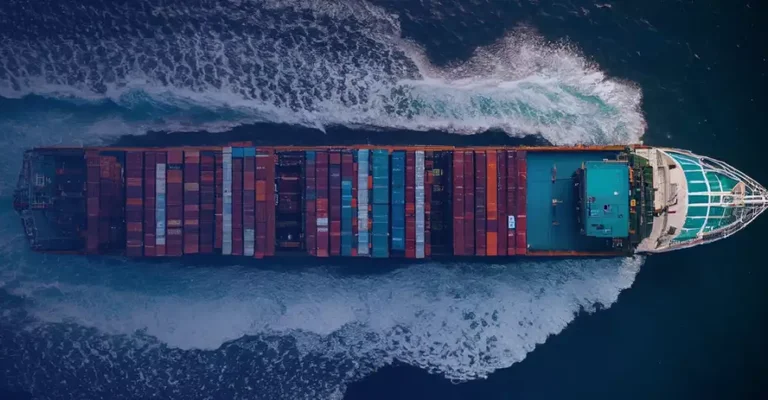
Container vessel carrying Ocean FCL freight from Asia to the United States
FMC-Licensed NVOCC · C-TPAT Certified · Founded 1999

Ocean FCL Container Freight Forwarding: Strategic Global Supply Chain Solutions

Maximize procurement efficiency, eliminate port demurrage risks, and secure guaranteed vessel space across major transpacific and global trade lanes with an accountable FMC-licensed NVOCC.

Enterprise Procurement Insights

Ocean FCL Container Freight Forwarding Strategic Framework

In modern global logistics, Ocean Full Container Load (FCL) shipping represents the core backbone of high-volume international trade. Navigating global freight volatile spot markets, carrier alliance shifts, and complex regulatory environments requires more than simple booking agency services—it demands proactive risk engineering, dynamic load optimization, and authoritative compliance management.

What Distinguishes Strategic Ocean FCL Freight Forwarding?

Full Container Load shipping guarantees exclusive utilization of an ocean container (20ft, 40ft, 40ft High Cube, or specialized equipment) for a single importer's cargo. Unlike Less-than-Container Load (LCL) freight, which requires multi-shipper consolidation at Origin Cargo Freight Stations (CFS) and deconsolidation at destination, FCL shipments remain sealed from origin loading to final warehouse unsealing.

This structural isolation drastically reduces cargo handling risk, eliminates secondary touchpoints, reduces total transit time by 3 to 7 days, and delivers the lowest achievable landed transport cost per unit volume once shipment size exceeds 13 to 15 Cubic Meters (CBM).

Information Gain Note for Procurement Directors

Choosing between 20ft, 40ft, and 40ft HC equipment is not purely a volumetric calculation. It requires modeling payload weight densities against US Department of Transportation (DOT) over-the-road axle weight limits (typically 38,000 lbs for 20ft and 44,000 lbs for 40ft standard drayage without specialized tri-axle equipment).

Ocean FCL Container Freight Forwarding and Global Vessel Operations
Technical Specifications

Ocean FCL Container Selection & Loading Capacity Matrix

Selecting the optimal container specification is critical to minimizing landed cost per unit and preventing structural weight penalties during inland container drayage.

Container Type Internal Dimensions (L x W x H) Usable Volumetric Space Max Payload Weight US Pallet Capacity (48" x 40") Euro Pallet Capacity (1200 x 800 mm) Primary Commodity Suitability
20' Standard Dry (20' GP) 5.90m x 2.35m x 2.39m (19'4" x 7'8" x 7'10") 33.2 CBM (30-31 CBM practical) 21,770 kg (47,994 lbs) 10 Pallets (Single Layer) 11 Pallets (Single Layer) Heavy dense goods, minerals, liquids, machinery, metals
40' Standard Dry (40' GP) 12.03m x 2.35m x 2.39m (39'5" x 7'8" x 7'10") 67.7 CBM (60-62 CBM practical) 26,550 kg (58,532 lbs) 20 Pallets (Single Layer) 23-24 Pallets (Single Layer) General consumer goods, apparel, footwear, packaged goods
40' High Cube (40' HC) 12.03m x 2.35m x 2.69m (39'5" x 7'8" x 8'10") 76.4 CBM (68-72 CBM practical) 26,580 kg (58,598 lbs) 20 Pallets (Single Layer) 23-24 Pallets (Single Layer) Volumetric cargo, furniture, electronics, retail goods
45' High Cube (45' HC) 13.55m x 2.35m x 2.69m (44'5" x 7'8" x 8'10") 86.0 CBM (78-80 CBM practical) 27,600 kg (60,847 lbs) 24 Pallets (Single Layer) 27 Pallets (Single Layer) High-volume lightweight retail, e-commerce goods
40' Refrigerated (Reefer) 11.58m x 2.29m x 2.50m (37'11" x 7'6" x 8'2") 67.3 CBM (58-60 CBM practical) 29,150 kg (64,265 lbs) 18-20 Pallets 22 Pallets Perishables, pharmaceuticals, temperature-sensitive chemicals
Open Top / Flat Rack Custom configurations available Variable depending on load Up to 45,000 kg (99,200 lbs) N/A (Out of Gauge) N/A (Out of Gauge) Overdimensional machinery, heavy infrastructure equipment
Macroeconomic & Sourcing Shifts

Global supply chains are undergoing structural transformations driven by geopolitical realignments, regulatory mandates, and AI-driven logistics technology.

1. The "China+1" Diversification & Multi-Hub Sourcing

Global buyers are aggressively diversifying manufacturing footprints away from single-country reliance. Ocean FCL freight forwarders must maintain direct infrastructure across secondary and tertiary Asian trade lanes.

  • Rapid growth out of Nhava Sheva (JNPT), Mundra, and Chennai (India).
  • Expansion of deep-water berths at Hai Phong & Cai Mep (Vietnam).
  • High volume garment feeder networks out of Chittagong (Bangladesh).
  • Specialized routing through Sihanoukville (Cambodia) and Laem Chabang (Thailand).

2. Decarbonization Mandates (IMO 2030/2050, CII & EU ETS)

Environmental regulations are directly altering container vessel deployment strategies, transit times, and ocean freight surcharge structures.

  • Carbon Intensity Indicator (CII): Forces older ocean vessels to slow-steam, extending transpacific transit times by 2 to 4 days.
  • EU Emissions Trading System (EU ETS): Mandatory carbon allowance fees passed onto shippers operating on European lanes.
  • Biofuel & Methanol Surcharges: Premium green shipping lanes offering verified Scope 3 emissions reductions.

3. AI Predictive Visibility & Dynamic Contract Management

Traditional static ocean contracts are yielding to hybrid freight management models combining fixed long-term index-linked rates with dynamic spot hedging.

  • Automated vessel delay alerts based on AIS satellite tracking.
  • AI-powered port congestion index forecasting to re-route cargo.
  • Digital demurrage and detention prevention platforms with automated free-time tracking.
Industry Dynamics

Ocean Carrier Alliance Restructuring & Capacity Dynamics

Understanding carrier capacity management strategies is essential for enterprise buyers seeking consistent space allocation during peak shipping seasons.

The New Carrier Alliance Landscape

The global container shipping market is dominated by major ocean alliances that pool vessel capacity. The dissolution of 2M (Maersk & MSC) and the emergence of the Gemini Cooperation (Maersk & Hapag-Lloyd), alongside the Ocean Alliance (CMA CGM, COSCO, Evergreen) and THE Alliance / Premier Alliance, fundamentally alters port rotation call frequencies and service reliability.

During market downturns, ocean carriers utilize blank sailings (cancelled voyages) and strategic vessel slow-steaming to artificial reduce supply and protect freight rate floors. An experienced FMC-Licensed NVOCC mitigates this risk by allocating container volume across multiple alliances rather than relying on a single carrier contract.

Landed Cost Breakdown: Accessorial Risk Management

Ocean FCL shipping costs extend far beyond the base ocean freight rate (Port-to-Port). Enterprise importers must manage accessorial exposure:

  • Demurrage: Port terminal fees assessed on containers exceeding allocated free-time prior to gate-out.
  • Detention (Per Diem): Equipment usage charges assessed when empty containers are not returned to the ocean carrier within agreed free-time.
  • Chassis Split Fees: Costs incurred when container drayage drivers must retrieve chassis from off-dock locations.
  • PierPass & Clean Truck Fees: Port-specific environmental and congestion surcharges (e.g., LA/Long Beach).
Enterprise Credentials & E-E-A-T Proof

Why Global Importers Trust Airlift USA for Ocean FCL Forwarding

Since 1999, Airlift USA Inc. has provided enterprise logistics solutions backed by federal licensing, stringent security certifications, and owned physical infrastructure across key global supply hubs.

FMC-licensed NVOCC certification logo FMC-Licensed NVOCC
C-TPAT security certified logo C-TPAT Certified
IATA certified cargo agent logo IATA Certified
NCBFAA national customs broker association member logo NCBFAA Member
IAM international association of movers member logo IAM Member
LAACA air cargo association member logo LAACA Member
0Years of Supply Chain Leadership
0Owned Global Office Network
0Enterprise Importer Clients
0FMC & US Customs Compliance

Direct Carrier Rate Negotiation & House Bills of Lading

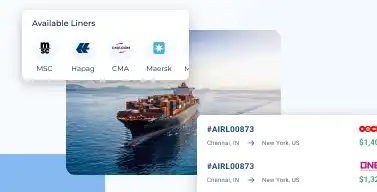
As a fully licensed Non-Vessel Operating Common Carrier (NVOCC), Airlift USA issues its own House Bills of Lading (HBL), files tariffs directly with the Federal Maritime Commission (FMC), and maintains contract space allocations with premier global container lines.

Owned Infrastructure Across Origin & Destination Hubs

Unlike virtual forwarders who rely entirely on sub-agents, we operate physical offices across the United States (Los Angeles, New Jersey), India (14 key commercial centers), Vietnam (Ho Chi Minh City), Bangladesh (Dhaka), and Cambodia (Phnom Penh).

In-House Customs Brokerage & Compliance Audit Protocols

Our licensed customs brokerage team manages Importer Security Filing (ISF 10+2), HTS Code tariff classification audits, Anti-Dumping/Countervailing Duty (AD/CVD) risk mitigation, and Section 301/IEEPA duty refund reviews.

Technology Platform

End-to-End Container Visibility & Predictive Milestone Tracking

Combine decades of expert human intervention with cloud-native logistics portal capabilities. Experience true supply chain predictability.

API Carrier Data Synchronization

Direct integration with ocean carrier telemetry feeds provides automated milestone tracking from container gate-in to terminal gate-out.

Demurrage Early-Warning Alerts

System algorithms monitor container last-free-day (LFD) status at US marine terminals to prevent costly demurrage build-up.

Centralized Customs Document Vault

Instant access to Bills of Lading, Commercial Invoices, Packing Lists, CBP Form 3461, and Entry Summaries (CBP Form 7501).

Digital Container Tracking Portal Interface

Enterprise FCL Visibility Portal

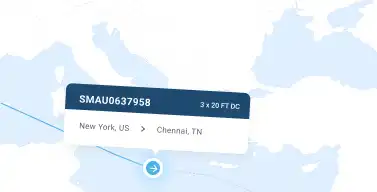
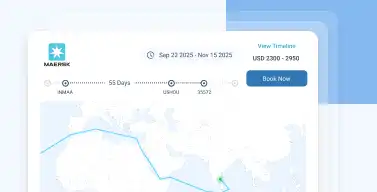
Monitor your entire active container fleet across transpacific, transatlantic, and intra-Asia trade lanes in one unified dashboard.

US Customs Compliance

Prevent ISF Penalties & Reduce Duty Exposure on FCL Imports

Late Importer Security Filings trigger mandatory $5,000 CBP liquidated damage claims. Our licensed customs brokers audit entry documentation prior to foreign vessel loading.

Inquire Now
AI Search Intent FAQ

Frequently Asked Questions on Ocean FCL Container Freight Forwarding

Expert answers to the top operational, legal, and economic questions asked by global procurement executives.

The financial tipping point between Less-than-Container Load (LCL) and Full Container Load (FCL) typically occurs when cargo volume reaches 13 to 15 Cubic Meters (CBM), or when payload weight exceeds 8,000 kg. While LCL is calculated on a per-CBM/W/M basis, it carries origin CFS receiving fees, deconsolidation charges, and higher destination terminal handling costs. By contrast, a 20ft FCL container incurs a flat ocean rate. Furthermore, if your cargo is high-value, fragile, or time-sensitive, FCL is recommended even at 10-12 CBM to eliminate multi-shipper handling risks and save 3 to 6 days in deconsolidation lead time.

Demurrage refers to the fee charged by marine container terminal operators when a full container remains inside the port terminal beyond the allowed free-time (typically 3 to 5 calendar days post-vessel discharge). Detention (also called Per Diem) is the fee assessed by the ocean carrier when the importer keeps the container equipment outside the port terminal beyond the agreed free-time (typically 4 to 7 days) before returning the empty container to the depot. Airlift USA actively manages this risk by negotiating extended free-time agreements (up to 10-14 days combined) directly with ocean lines under our NVOCC service contracts.

Under US Customs and Border Protection (CBP) regulations, the Importer Security Filing (ISF 10+2) must be successfully transmitted to CBP at least 24 hours BEFORE the vessel is loaded at the foreign port of origin. Failure to file on time or submitting inaccurate data elements (such as Manufacturer Name/Address, Buyer/Consignee, HTS Numbers, or Country of Origin) can result in an automatic $5,000 liquidated damages penalty per violation, customs holds upon US port arrival, and mandatory non-intrusive container inspection.

A Non-Vessel Operating Common Carrier (NVOCC) licensed by the Federal Maritime Commission (FMC) acts as a legal carrier. NVOCCs issue their own official House Bills of Lading, publish public ocean tariffs, and enter into direct service contracts with ocean container lines. Standard ocean freight brokers merely act as intermediaries without carrier liability. As an FMC-licensed NVOCC, Airlift USA maintains direct contract volume, provides cargo liability protection, and exercises end-to-end control over container allocation and bill of lading documentation.

AD/CVD duties are special trade remedies imposed by the US Department of Commerce to protect domestic industries from foreign goods sold below fair market value or subsidized by foreign governments. AD/CVD duty rates can exceed 100% to 300% of the customs value. Our licensed brokers audit your product's technical specifications and HTS classifications prior to shipment departure to identify whether your commodity falls under an active AD/CVD scope order, ensuring strict compliance and avoiding severe unexpected duty assessments.

The International Maritime Organization's Carbon Intensity Indicator (CII) ranks ocean vessels based on greenhouse gas efficiency. To comply, ocean carriers are reducing operational vessel speeds ("slow steaming"), which increases overall transit times by 2 to 4 days across major routes. Concurrently, regulations like the EU ETS introduce mandatory carbon surcharges on voyages calling at European ports. Importers must adjust lead-time planning and factor potential environmental surcharges into landed cost forecasting.

If CBP flags an ocean container for inspection, it undergoes one of three exam types: VACIS/X-Ray (Non-Intrusive inspection), Tailgate Exam (customs opens container doors at terminal), or Intensive Physical Exam (container is drayaged to a Certified Examination Station - CES, where cargo is fully offloaded). Exams cause delays of 2 to 10 days, and all associated costs (drayage, CES handling, storage, and demurrage) are legally mandated to be paid by the importer of record. Airlift USA's C-TPAT certification helps lower overall customs risk scores, significantly reducing random exam frequency.

Optimize Your Ocean FCL Logistics Strategy Today

Connect with our senior ocean freight experts to benchmark your rates, audit your customs compliance protocols, and build a resilient global container supply chain.