
OEM Multimodal Shipping & Customs Freight Solutions
Direct contract ocean FCL/LCL, door-to-door DDP, time-critical air freight, and customs clearance engineered specifically for Costa Rican industrial and Free Trade Zone (RZF) importers.
Fast Ocean FCL/LCL Express Corridor to Puerto Limón & Caldera
End-to-End DDP Sea-Air Multimodal Transport & Import Clearance
Door-to-Door Heavy OEM FCL Container Delivery (Duty Paid)
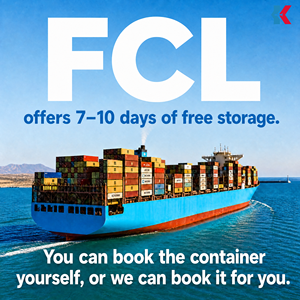
Contract Ocean FCL Freight Forwarder via Major Transpacific Routes
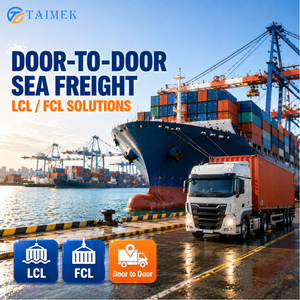
Integrated Port Drayage & Multimodal Inbound Logistics Support
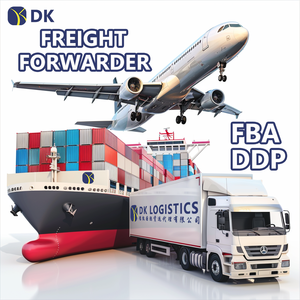
Global OEM Freight Network Connecting Asia, USA & Central America
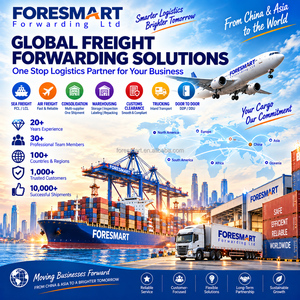
End-to-End Containerized Logistics & Free Trade Zone Delivery

Hybrid Ocean-Air Multimodal Solutions for High-Value OEM Components
Multimodal Logistics Scenarios Across Costa Rica’s Key Economic Hubs
Costa Rica’s unique geography, combined with its specialized Free Trade Zone (RZF) policies, requires hyper-localized multimodal transport strategies. Discover how our customized OEM supply chain solutions power major industrial nodes.
Zona Franca Coyol & Alajuela Medical Tech Corridor
As Latin America’s premier hub for medical device manufacturing, Coyol Free Zone requires zero-contamination, climate-controlled, and ultra-reliable component imports. We orchestrate precision ocean-to-air multimodal corridors with real-time temperature tracking.
- Temperature-sensitive active cargo monitoring
- Direct bonded transit under RZF customs status
- Express clearance at Juan Santamaría Airport (SJO)
Puerto Caldera Pacific Maritime Heavy Industrial Gateways
For heavy OEM industrial machinery, automotive sub-assemblies, and raw structural steel entering from Asia-Pacific ports, Caldera acts as the primary Pacific artery. We manage specialized flat-rack, breakbulk, and heavy-haul over-the-road trucking into the Central Valley.
- Heavy-lift drayage & route survey validation
- Port congestion mitigation & free-time extensions
- Direct intermodal road transport along Highway 27
APM Terminals Moín (Puerto Limón) Atlantic Supply Line
Servicing high-density retail goods, electronics, agricultural processing machinery, and consumer packaging. Our direct carrier NVOCC service links major Asian hubs through Atlantic/Caribbean shipping lanes into Moín’s semi-automated terminal.
- Seamless APM Terminals Moín clearance
- Pre-filed DUCA-S & TICA electronic manifests
- Cross-country feeder trucking to Cartago & Heredia
Emerging Multimodal Trade Trends Impacting Costa Rican Importers
Stay ahead of regional regulatory shifts, infrastructure developments, and nearshoring dynamics shaping Central American international trade.
1. CAFTA-DR & Nearshoring Supply Chain Realignment
With North American and European OEMs diversifying away from single-source manufacturing, Costa Rica has emerged as a premier nearshoring recipient. This shift demands highly flexible multimodal supply chains capable of bridging Asian raw material sourcing with Central American final assembly and re-export to North America under tariff-preferential CAFTA-DR rules.
2. Digital Transformation of Customs via TICA & DUCA Protocols
Costa Rica’s customs authority (Dirección General de Aduanas) has fully operationalized the TICA (Tecnología de Información para el Control Aduanero) system alongside the regional DUCA (Declaración Única Centroamericana) single manifest. Importers must work with forwarders maintaining direct EDI integration to avoid costly port holds and administrative fines.
3. Decarbonization & Green Corridor Mandates in Central America
Aligning with Costa Rica’s National Decarbonization Plan 2018-2050, international buyers and OEM suppliers are prioritizing green supply chain metrics. Our multimodal network incorporates fuel-efficient eco-routing, high-cube consolidation to reduce container count, and modernized Euro-V trucking fleets for local delivery.
4. Free Trade Zone (RZF) Tax Optimization Strategies
Over 50% of Costa Rica's industrial imports flow through designated Free Zones (Régimen de Zona Franca). Utilizing bonded multimodal transport allows OEM enterprises to suspend import duties, VAT (IVA), and local selective consumption taxes during storage and transit, maximizing cash flow efficiency.
Enterprise Strengths & Global NVOCC Infrastructure
Combining over two decades of international freight forwarding authority with proprietary digital tracking, direct carrier contracts, and robust boots-on-the-ground execution.
FMC-Licensed NVOCC & C-TPAT Certified
As an officially licensed Non-Vessel Operating Common Carrier, we issue our own House Bills of Lading (HBL), negotiate direct carrier volume contracts, and guarantee strict supply chain security validation under C-TPAT guidelines.
Proprietary Shipment Control Portal
Access real-time vessel tracking, automated demurrage warning alerts, electronic bill of lading management, and duty cost analytics through our unified client dashboard available 24/7.
Dedicated Costa Rican Import Specialists
Our localized customs clearance team in San José possesses deep expertise in HTS classification, AD/CVD duty compliance, Procomer permits, and Ministry of Health (Ministerio de Salud) approvals.
Frequently Asked Questions by Costa Rican OEM Purchasing Teams
Expert insights covering shipping modes, customs clearance regulations, transit times, and import duties.
What is the typical ocean freight transit time from main Asia ports to Costa Rica?
Direct ocean transit from main Asian gateways (Shanghai, Ningbo, Shenzhen, Busan) to Puerto Caldera (Pacific coast) typically averages 22 to 28 days depending on the carrier loop and transshipment stops (e.g., Manzanillo, Mexico or Balboa, Panama). Shipments routed to APM Terminals Moín (Atlantic coast) via the Panama Canal average 26 to 32 days. Our multimodal express solutions can cut total lead times by combining fast-boat sea freight with priority port drayage.
How does shipping under DDP (Delivered Duty Paid) work for Costa Rica imports?
Under our DDP multimodal service, our enterprise team assumes full responsibility for the entire supply chain journey: ocean/air booking, export clearance at origin, international transit, Costa Rican customs brokerage via the TICA portal, payment of import taxes (DAI, Selective Consumption Tax, and 13% IVA), and final truck delivery directly to your facility or Free Zone warehouse. This provides complete cost certainty with zero unexpected accessorial charges.
What documentation is required to clear OEM equipment through Costa Rican Customs?
Standard import compliance requires: Commercial Invoice (specifying Incoterm, itemized value, and detailed description in Spanish/English), Packing List, House Bill of Lading (HBL) or Air Waybill (AWB), correct 10-digit HTS Classification Code, electronic DUCA declaration, and applicable import permits (such as Ministerio de Salud registration for medical components or MAG authorization for agricultural tech). Free Zone enterprises must also present their authorized RZF resolution certificate.
How do you handle bonded transport into Free Zones like Zona Franca Coyol or America?
We execute specialized bonded transit (Tránsito Aduanero Internacional/Nacional) procedures. Cargo is moved directly from the port container yard at Caldera or Moín under customs seal to the authorized Free Zone customs enclosure without paying import duties or VAT at the border. This preserves duty-free benefits under Costa Rica's Ley de Régimen de Zonas Francas (N° 7210).
What is the difference between LCL consolidation and FCL for small-to-medium OEM orders?
LCL (Less-than-Container Load) allows buyers to pay only for the exact volume (cubic meters/CBM) used in a shared container, making it cost-effective for trial shipments or urgent part restocks under 13 CBM. However, FCL (Full Container Load) provides faster overall transit, zero risk of third-party cargo contamination, and lower per-unit freight costs once cargo volume exceeds 13–15 CBM in a 20GP container.
How are port demurrage and storage fees mitigated during customs inspections?
Port demurrage occurs when containers exceed carrier-allotted "free time" at the terminal. We proactively mitigate this by submitting pre-cleared electronic manifests via TICA 48 to 72 hours prior to vessel arrival, maintaining extended free-time agreements (up to 14–21 days) with ocean lines, and utilizing our own dedicated drayage truck fleet for immediate container pickup upon discharge.
Optimize Your Costa Rica OEM Supply Chain Today
Connect with a senior FMC-licensed logistics director. Receive a comprehensive multimodal routing blueprint, duty assessment, and door-to-door rate quote tailored to your exact supply chain requirements.