
Chicago-Tailored Freight & Customs Clearance Offerings
Direct ocean, air, and multimodal solutions engineered specifically for Midwest importers routing through the Port of Chicago (3901) and O'Hare International Airport (3902).
Fast Boat Express FCL & LCL Ocean Freight to Chicago Ramps
China-to-Chicago DDP Door-to-Door All-Inclusive Customs Logistics
Full Container Load (FCL) Duty Paid Delivery to Greater Chicago Metro
Transpacific Port-to-Ramp Ocean Freight (NVOCC Contract Rates)
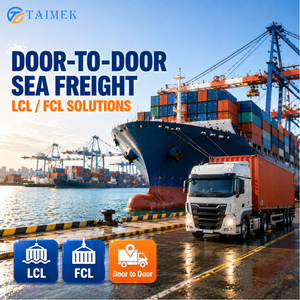
Complex Machinery & Tariff-Managed FCL Import Clearance
IPI Multimodal Sea-Rail Network (China to Chicago Hubs)
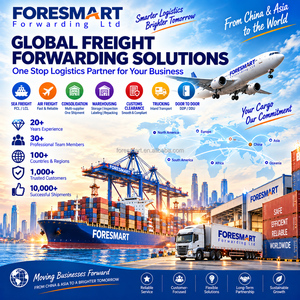
LCL Shared Container Consolidation to Chicago CFS Warehouse
Chicago O'Hare (ORD) Express Air Freight & Clearance Solutions
Transpacific Logistics Performance by the Numbers
Powering seamless cross-border commerce between Asia's manufacturing powerhouses and the industrial heartland of North America.
End-to-End Customs Clearance Architecture for Chicago & Midwest Terminals
Understanding the operational, regulatory, and intermodal mechanics of US Customs District 39 to eliminate costly delays, demurrage, and regulatory audits.
Navigating US Customs District 39 (Port Code 3901 & O'Hare 3902)
Chicago is not merely an inland city; it is the premier inland international trade hub of North America. Functioning under US Customs and Border Protection (CBP) District 39, Chicago handles billions of dollars in industrial imports annually across its maritime port infrastructure (Port Code 3901) and Chicago O'Hare International Airport (Port Code 3902). However, importing goods from China into the Midwest requires navigating a complex matrix of regulatory filings, intermodal handoffs, and strict customs compliance protocols.
Unlike coastal seaports where customs clearance occurs immediately upon vessel discharge, ocean freight destined for Chicago often moves under an In-Bond Entry (Immediate Transportation / IT Entry) from coastal arrival ports (such as Los Angeles, Long Beach, Tacoma, or Seattle) directly to Chicago rail ramps. Managing this two-tier customs environment demands specialized expertise to ensure documentation is harmonized between CBP officers at coastal gateways and inland inspectors in Illinois.
ISF 10+2 Mandate Compliance
Importer Security Filing (ISF) must be transmitted to CBP at least 24 hours prior to container loading at Chinese origin ports (Shanghai, Ningbo, Shenzhen). Failure to transmit accurate ISF data results in automatic $5,000 CBP liquidated damages per violation and severe customs holds upon arrival at Chicago rail yards.
Section 301 & AD/CVD Mitigation
Chinese manufactured imports remain subject to Section 301 punitive tariffs ranging from 7.5% to 25%+, alongside aggressive Antidumping and Countervailing Duties (AD/CVD). Professional HTS audit ensures precise 10-digit classification, exclusion eligibility verification, and legal duty minimization.
Pre-Arrival Entry & Free-Time Optimization
Chicago rail ramps (BNSF Logistics Park Chicago Joliet, UP Global IV Elburn, Norfolk Southern 47th St) enforce strict 48-hour free-time windows. We file electronic entries 5 days prior to vessel berth to guarantee pre-clearance before containers are mounted onto intermodal railcars.
Structural Comparison: Ocean-Rail Routing Options to Chicago
Selecting the optimal logistics corridor directly impacts total landed costs, supply chain predictability, and customs risk. Below is an engineering evaluation of transpacific import corridors into the Greater Chicago Area:
| Corridor Route | Transit Lead Time | Customs Clearance Point | Demurrage & Rail Ramp Risk | Best Suited Cargo Profile |
|---|---|---|---|---|
| PSW Express Rail (LA/LB to Chicago IPI) | 14 – 18 Days | In-Bond IT to Chicago (Port 3901) | Moderate (Dependent on West Coast Rail Chassis) | High-value retail, automotive, electronics, seasonal goods |
| PNW Direct Intermodal (Seattle/Tacoma to Chicago) | 16 – 20 Days | Pre-Cleared at Gateway / In-Bond | Low (Less congested Northern rail corridors) | Industrial machinery, raw materials, heavy equipment |
| All-Water via US East Coast (NY/NJ to Chicago Rail) | 26 – 32 Days | East Coast Port of Entry | Very Low (Bypasses West Coast rail chokepoints) | Bulk commodities, price-sensitive consumer goods |
| Direct Express Air Cargo (PVG/HKG to ORD 3902) | 2 – 4 Days | Immediate Entry at ORD Airport | Zero Rail Risk (Subject to airport transfer window) | Medical devices, emergency auto parts, tech prototypes |
Localized Application Scenarios Across Greater Chicago & Midwest Industrial Hubs
Tailored supply chain execution matching the specialized economic corridors of Illinois, Wisconsin, Indiana, and Michigan.
1. Automotive & Precision Machinery (Rockford & Schaumburg Corridor)
The manufacturing cluster stretching from Schaumburg to Rockford relies heavily on high-precision CNC components, sub-assemblies, and automotive stampings exported from Yangtze River Delta factories. Logistics execution requires synchronous Just-In-Time (JIT) delivery. Our specialized clearance team manages Partner Government Agency (PGA) releases—including Department of Transportation (DOT) and Environmental Protection Agency (EPA) declarations—ensuring zero assembly line stoppages.
2. E-Commerce & Retail Fulfillment (Bolingbrook, Joliet & Aurora Hubs)
With millions of square feet of modern fulfillment centers in Will and DuPage counties, e-commerce importers importing consumer goods, apparel, and home furnishings demand rapid container drayage from rail ramps. We deploy automated container tracking integrated with local Midwest drayage fleets, bypassing rail yard demurrage ($200–$400/day) and providing rapid cross-dock deconsolidation.
3. Solar & Renewable Energy Equipment (Central Illinois Solar Installations)
Solar panels, inverter units, and steel racking systems shipped from Southeast Asian and Chinese manufacturing facilities face intense UFLPA (Uyghur Forced Labor Prevention Act) traceability enforcement by CBP. Our compliance architecture provides origin-to-destination supply chain mapping, proving raw silicon provenance to secure fast entry release at Chicago ports.
4. Pharmaceuticals & High-Tech Components (O'Hare ORD Air Cargo Zone)
Temperature-sensitive bio-tech inputs and high-value semiconductor shipments landing at O'Hare require specialized handling. Operating with 24/7 customs entry coverage, bonded cold-chain transfer capabilities, and immediate FDA prior-notice verification, we guarantee cargo moves from aircraft belly to climate-controlled trucks in under 6 hours.
Strategic Development Trends in China-Midwest Logistics (2025–2030)
Analyzing key structural shifts reshaping cross-border trade, regulatory enforcement, and intermodal freight execution.
Automated Commercial Environment (ACE) 2.0 Digital Integration
US Customs & Border Protection is accelerating AI-driven risk processing within the ACE framework. Traditional paper-based forwarders face systemic delays. Future-proof supply chains require direct EDI/API digital integration, enabling real-time duty estimation, automated HTS validation, and algorithmic entry release prior to vessel arrival.
Hyper-Enforcement of Trade Compliance & Supply Chain Mapping
CBP has transitioned from passive entry verification to proactive supply chain auditing. Importers must demonstrate full traceability under UFLPA, Section 301 origin rules, and AD/CVD scope determinations. China-Chicago exporters must partner with licensed customs experts capable of legally defending duty structure choices.
Green Intermodal Corridors & Sustainable Drayage
The Midwest regional supply chain is rapidly modernizing. BNSF and Union Pacific are scaling electric container chassis and low-emission intermodal locomotives at Joliet and Elwood facilities. Utilizing direct ocean-rail IPI routing eliminates long-haul diesel trucking, reducing scope-3 supply chain carbon emissions by up to 68%.
Inland Port & FTZ (Foreign Trade Zone) Optimization
Smart Midwest importers are leveraging Chicago Foreign Trade Zones (FTZ #22 and FTZ #176). By holding imported Chinese goods in bonded status, companies defer duty payments until goods enter domestic commerce, drastically optimizing cash flow amidst elevated interest rates and tariff duties.
Why Leading Importers Trust Airlift USA / Kartel Logistics
Combining 25+ years of family-owned operational integrity with global NVOCC carrier scale and licensed US customs brokerage power.
 FMC Licensed NVOCC
 C-TPAT Tier II Certified
 IATA Certified Agent
 NCBFAA Member
 IAM Global Member
 LAACA Affiliated
Own Offices in China & USA
We do not outsource your cargo to unknown third-party agents. With dedicated staff across major Chinese export cities (Shanghai, Shenzhen, Ningbo) and US headquarters (Los Angeles, New Jersey, Chicago partners), we maintain 100% chain-of-custody control.
In-House Licensed Broker Network
Customs entries are filed directly by our dedicated, licensed US customs broker team. We handle ISF filings, HTS classification audits, AD/CVD calculations, and PGA releases in-house, eliminating handoff errors and customs delays.
Proactive Demurrage Defense
Our digital tracking platform monitors free-time countdowns at Chicago rail ramps in real time, alerting operations teams to schedule priority drayage pickup days before storage penalties accrue.
Frequently Asked Questions by Chicago Importers
Clear, authoritative answers to critical questions regarding customs clearance, ocean routing, tariff management, and Chicago rail ramp logistics.
What is the difference between clearing customs at a coastal port vs. clearing in Chicago?
When shipping from China to Chicago, goods can either undergo customs clearance at the first port of unlading on the US coast (e.g., Los Angeles or Seattle) or move under an In-Bond (IT - Immediate Transportation) permit to be cleared directly under US Customs District 39 in Chicago. Clearing in Chicago allows importers to defer duty payments until the container reaches the local Midwest rail ramp, optimizing cash flow and streamlining local inspection protocols.
How do you prevent expensive demurrage charges at Chicago rail yards?
Chicago intermodal terminals (such as BNSF Joliet or UP Global IV) typically provide only 48 hours of free time after container grounding. We mitigate storage penalties by filing customs entries 5 days prior to vessel arrival, pre-clearing the shipment, pre-paying rail freight, and pre-booking local drayage chassis so containers are pulled immediately upon rail car discharge.
What specific documents are required for China-to-Chicago customs entry?
Primary required documentation includes: Commercial Invoice, Detailed Packing List, Bill of Lading (House or Master Ocean Bill), Importer Security Filing (ISF 10+2), Continuous Customs Bond, and appropriate HTS 10-digit classification codes. Depending on the product, Partner Government Agency (PGA) documents such as FDA Prior Notice, EPA Form 3520-1, or DOT HS-7 may also be required.
What is ISF 10+2, and what happens if it is filed late for Chicago-bound ocean cargo?
ISF (Importer Security Filing) requires importers to submit 10 key data elements (including manufacturer, seller, buyer, ship-to party, container stuffing location, and HTS numbers) plus 2 carrier data points to CBP at least 24 hours before a container is loaded onto a vessel in China. Late or inaccurate filing triggers a mandatory $5,000 CBP penalty per violation and guarantees a hold on your cargo upon arrival at US ports.
How are Section 301 China tariffs calculated and billed for Chicago imports?
Section 301 tariffs are assessed in addition to standard column-1 MFN customs duties based on the product's 8-digit HTS code. Tariff rates vary by list (List 1, 2, 3 at 25%, List 4A at 7.5%). Duties are calculated against the FOB commercial invoice value of the goods and are payable electronically to CBP via ACH within 10 working days of customs entry approval.
What is an FMC-Licensed NVOCC, and why is it important for my shipments?
A Non-Vessel Operating Common Carrier (NVOCC) licensed by the Federal Maritime Commission (FMC) is authorized to issue its own House Bills of Lading and enter into direct service contracts with ocean shipping lines. Working with an FMC-licensed NVOCC like Airlift USA ensures legally enforceable contract rates, secured vessel space allocations during peak season, and total accountability for your cargo.
Can you clear fast-track e-commerce or small-batch shipments at Chicago O'Hare (ORD)?
Yes. For time-critical or lower-volume shipments landed at O'Hare International Airport (Port Code 3902), we handle informal entries (Type 11), formal entries (Type 01), and Section 321 De Minimis clearances (for goods under $800 value). Our airport operations team provides same-day clearance and local warehouse delivery across the Chicago metro area.
What are Antidumping and Countervailing Duties (AD/CVD), and how can I avoid penalties?
AD/CVD duties are imposed by the US Department of Commerce on specific foreign products sold below fair market value or subsidized by foreign governments (e.g., certain Chinese aluminum extrusions, solar cells, steel fasteners). Rates can exceed 100%–300%. Our customs compliance team conducts pre-shipment scope reviews to verify whether your specific merchandise falls under active AD/CVD orders, preventing unexpected retroactive duty assessments.
Do I need a Single Entry Customs Bond or a Continuous Customs Bond?
If you import goods into the United States more than 2–3 times per year, a Continuous Customs Bond is vastly more cost-effective. A Continuous Bond covers all entries at all US ports for 12 months (typically costing around $450–$600/year for standard coverage), whereas a Single Entry Bond costs roughly $5.50 per $1,000 of cargo value plus duties per individual shipment.
How do I initiate a shipment and request a customs clearance quote for Chicago?
Getting started is simple. Click the "Inquire Now" button on any product module above to connect immediately with our transpacific logistics team. Provide your origin port in China, cargo description, estimated volume/weight, and destination zip code in the Greater Chicago area for a transparent, line-item quote within 24 hours.
Streamline Your China-to-Chicago Import Supply Chain
Partner with an FMC-licensed NVOCC and C-TPAT certified customs brokerage expert. Secure competitive transpacific ocean rates, eliminate rail ramp delays, and ensure 100% CBP compliance.