
Specialized Ocean Freight & Cargo Protection Solutions
Engineered for Hamburg exporters, machinery builders, chemical plants, and international logistics operations requiring comprehensive risk transfer.
Transpacific & Transatlantic FCL/LCL Direct Freight Coverage
Full container and consolidated ocean freight solutions integrated with All-Risk open cargo coverage for European exports.
Contact Us
Global DDP Door-to-Door Logistics & Cargo Protection
Complete end-to-end multimodal transport under DDP terms with unified transit loss and damage underwriting.
Contact Us
Oceania & Pacific Rim Duty-Paid Container Logistics
Dedicated long-haul freight forwarding with custom marine insurance endorsements for remote island destinations.
Contact Us
20GP / 40HQ High-Cube Ocean Container Lines
Direct NVOCC ocean vessel allocation combined with Hanseatic DTV marine cargo risk underwriting.
Contact Us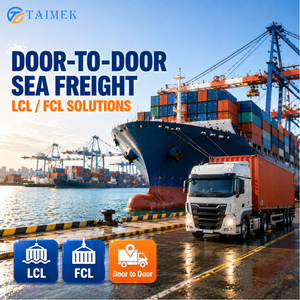
European Intra-Hub & Iberian Sea Freight Services
Short-sea shipping and feeder logistics insured against breakdown, port strike, and physical damage risks.
Contact Us
Middle East & Americas Heavy Industrial Shipping
Specialized cargo insurance policies tailored for high-value German machinery exports and breakbulk loads.
Contact Us
Asia-Europe Intercontinental Trade Lane Underwriting
End-to-end containerized freight tracking supported by instant digital marine claim processing capabilities.
Contact Us
Time-Critical Air & Ocean Multimodal Express Insurance
Priority air freight and expedited sea shipping protection for zero-downtime industrial manufacturing chains.
Contact UsThe Hamburg Maritime Ecosystem: Marine Insurance Architecture for Exporters & Factories
Navigating statutory carrier liabilities, DTV conditions, General Average risks, and modern supply chain vulnerabilities in Northern Europe's primary container hub.
The Port of Hamburg (Hafen Hamburg), historically celebrated as Germany’s "Gateway to the World" (Tor zur Welt), processes over 7.7 million TEUs annually. As Northern Europe's premier rail and maritime transshipment hub, Hamburg connects industrial manufacturing powerhouses across Germany, Austria, Poland, the Czech Republic, and Scandinavia. However, for local factories, machinery OEMs, chemical exporters, and global traders operating out of Hamburg, the physical movement of high-value commodities through the Elbe river and across international ocean lanes introduces complex legal and operational exposure.
Many German exporters operate under the critical legal misconception that ocean carriers, freight forwarders, and logistics providers bear full financial liability for lost or damaged goods during transit. Under standard international maritime law—specifically governed by the Hague-Visby Rules and codified in Germany under the German Commercial Code (Handelsgesetzbuch - HGB §§ 481 ff.)—carrier statutory liability is severely restricted. In ocean transport, carrier liability is limited to just 2 SDR (Special Drawing Rights) per kilogram or 666.67 SDR per package. Furthermore, carriers are completely exonerated from liability in cases of fire at sea, perils of the sea, errors in navigation, and statutory General Average (Havarie Grosse) declarations.
1. Deconstructing Marine Cargo Insurance Frameworks: DTV vs. Institute Cargo Clauses
Factories and export houses in Hamburg typically utilize two primary legal frameworks when structuring cargo insurance policies: the traditional German DTV Güterversicherungsbedingungen (DTV Cargo Conditions) and the globally standardized Institute Cargo Clauses (ICC) drafted by the International Underwriting Association (IUA) in London.
| Coverage Parameter | Institute Cargo Clauses (A) [ICC A] | DTV All Risk Conditions (Volle Deckung) | HGB § 481 Statutory Carrier Liability |
|---|---|---|---|
| Underwriting Philosophy | All Risks (Unless specifically excluded) | All Risks (Universal German standard) | Strictly fault-based with statutory caps |
| General Average (Havarie Grosse) | Fully Covered | Fully Covered | Exporter Liable for Cash Deposit |
| Elbe River Feeder Transit | Included (Warehouse-to-Warehouse) | Included (Fluss- und Seetransport) | Limited to 8.33 SDR/kg for inland leg |
| Cyber Loss Exclusion (LMA5393) | Subject to Cyber Clause Endorsements | Subject to DTV Cyber Exclusions | Excluded from Carrier Responsibility |
| Financial Compensation Basis | Invoice Value + 10% Imaginary Profit | Reinstatement / Re-acquisition Value | 2 SDR / kg (~€2.50 / kg) Max |
For Hamburg factories exporting precision engineering equipment, automotive sub-assemblies from Lower Saxony, or specialized chemicals from Stade, securing an Open Cover Marine Policy (Generalpolice) under ICC (A) or DTV Volle Deckung is an essential risk management protocol. It ensures that goods are protected on a seamless "Warehouse-to-Warehouse" basis—covering inland drayage via Hamburg's Waltershof or Altenwerder container terminals, barge transshipment along the Elbe, ocean voyage, and final overseas inland delivery.
Localized Cargo Insurance Scenarios Across Northern Germany
Real-world risk transfer profiles tailored to specific industrial sub-sectors operating within the Metropolitan Region of Hamburg.
Automotive & OEM Component Exports
High-value automotive parts moving out of factories in Wolfsburg and Hamburg via Container Terminal Burchardkai (CTB). Open cover marine policies protect against micro-scratching, moisture damage, and container tipping during sea transit.
Chemical Logistics (ChemCoast Park Stade)
Specialized ISO tank container transport for hazardous liquids. Policies integrate custom DTV chemical risk riders covering chemical leakage, contamination during transshipment, environmental liability, and temperature deviation.
Mechanical Engineering & Breakbulk
Heavy machinery exported via Hamburg’s multipurpose terminals (C. Steinweg / Wallmann & Co.). Underwriting includes structural rigging, deck cargo hazards, and specialized heavy-lift Survey Inspections mandated by marine underwriters.
Market & Underwriting Trends Impacting Hamburg Exporters
Strategic risk vectors reshaping marine cargo insurance terms for Northern European factories in 2025/2026.
Elbe River Draft Restrictions & Feeder Delays
Low water levels (Niedrigwasser) on the Elbe frequently restrict ultra-large container vessel (ULCV) draft depth, forcing cargo diversions to Bremerhaven or Wilhelmshaven. Marine policies must incorporate Deviation & Transshipment Clauses to avoid coverage lapses during emergency port rerouting.
Red Sea Transit Diversions & Cape of Good Hope
Geopolitical disruptions have forced Asia-Hamburg shipping services to bypass Suez, adding 10–14 days around Africa. Extended transit times elevate risks of container condensation (container rain), spoiled perishable shipments, and delayed delivery penalties.
Cyber Loss Exclusions (LMA5393 / LMA5567)
With automated terminals like HHLA Altenwerder relying heavily on software integrations, global marine underwriters strictly enforce cyber risk exclusions. Forward-thinking Hamburg exporters are actively negotiating cyber write-backs to safeguard against automated logistics system failures.
General Average (Havarie Grosse): The Silent Risk for Hamburg Exporters
When a container ship runs aground or suffers a fire at sea, the vessel owner may declare General Average under the York-Antwerp Rules. Under maritime law, all cargo owners on board are legally obligated to post a substantial financial cash deposit (often 10% to 50% of cargo value) before their containers are released at Hamburg terminals. With an active Marine Cargo Open Cover Policy in place, the insurer immediately issues a General Average Guarantee Bond, unlocking your cargo instantly without draining your operational cash reserves.
Request General Average Guarantee ConsultationWhy Hamburg Exporters Partner with Airlift USA & Kartel Logistics
Combining over 25 years of global freight brokerage, NVOCC licensing, and high-tier risk management expertise.
FMC-Licensed NVOCC & C-TPAT Certified
As a licensed Non-Vessel Operating Common Carrier (NVOCC) and C-TPAT certified forwarder since 1999, we issue proprietary House Bills of Lading (HBL) directly backstopped by tier-one international marine insurers.
Direct Carrier Integration & Real-Time Tracking
Our cloud-native logistics platform connects directly into major ocean liner API networks (Maersk, Hapag-Lloyd, MSC, ONE), giving Hamburg exporters immediate visibility over transit milestones, demurrage windows, and claim alerts.
End-to-End Transatlantic & Transpacific Control
With dedicated operational hubs across North America, India, Vietnam, Bangladesh, Cambodia, and strong Hanseatic agency partnerships, we control the entire cargo flow from North German factory gates to final overseas delivery points.
Frequently Asked Questions by Hamburg Exporters
Expert answers regarding marine insurance procurement, Incoterms liability, and claims procedures under German law.
Optimize Your Cargo Risk Architecture in the Hamburg Market
Consult with our FMC-licensed NVOCC marine underwriters and freight forwarders to audit your current export policies, eliminate coverage gaps, and lock in competitive open cover rates.