
Korea Logistics & Freight Services
Global Transport & Bonded Cargo Solutions
High-efficiency containerized shipping, air freight, and door-to-door DDP services directly connected to South Korea’s bonded warehousing network.
Top 10 Freight Forwarder China To Usa Uk Spain Ddp Shipping Agent Logistics Services Sea Air Freight Agente De Compras
Send an Inquiry
China Agent Offers Door-to-Door FCL Container Delivery Duty Paid to Samoa Papua New Guinea Marshall Islands Micronesia
Send an Inquiry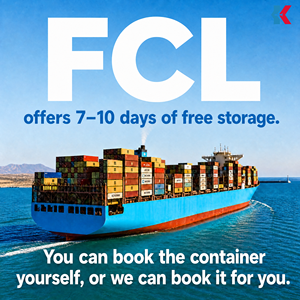
20GP 40HQ 40GP Container FCL Sea Freight Shipping Agent Port to Port Ocean Freight Forwarder International Logistics Service
Send an Inquiry
FCL Sea Freight From China to Spain with Delivery Support With Import Handling Shipping Agent
Send an Inquiry
Ocean Sea Freight Shipping Agent From China To USA UK Czech Ghana Oman Dubai Italy UAE
Send an Inquiry
China Sea Shipping Agents Freight Forwarding Fcl Logistics Service Container Door to Door
Send an Inquiry
Professional Shipping Agent DDP Door To Door Logistics Services Freight Forwarder Air Sea Shipping From China
Send an Inquiry25+
Years Industry Expertise
100%
KCS Compliance Tracking
20+
Global Direct Offices
600+
Enterprise Cargo Clients
1. Executive Overview: Navigating South Korea’s Bonded Warehousing Ecosystem
South Korea stands as one of the world's most sophisticated logistics and manufacturing epicenters. As a critical node in Asia-Pacific trade corridors connecting China, Japan, and Western hemispheric markets such as the United States, managing physical inventory within South Korean jurisdiction requires high regulatory precision. Foreign manufacturers, suppliers, and procurement entities exporting goods into South Korea frequently face capital tie-ups due to upfront import duties and Value-Added Tax (VAT). Herein lies the operational power of Bonded Warehousing Factories and Suppliers serving Korea.
Operated under strict regulatory oversight from the Korea Customs Service (KCS) and governed by the Customs Act of South Korea, a bonded warehouse (Bose-Changgo) or bonded factory (Bose-Gongjang) allows commercial entities to store, process, assemble, repackage, and re-export imported goods without incurring immediate customs duties or domestic taxes. By leveraging these designated free zones—such as the Incheon Airport Free Trade Zone (FTZ), Busan Port FTZ, and Pyeongtaek-Dangjin Hinterlands—enterprises turn supply chain friction into a lean, cash-flow-optimized competitive advantage.
Strategic Value Provision: Storing high-value components (e.g., semiconductor wafers, automotive modules, cosmetic raw materials) inside KCS-licensed bonded facilities defers customs duties until final entry into South Korea's domestic tariff area, while completely waiving duties if re-exported to third-party countries.
2. Bonded Factory (보세공장) vs. Bonded Warehouse (보세창고): Operational Distinctions
For international suppliers targeting South Korea, understanding the regulatory boundaries defined by the Korea Customs Service is paramount to establishing compliant supply chain workflows:
| Operational Dimension | Bonded Warehouse (보세창고) | Bonded Factory (보세공장) |
|---|---|---|
| Primary Function | Storage, inspection, sorting, consolidation, and simple value-added services (labeling, kitting). | Raw material processing, industrial manufacturing, precision assembly, and technical modification. |
| KCS Regulatory Scope | Focuses on stock inventory reconciliation, security, seal integrity, and storage duration control. | Requires strict yield ratio reporting (BOM checking), raw-material-to-finished-goods mapping under KCS supervision. |
| Customs Duty Status | Deferred until customs clearance into South Korean domestic territory. Exempt if re-exported. | Deferred on raw materials; calculated based on raw components or finished goods upon domestic entry. |
| Ideal Industry Application | Cross-border e-commerce, consumer packaged goods, retail spare parts, electronics distribution. | Semiconductor equipment manufacturing, automotive component assembly, chemical compounding. |
3. Financial Engineering: Capital Efficiency & Tariff Optimization
The implementation of bonded logistics within South Korea provides direct financial benefits that bolster enterprise balance sheets. Modern supply chains face severe challenges from fluctuating global interest rates and high holding costs. Using a bonded warehouse network serving Korea enables:
- Working Capital Preservation: Import duties ranging from 8% to over 30% (depending on HTS classification) plus 10% Korean VAT are held in abeyance until the exact moment of domestic sale.
- Mitigation of Re-Export Taxation: Goods moved from China, South Asia, or North America into a South Korean FTZ bonded facility for final testing or repackaging can be dispatched to destination markets across East Asia with zero tariff friction.
- Buffer Stock Management: Global suppliers can maintain high-volume inventory physically close to Korean OEMs (e.g., Hyundai, Samsung, SK Hynix) without transferring ownership or triggering customs entry until goods are requested on a Just-In-Time (JIT) schedule.
Targeted Korean Markets
Localized Application Scenarios
Tailored bonded factory and warehousing integration designed to meet the rigorous compliance standards of South Korea's major industrial sectors.
Semiconductor & Precision Tech Hubs
Serving the Gyeonggi-do cluster (Pyeongtaek, Yongin, Icheon). High-tech components enter bonded cleanroom warehouses adjacent to major foundries. Precision parts undergo temperature-controlled storage and lot-number tracking prior to final KCS declaration.
K-Beauty & Cosmetic Raw Material Staging
Global chemical and fragrance suppliers utilize bonded facilities near Incheon Port to store raw cosmetic compounds. Products undergo domestic KC Safety Certification compliance checks, localized labeling, and volume splitting before clearing customs.
Automotive & EV Battery OEM Logistics
Connecting supply chains between China, Southeast Asia, and Ulsan/Busan automotive complexes. Sub-assemblies stay in bonded status, allowing tier-1 suppliers to modify parts in licensed bonded factories before supplying assembly lines.
Cross-Border E-Commerce Fulfillment
Leveraging Incheon Free Economic Zone (IFEZ) bonded warehouses for B2C cross-docking. Orders placed by South Korean consumers clear customs rapidly via single-window electronic declarations (UNI-PASS) with expedited duty processing.
Transshipment Hub for APAC & US Lanes
Using Korea as a strategic multi-country consolidation point (MCC). Cargo originating across East Asia is consolidated within Busan FTZ bonded storage, then dispatched via ocean FCL or air freight to major US and European entry ports.
Perishable & Cold-Chain Bonded Storage
Temperature-controlled bonded facilities serving pharmaceutical, food processing, and specialized chemical imports. Maintains strict cold-chain compliance under KCS seal protocols from port offload to facility intake.
4. Future Trends: Smart Bonded Infrastructure & Regulatory Evolution in Korea
The landscape of South Korean logistics is undergoing digital transformation driven by government policy and global technological shifts. Overseas brands and logistics directors must align with these emerging trends:
A. Integration of AI-Driven KCS UNI-PASS Reporting
The Korea Customs Service has aggressively expanded its automated clearing network, UNI-PASS. Modern bonded warehouses serving Korea utilize direct API connectivity to transmit real-time RFID and barcode data upon container unsealing. This automated reporting eliminates manual inventory mismatches, reducing customs inspection hold-ups from days to minutes.
B. Expansion of Free Trade Zone (FTZ) Ecosystems
South Korea’s Ministry of Trade, Industry and Energy (MOTIE) continues to expand FTZ privileges around major logistics infrastructure, including Incheon International Airport (ICN), Busan New Port, and Gwangyang Port. These zones combine bonded warehouse capabilities with tax incentives, streamlined regulatory approvals, and relaxed labor rules for multinational logistics suppliers.
C. Mandatory Regulatory Compliance: KC Mark & Chemical Control Act
Regulatory scrutiny inside bonded zones has heightened regarding consumer safety and environmental standards. Imported electronics, toys, and machinery must secure KC (Korea Certification) approval before entering domestic commerce. Specialized bonded warehouses serve as authorized compliance centers where certified technicians apply required compliance labels, repackage units, and conduct safety testing prior to formal customs declaration.
Enterprise Superiority: Your Accountable Logistics & Bonded Gateway Partner
Backed by over two decades of global logistics mastery, Airlift USA operates as an FMC-licensed NVOCC, C-TPAT certified, and IATA-approved international freight matrix. We bridge manufacturing hubs across China, India, and Southeast Asia with South Korea and North American markets through accountable, technology-enabled supply chain infrastructure.
Our direct relationships with major ocean lines and air carriers ensure guaranteed vessel space, transparent freight structures, and seamless bonded customs entry through dedicated local logistics experts.
Procurement Guidance
Frequently Asked Questions
Answers to common regulatory, logistical, and customs clearance questions asked by procurement teams importing into South Korea.
What is the maximum allowed storage duration in a South Korean bonded warehouse?
Under the Korea Customs Act, goods stored in general bonded warehouses (Bose-Changgo) can typically remain for up to 1 year, with extensions available upon application to the district customs chief. However, in designated Free Trade Zones (FTZs) such as Incheon Airport FTZ or Busan Port FTZ, storage duration is virtually unlimited, provided the inventory remains compliant and properly reported.
Can value-added activities like KC labeling or testing be conducted inside a Korean bonded facility?
Yes. KCS regulations allow specific non-transformative value-added activities inside licensed bonded warehouses, including inspection, sorting, kitting, re-packaging, and the attachment of mandatory KC compliance labels. Major assembly or manufacturing requires a designated Bonded Factory (Bose-Gongjang) license.
How does customs duty deferral work when transferring goods from China to South Korea bonded zones?
Cargo shipped via ocean FCL/LCL or air freight from China enters South Korean sea/air ports under bonded transport status (Bose-Unsong). Goods are moved directly into the bonded warehouse without paying duty or VAT. Customs duties and 10% VAT are triggered only when a domestic customs declaration is submitted via UNI-PASS for final dispatch into Korea's domestic market.
What documentation is required to clear bonded cargo into South Korea's domestic market?
Standard entry requires a Commercial Invoice, Packing List, Ocean Bill of Lading (B/L) or Air Waybill (AWB), HTS Classification Code, Import Declaration Form, and where applicable, regulatory approvals such as KC Certificates, Quarantine Certificates, or MSDS for chemical goods.
Why should I partner with an FMC-licensed NVOCC for my South Korean trade routes?
An FMC-licensed NVOCC provides direct carrier contracting power, issues legally binding House Bills of Lading, and offers origin-to-destination financial accountability. This ensures negotiated container space, fixed rate schedules, and integrated customs handling across multi-country trade corridors.
Optimize Your Bonded Logistics & Freight Strategy Serving Korea
Consult with our international freight experts to establish lean bonded warehouse workflows, defer duty exposure, and secure reliable ocean and air capacity.