
Recommended China Logistics Solutions
Curated international freight forwarding services, door-to-door (DDP/DAP) routes, and container shipping solutions engineered for modern cross-border supply chains.
Best Price Freight Forwarder Fast Boat Sea FCL LCL Shipping Agent From China to Australia/Canada
- Express Ocean Routes & Priority Space
- Flexible FCL & LCL Consolidation
- Port-to-Door Tariff Optimization
Top 10 Freight Forwarder China To Usa Uk Spain Ddp Shipping Agent Logistics Services Sea Air Freight Agente De Compras
- Complete DDP Duty-Paid Services
- Multimodal Sea & Air Freight Integration
- Full Sourcing & Inspection Support
China Agent Offers Door-to-Door FCL Container Delivery Duty Paid to Samoa Papua New Guinea Marshall Islands Micronesia
- Pacific Islands Specialized Lane Coverage
- End-to-End Customs Tax Settlement
- Heavy Lift & Standard Container Handling
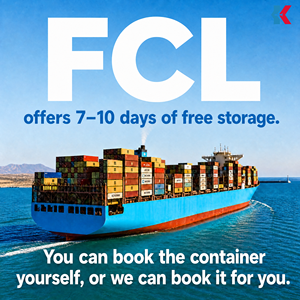
20GP 40HQ 40GP Container FCL Sea Freight Shipping Agent Port to Port Ocean Freight Forwarder International Logistics Service
- Direct Vessel Allocation Contracts
- 20GP, 40GP & 40HQ Equipment Access
- Precise Port-to-Port Scheduling
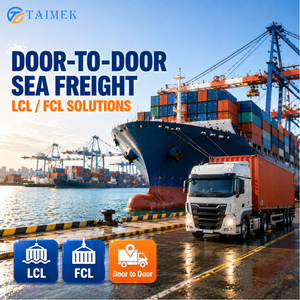
FCL Sea Freight From China to Spain with Delivery Support With Import Handling Shipping Agent
- European Union Customs Gateway Expert
- Inland Drayage & Bonded Warehouse
- Real-time EU Compliance Auditing
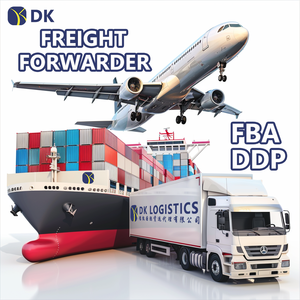
Ocean Sea Freight Shipping Agent From China To USA UK Czech Ghana Oman Dubai Italy UAE
- Global Middle East & Transatlantic Hubs
- Specialized Carrier Alliances (2M/Ocean/THE)
- Competitive Tier-1 NVOCC Spot Rates
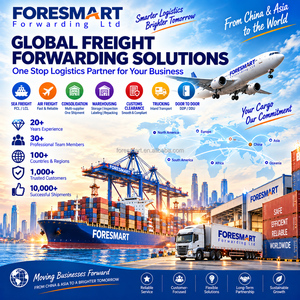
China Sea Shipping Agents Freight Forwarding Fcl Logistics Service Container Door to Door
- Integrated Factory Pickup & Stuffing
- Automated Bill of Lading Issuance
- Zero-Demurrage Harbor Protocol
Professional Shipping Agent DDP Door To Door Logistics Services Freight Forwarder Air Sea Shipping From China
- Tailored Air & Sea Charter Services
- End-to-End Last-Mile Parcel Delivery
- Multi-Country Warehousing Network
1. Strategic Overview: Sourcing Logistics Excellence in China
In the contemporary landscape of global trade, selecting the right partner among China logistics services manufacturers, freight forwarding agents, and non-vessel operating common carriers (NVOCC) has evolved from a tactical purchasing decision into a core strategic imperative. China’s manufacturing ecosystems generate billions of metric tons of cargo annually across major industrial hubs including the Pearl River Delta (Shenzhen, Guangzhou), the Yangtze River Delta (Shanghai, Ningbo), and the Bohai Rim (Qingdao, Tianjin). Managing the movement of this freight demands sophisticated multimodal architecture, deep regulatory compliance knowledge, and direct carrier volume access.
As enterprise procurement teams shift focus toward supply chain resiliency, cost predictability, and landed-cost transparency, evaluating China freight service providers requires scrutinizing specific technical credentials: Federal Maritime Commission (FMC) licensing, Customs-Trade Partnership Against Terrorism (C-TPAT) validation, International Air Transport Association (IATA) accreditations, and direct electronic data interchange (EDI) integrations with ocean lines.
2. Technical Architecture of Modern China Freight Logistics
Modern cross-border freight management relies on multi-layered operational modules designed to systematically absorb volatility in ocean space, freight rates, customs clearing bottlenecks, and port congestion. Industry-leading Chinese logistics factories operate as full-service integrators delivering bespoke services across the supply chain lifecycle:
FCL & LCL Consolidation
Optimizing space utilizing 20GP, 40GP, and 40HQ container specifications. Dedicated origin hubs execute Buyer's Consolidations, merging multi-factory orders into single FCL shipments to eliminate destination deconsolidation expenses.
Customs Clearance & ISF 10+2
In-house licensed customs broker networks manage Importer Security Filing (ISF 10+2) prior to vessel departure, alongside Harmonized Tariff Schedule (HTS) verification and Partner Government Agency (PGA) compliance (FDA, USDA, EPA).
Port Drayage & Bonded Warehousing
Rapid container pulling from terminal gates to mitigate port demurrage. Bonded warehousing facilities provide duty-deferred storage, cross-docking, transloading, and last-mile FTL/LTL freight distribution.
DDP vs. DAP vs. FOB Incoterms Comparison Matrix
For procurement officers sourcing goods from Chinese manufacturers, select Incoterms 2020 dictate operational control, risk transfer points, and overall landed-cost clarity. The comparative table below breaks down technical responsibilities:
| Incoterm 2020 | Export Customs (China) | Ocean / Air Freight | Import Duty & Taxes | Destination Drayage | Risk Transfer Point |
|---|---|---|---|---|---|
| FOB (Free on Board) | Seller Responsible | Buyer Responsible | Buyer Responsible | Buyer Responsible | Loaded on board vessel at China port |
| CIF (Cost, Insurance & Freight) | Seller Responsible | Seller Responsible | Buyer Responsible | Buyer Responsible | Loaded on board vessel at China port |
| DAP (Delivered at Place) | Seller Responsible | Seller Responsible | Buyer Responsible | Seller Responsible | Arrived at destination address (unloaded by buyer) |
| DDP (Delivered Duty Paid) | Seller Responsible | Seller Responsible | Seller Responsible | Seller Responsible | Delivered to final location with taxes/duties cleared |
3. Enterprise Strengths & Operational Capabilities
Operating as a premier tier-1 China logistics provider, our infrastructure bridges Asian industrial corridors with major destination markets across North America, Europe, Australia, Latin America, and the Pacific. We leverage deep domain expertise to safeguard supply chain continuity:
Direct Carrier Alliances: By holding direct NVOCC service contracts with ocean carriers including COSCO, MAERSK, CMA CGM, ONE, and MSC, we guarantee ocean freight container space even during seasonal space pinches and peak shipping months prior to Golden Week and Lunar New Year.
Comprehensive Tariff & Duty Auditing: International trade policies change rapidly. Our customs advisory arm conducts retrospective audits on past entry summaries, assisting importers in identifying overpaid Section 301 tariffs, establishing eligibility for IEEPA refund claims, and correctly structuring Antidumping and Countervailing Duty (AD/CVD) exemptions.
Integrated Global Footprint: With self-operated branch infrastructure across major US gateways (Los Angeles, New Jersey) and expanding Asian operational nodes in India, Vietnam, Bangladesh, Cambodia, and China, our team delivers complete end-to-end visibility. Importers gain real-time tracking, automated milestone notifications, and exception management via a single unified enterprise portal.
4. Future Procurement & Industry Development Trends
The global logistics sector is undergoing a profound structural evolution driven by geopolitical adjustments, technological disruption, and heightened environmental mandates. Enterprise procurement directors sourcing logistics services from China must align with four key emerging industry trends:
A. China+1 Multimodal Logistics Integration
As multinational corporations diversify manufacturing footprints across Vietnam, Thailand, Malaysia, and India, Chinese logistics providers are scaling into regional supply chain integrators. Modern China logistics factories do not merely route cargo out of Ningbo or Yantian; they orchestrate complex feeder networks, cross-border trucking, and feeder vessel feeder flows linking Southeast Asia assembly plants back to primary Chinese component supplier ecosystems.
B. Digitalization & Predictive Supply Chain Visibility
Legacy tracking relying on manual email updates is obsolete. Future-ready logistics service providers utilize direct API integrations with ocean carriers, terminal operating systems (TOS), and IoT-enabled container tracking sensors. This technology provides continuous real-time telemetry on vessel location, container internal temperatures, door-open alerts, and automated ETA calculation powered by machine learning algorithms.
C. Decarbonization and ESG-Compliant Freight Procurement
With the European Union’s Carbon Border Adjustment Mechanism (CBAM) and corporate Scope 3 emission reporting standards taking effect worldwide, sustainable freight options are moving from optional to mandatory. Leading China shipping providers are incorporating green ocean routes powered by Bio-LNG and Methanol-fueled vessels, alongside electrified port drayage fleets, providing verifiable CO2 footprint documentation per TEU-kilometer.
D. Automated Customs Compliance & Tariff Optimization Platforms
Cross-border tax governance is increasingly automated. AI-assisted classification tools analyze product specifications against complex regional tariffs, flagging classification anomalies, warning of potential AD/CVD penalties, and generating seamless entry documentation. This capability protects global enterprise importers from costly customs holds and post-summary penalties.
5. Logistics Procurement FAQ: Expert Guidance
Detailed technical answers to common operational, legal, and financial questions encountered by enterprise purchasing officers sourcing freight services from China.
Optimize Your China Logistics Architecture Today
Connect directly with our senior NVOCC freight specialists to review your trade lanes, optimize landed costs, and secure competitive ocean & air space contracts tailored to your enterprise needs.
Get Catalog