
Featured China Shipping & ISF Filing Services
Explore our standardized ocean container forwarding, air chartering, and automated U.S. Customs Importer Security Filing (ISF) solutions optimized for cross-border trade.
Best Price Freight Forwarder Fast Boat Sea FCL LCL Shipping Agent From China to Australia/Canada
Top 10 Freight Forwarder China To Usa Uk Spain Ddp Shipping Agent Logistics Services Sea Air Freight
China Agent Offers Door-to-Door FCL Container Delivery Duty Paid to Samoa Papua New Guinea Marshall Islands
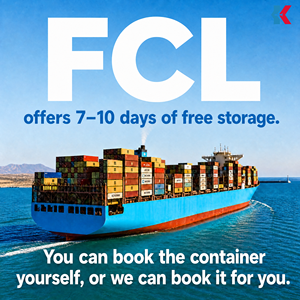
20GP 40HQ 40GP Container FCL Sea Freight Shipping Agent Port to Port Ocean Freight Forwarder Service
FCL Sea Freight From China to Spain with Delivery Support With Import Handling Shipping Agent
Ocean Sea Freight Shipping Agent From China To USA UK Czech Ghana Oman Dubai Italy UAE
China Sea Shipping Agents Freight Forwarding Fcl Logistics Service Container Door to Door

Professional Shipping Agent DDP Door To Door Logistics Services Freight Forwarder Air Sea Shipping
Navigating China-to-USA Importer Security Filing (ISF 10+2) & Customs Integrity
In cross-border oceanic trade between Mainland China industrial clusters and United States ports of entry, statutory compliance is the bedrock of supply chain velocity. For U.S. importers sourcing from China ISF filing factories and suppliers, navigating the U.S. Customs and Border Protection (CBP) 10+2 Importer Security Filing (ISF) requirement is not merely a administrative task—it is a critical risk-management mechanism designed to prevent costly vessel holds, customs audits, and liquidated damages penalties.
The 24-Hour Pre-Loading Mandate
CBP regulations stipulate that ISF data must be submitted electronically via an ABI (Automated Broker Interface) system at least 24 hours prior to cargo loading onto the vessel at origin ports like Shanghai, Ningbo, Shenzhen, or Qingdao. Failure to meet this precise timestamp exposes importers to automatic $5,000 penalties per late filing.
FMC-Licensed NVOCC Accountability
Operating as a licensed Non-Vessel Operating Common Carrier (NVOCC) empowers logistics providers to issue proprietary House Bills of Lading (HBL), negotiate direct carrier volume contracts, and seamlessly synchronize Automated Manifest System (AMS) filings with origin suppliers to eliminate data discrepancies.
Customs Duty & HTS Audit Precision
Correct Harmonized Tariff Schedule (HTS) 6-digit classification prevents duty overpayment and safeguards against Antidumping/Countervailing Duty (AD/CVD) infractions. In-house customs experts audit factory invoice descriptions prior to transmission.
Data Structure Requirements for 10+2 Importer Security Filing
To establish institutional trust and operational transparency under CBP regulations, importers must coordinate with China manufacturing suppliers to capture ten mandatory data elements prior to container sealing and terminal gate-in.
| Data Element # | Requirement Description | Responsible Entity | Verification Protocol |
|---|---|---|---|
| Element 1 | Seller Name & Address | China Factory / Supplier | Commercial Invoice matching Business License |
| Element 2 | Buyer Name & Address | U.S. Importer of Record | Purchase Order Verification & IOR Profile |
| Element 3 | Importer of Record Number / FTZ Applicant ID | U.S. Importer | CBP Form 5106 Active Registration |
| Element 4 | Consignee Number(s) | U.S. Recipient | EIN / IRS Tax ID Validation |
| Element 5 | Manufacturer (or Supplier) Name & Address | China Factory | MID (Manufacturer Identification) Code Audit |
| Element 6 | Ship-to Party Name & Address | Final Distribution Center / DC | Delivery Order & Warehouse Schedule |
| Element 7 | Country of Origin | China Exporter | Certificate of Origin (COO) Audit |
| Element 8 | Commodity Harmonized Tariff Schedule (HTS-6) | Customs Broker & Importer | 6-digit Tariff Audit & Binding Ruling Check |
| Element 9 | Container Stuffing Location | Consolidator / Factory loading bay | CFS Record or Factory Load Report |
| Element 10 | Consolidator (Stuffer) Name & Address | Freight Forwarder / Origin Agent | Container Load Plan (CLP) Verification |
Proactive Demurrage & Detention Mitigation Strategy
A missing or rejected ISF transmission triggers a "Do Not Load" (DNL) order from CBP at origin ports, or causes immediate customs holds upon vessel arrival at U.S. gateways like Los Angeles/Long Beach or New York/New Jersey. Container holds result in port demurrage charges escalating up to $300–$500 per day. Our synchronized tracking system ensures 100% pre-manifest verification to eliminate compliance-based port delays.
Future Procurement & Logistics Trends in China Sourcing
Supply chain dynamics between Asian production hubs and North American buyers are evolving rapidly under technological integration, regulatory updates, and geopolitical shifts.
AI-Automated Pre-Filing & Classification Validation
By 2026, customs entry and ISF data transmission will heavily rely on direct API integration between Chinese ERP factory systems and Automated Broker Interfaces (ABI). AI algorithms automatically cross-reference commercial invoices with CBP classification databases, reducing manual filing errors to near zero.
Multimodal Redirection & Regional Hub Diversification
Modern procurement strategies combine direct China origin shipments with regional consolidation in Southeast Asian hubs (Vietnam, Cambodia, Malaysia). Robust logistics providers offer unified multi-country ISF and customs management across diverse trade lanes on a single dashboard.
Tariff Auditability & IEEPA Duty Recovery
With ongoing shifts in U.S. trade policy, Section 301 tariffs, and International Emergency Economic Powers Act (IEEPA) reviews, global importers are auditing past entries for duty overpayments. Professional freight forwarders provide full entry historical logs to assist in filing administrative protests and duty drawback claims.
End-to-End Scope 3 Carbon Footprint Auditing
Global corporations increasingly mandate greenhouse gas emissions reporting for international freight. Leading NVOCC carriers provide carbon metric calculations per TEU across ocean vessel legs, port drayage, and final door delivery, aligning procurement with ESG standards.
Integrated Logistics Power & Regulatory Control
Combining proprietary technological infrastructure with boots-on-the-ground presence in both Mainland China and key North American ports.
Direct Carrier Contract Allocation
Direct Tier-1 contracts with global ocean lines (COSCO, Maersk, ONE, Matson) ensure guaranteed container space and competitive FCL/LCL ocean freight rates during peak shipping seasons.
C-TPAT Certified Supply Chain Security
Our Customs-Trade Partnership Against Terrorism (C-TPAT) accreditation reduces physical inspection rates by CBP at U.S. arrival terminals, expediting cargo release for immediate distribution.
Full In-House Brokerage & Bond Support
We manage Single Entry Bonds (SEB) and Continuous Customs Bonds in-house, enabling rapid ISF filings without requiring third-party intermediary authorization delays.
Frequently Asked Questions: China ISF Filing & Import Logistics
Expert insights on compliance rules, timing constraints, customs bonds, and operational best practices for U.S. buyers.
CBP enforces the 24-Hour Rule, which requires ISF 10+2 data to be successfully transmitted and accepted by U.S. Customs systems at least 24 hours prior to the cargo being loaded aboard the vessel at the Chinese origin port (e.g., Shanghai, Yantian, Ningbo). Submitting data after loading starts constitutes a late filing violation.
Inaccurate ISF filings can result in a CBP hold upon vessel arrival in the United States, trigger physical container inspections (VACIS/Tailgate exam), and expose the Importer of Record to liquidated damages of $5,000 per inaccurate filing (up to a maximum of $10,000 per shipment). Our team conducts pre-audits of supplier commercial data to correct discrepancies before submission.
Yes. CBP requires an active customs bond to secure the ISF transmission. Importers can utilize a Continuous Customs Bond (recommended for regular importers shipping 3+ times per year) or a Single Entry Bond (SEB) with ISF bond rider. We provide instant online continuous bond underwriting for qualified importers.
An FMC-licensed NVOCC acts as a carrier, issuing its own House Bills of Lading, securing space allocations directly with ocean vessel operators, and accepting legal liability for cargo movement. A traditional customs broker handles only import documentation. As an integrated NVOCC and broker, we manage both ocean physical transport and digital customs clearance under one roof.
No. The Lowest-Level Bill of Lading number (either the Master Bill of Lading for direct bookings or House Bill of Lading for NVOCC consolidations) is a mandatory linking element required by CBP to pair the ISF submission with the carrier’s Automated Manifest System (AMS) manifest.
Under Incoterms DDP, while your Chinese supplier or freight forwarder manages logistics and duty payments, the U.S. Importer of Record (or ultimate consignee) remains legally responsible under U.S. law for CBP compliance errors. Utilizing our licensed U.S. brokerage team ensures your DDP shipments adhere strictly to federal customs standards.
Demurrage fees are avoided by submitting ISF 10+2 data early (3-5 days before port gate-in), pre-clearing entry documentation 5 days prior to vessel ETA, utilizing C-TPAT certified supply chain partners, and pre-arranging harbor drayage trucking within free-time port windows (typically 4-5 calendar days).
Ready to Optimize Your China-to-USA Supply Chain?
Streamline your Importer Security Filing, secure direct vessel space allocations, and eliminate customs penalty risks with our licensed NVOCC team.