
Recommended Global Freight Solutions
Direct-from-source operational capabilities delivering FCL, LCL, Air Express, and end-to-end DDP door-to-door services from premier Chinese manufacturing hubs worldwide.
Professional Shipping Agent DDP Door To Door Logistics Services Freight Forwarder Air Sea Shipping From China
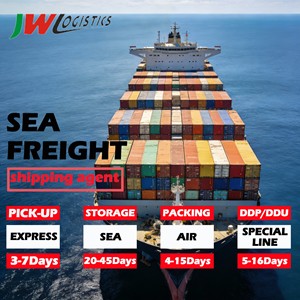
Cheapest Shipping Agent Sea Freight Forwarder DDP DDU LCL Express Sea Shipping Agent Dropshipping DHL Shipping To UK/USA/FR/CA
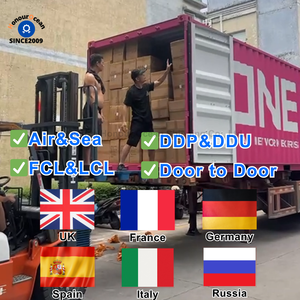
DDP FCL LCL Express Sea Freight Forwarder Door-to-Door Shipping Agent for UK France Germany Spain Italy Russia Europe From China
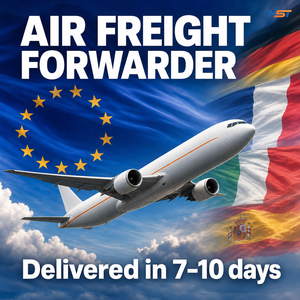
Europe Air Freight Forwarder Rapid Dispatch Within 24 Hours DDP Shipping Agent Non-Stop Flight Fast Delivery in 7-10 Days
Door to Door DHL FEDEX UPS Express Railway Air Shipping Agent China to Europe UAE USA South Africa Freight Forwarder
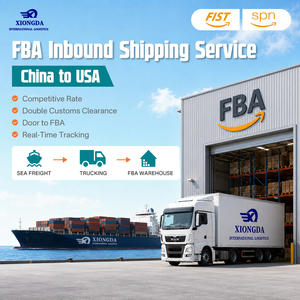
Amazon SPN FIST Certified Freight Forwarder Sea Shipping Agent From China to USA America Amazon FBA Inbound Shipping Service

Cheapest DDP DDU Door to Door Sea Freight Cargo FCL Forwarder 1688 Agent China Shipping Agent to Canada From China
Professional DDP Freight Forwarder For UK France Germany Air Express Shipping From Guangzhou To Lahore
Enterprise Infrastructure & Licensing Competencies
Operating as an FMC-Licensed NVOCC, C-TPAT Certified, and IATA-accredited logistics powerhouse delivering tier-one ocean and air freight solutions from China's primary manufacturing ports.
FMC & NVOCC Certification
Direct contract negotiations with ocean carriers (COSCO, MAERSK, CMA CGM, ONE) allow us to issue proprietary House Bills of Lading (HBL), guaranteeing space protection during peak shipping seasons.
C-TPAT & Compliance Shield
Full adherence to U.S. Customs and Border Protection security mandates. Expedited customs processing, dramatically reduced inspection frequencies, and full compliance auditing for duty minimization.
IATA Air Cargo Acceleration
Direct allocations on non-stop block space agreements (BSA) from major Chinese air transport hubs (PVG, CAN, SZX, HKG) ensuring rapid transit times of 3 to 7 days globally.
In-House ISF (10+2) & Brokerage
Direct electronic Data Interchange (EDI) transmission with CBP for Importer Security Filing prior to vessel departure, preventing steep non-compliance penalties ($5,000+ per violation).
Amazon SPN & FBA Excellence
Certified Service Provider Network (SPN) logistics offering direct palletization, Amazon FBA appointment scheduling, floor-loading optimization, and automated carrier Central booking.
End-to-End DDP/DDU Solutions
All-inclusive delivered duty paid execution. We absorb tariff management, customs clearance, bonded warehousing, and last-mile trucking across North America, Europe, and Asia-Pacific.
1. Architectural Dynamics of China Cargo Forwarding Manufacturing & Logistics
The global trade infrastructure has evolved beyond basic freight transportation into an intricate ecosystem of supply chain engineering. Selecting a top-tier China freight forwarding partner is no longer simply about buying shipping container space; it requires integrating factory floor production timelines with ocean vessel rotations, customs clearance protocols, and destination transloading capabilities.
China's key manufacturing provinces—Guangdong, Zhejiang, Jiangsu, and Shandong—each present unique port gateway operations. For example, maritime exports originating from Shenzhen (Yantian/Shekou) or Guangzhou (Nansha) require tailored routing strategies compared to Yangtze River Delta consolidation originating out of Shanghai or Ningbo-Zhoushan. A sophisticated freight forwarder operates as an extension of the manufacturing ecosystem, utilizing specialized consolidation hubs near major industrial clusters to assemble LCL (Less-Than-Container Load) shipments or manage FCL (Full-Container Load) factory stuffing with real-time telemetry.
Strategic Information Gain Insight: Modern cargo forwarding relies on digital synchronization. Integrating warehouse management systems (WMS) directly with factory Enterprise Resource Planning (ERP) tools reduces factory-to-port dwell times by an average of 36 hours, eliminating demurrage charges before cargo even reaches the departure terminal.
Customs Brokerage Architecture: Navigating Tariff Compliance and HTS Precision
In an era defined by volatile trade policies, Section 301 tariffs, Antidumping and Countervailing Duties (AD/CVD), and strict Partner Government Agency (PGA) enforcement (such as FDA, USDA, or EPA regulations), customs entry execution dictates bottom-line profitability. Freight forwarding excellence demands accurate Harmonized Tariff Schedule (HTS) classification, proper valuation modeling, and timely Importer Security Filing (ISF 10+2).
Our customs entry architecture employs rigorous pre-auditing processes. By verifying commercial invoices, packing lists, and certificates of origin prior to cargo departure from Chinese origin ports, importers mitigate the risks of customs holds, Intensive Exam (CBP Exam) fees, and severe delay penalties at destination ports such as Los Angeles/Long Beach, New York/New Jersey, Rotterdam, or Hamburg.
2. Procurement & Sourcing Trends in International Logistics (2026–2030)
As international buyers, enterprise brands, and e-commerce aggregators re-evaluate supply chain resilience, several macro trends are reshaping how cargo forwarding services are procured from Chinese manufacturing networks:
A. Transition to Turnkey DDP (Delivered Duty Paid) Models
Traditional FOB (Free on Board) procurement places the heavy burden of freight booking, customs clearance, marine insurance, and inland drayage onto the buyer. Modern buyers are shifting rapidly toward consolidated DDP models managed by specialized Chinese freight forwarders. Under a DDP structure, the freight partner assumes full accountability for the cargo journey—from factory gate pickup in China through foreign customs clearance to final warehouse delivery—eliminating unexpected accessorial charges, chassis split fees, and storage penalties.
B. Regionalization, Nearshoring, and Multimodal Sea-Land-Air Routing
While direct ocean freight remains the backbone of intercontinental trade, multimodal solutions are expanding exponentially. High-value electronics, fast-fashion apparel, and seasonal inventory increasingly leverage hybrid shipping models: China-Europe Railway Express (Yiwu/Chongqing to Duisburg/Malaszewicze), Sea-Air transshipment via Dubai/Singapore, or combined sea-truck transport servicing Southeast Asia and North America. Diversifying transport modes buffers enterprises against maritime bottleneck events and canal disruptions.
C. Data-Driven Scope 3 Carbon Reporting & Green Logistics
Environmental, Social, and Governance (ESG) compliance has moved from a corporate footnote to a critical procurement requirement. Global importers now require transparent CO2 footprint accounting across ocean and air legs. Modern freight forwarders must provide route-optimization analytics, carrier fleet fuel efficiency audits (Methanol/LNG dual-fuel vessel allocation), and carbon offset verification data alongside standard bill of lading documentation.
Multimodal Logistics Execution Matrix
| Transport Mode | Avg. Lead Time (Asia to US/EU) | Cost Efficiency Factor | Customs Risk Index | Ideal Cargo Profile |
|---|---|---|---|---|
| Air Express (DHL/UPS/FedEx) | 3 – 5 Days | Premium High | Low (Automated) | Samples, High-Value Electronics, Time-Critical Restocks |
| Direct Air Freight (IATA BSA) | 5 – 8 Days | High | Low-Medium | Perishables, High-Value Consumer Goods, Peak Season Supplies |
| China-Europe Railway Express | 12 – 18 Days | Moderate-High | Medium (Border Transit) | Industrial Machinery, Automotive Parts, Mid-Tier Apparel |
| Fast Sea Freight (Express Ocean) | 11 – 16 Days | Moderate | Medium | E-commerce Inbound (Amazon FBA), High-Velocity Retail |
| Standard Ocean FCL (20'/40'HC) | 22 – 35 Days | Maximum Economy | Medium-High (Port Congestion) | Bulk Raw Materials, Furniture, Heavy Equipment, Standard Goods |
| Ocean LCL Consolidation | 25 – 40 Days | High (Pay-per-CBM) | Medium (Shared Container) | Small-to-Medium Batch Orders, Trial Manufacturing Runs |
3. Industry Technological Evolution & Logistics Infrastructure Trends
The digitization of freight forwarding has elevated transparency across international shipping lanes. Enterprise buyers no longer accept manual daily tracking emails or vague status updates. The integration of modern technology stacks into freight forwarding infrastructure provides unprecedented operational clarity:
Real-Time IoT Telemetry & Container Tracking
Smart container technology utilizing GPS, optical light sensors, and temperature/humidity logging devices allows cargo owners to monitor real-time environmental conditions within containers. This level of visibility is particularly essential for cold-chain pharmaceutical products, sensitive chemical shipments, and high-precision electronic equipment transported across ocean routes.
Automated Warehouse Deconsolidation & Cross-Docking
Upon arrival at primary destination gateways (such as the Ports of Los Angeles, Long Beach, Tacoma, or Rotterdam), efficient deconsolidation at bonded container freight stations (CFS) is critical. Advanced cross-docking operations allow cargo to be offloaded from ocean containers, sorted by SKU, palletized to retailer specifications, and transferred directly onto domestic FTL (Full Truckload) or LTL (Less-Than-Truckload) carriers within 24 to 48 hours of vessel discharge.
Cargo Procurement & Logistics FAQ
Detailed technical answers to common questions about Chinese freight forwarding operations, customs procedures, Incoterms, and supply chain management.
What is the difference between a Freight Forwarder and a Licensed NVOCC?
A Freight Forwarder acts primarily as an agent organizing transportation between shippers and ocean/air carriers. A Non-Vessel Operating Common Carrier (NVOCC), licensed by governing authorities such as the U.S. Federal Maritime Commission (FMC), acts as a virtual ocean carrier. NVOCCs issue their own proprietary House Bills of Lading (HBL), enter into direct rate contracts with ocean shipping lines, assume carrier liability for the cargo, and offer guaranteed container allocation during tight market conditions.
How does DDP (Delivered Duty Paid) differ from DDU (Delivered Duty Unpaid)?
Under DDP shipping terms, the seller (or their designated freight forwarder) assumes full financial and operational responsibility for the complete transit journey. This includes origin trucking, export customs, ocean/air freight, destination customs clearance, payment of all import duties and taxes, port handling fees, and final door delivery. Under DDU (or DAP - Delivered at Place), the buyer is responsible for settling local customs duties, taxes, and import clearance fees prior to cargo release.
Why is the ISF (Importer Security Filing) 24-Hour Rule critical for US-bound ocean shipments?
U.S. Customs and Border Protection (CBP) mandates that Importer Security Filing (commonly known as ISF 10+2) must be transmitted electronically at least 24 hours before cargo is loaded onto a vessel destined for the United States at a foreign port. Failure to submit accurate ISF data within this strict timeframe can result in mandatory $5,000 penalties per late filing, customs holds, do-not-load orders, and extensive inspection delays upon vessel arrival.
How can importers mitigate Demurrage and Detention charges at destination ports?
Demurrage (fees charged for containers remaining inside the port terminal past free time) and Detention (fees charged for holding empty containers past free time outside the port) are mitigated by establishing pre-clearance customs entries prior to vessel arrival, utilizing bonded drayage carriers with pre-booked port pickup appointments, securing extended free-time agreements (e.g., 10-14 days) via NVOCC contract clauses, and implementing rapid cross-docking at destination facilities.
What structural requirements must be met for shipping goods into Amazon FBA fulfillment centers?
Shipping to Amazon FBA requires strict compliance with Amazon's inbound logistical standards. Cargo must be properly labeled with FBA carton labels and ASIN barcodes. Pallets must conform to standard dimensions (48" x 40" wood pallets in North America), stay under maximum height and weight thresholds, be stretch-wrapped securely, and have delivery appointments scheduled via Amazon's Carrier Central portal by an authorized freight forwarder.
When should an enterprise choose Ocean FCL versus Ocean LCL consolidation?
Ocean FCL (Full Container Load) is optimal when cargo volume exceeds 13 to 15 cubic meters (CBM) or when total shipment weight justifies reserving a standard 20-foot container. FCL offers faster transit times as it bypasses origin consolidation and destination CFS deconsolidation. Ocean LCL (Less-Than-Container Load) is cost-effective for smaller volumes (1 to 12 CBM), as the shipper pays exclusively for the volume used within a shared container hub.
What role does Cargo Insurance play in international logistics?
Carrier liability under international maritime law (Hague-Visby Rules) is strictly limited (often to as little as $500 per package or customary freight unit). Comprehensive Marine Cargo Insurance (All-Risk Coverage) protects the shipper against physical loss, damage, theft, vessel accidents, jettisoning, and General Average contributions from door to door, compensating for the full commercial invoice value plus freight costs.
How do Antidumping (AD) and Countervailing Duties (CVD) impact shipping costs?
AD/CVD duties are imposed by governments to protect domestic industries from unfairly priced foreign imports. These duties can exceed 100% to 500% of the commercial invoice value. A sophisticated freight forwarder assists importers in conducting pre-shipment HTS code audits and manufacturer origin reviews to identify potential AD/CVD liabilities, preventing unexpected financial assessments upon entry clearance.
Optimize Your Global Cargo Strategy Today
Partner with an FMC-licensed NVOCC, C-TPAT certified, and IATA accredited freight manufacturer and logistics operator. Get direct access to competitive ocean rates, pre-cleared customs workflows, and dedicated supply chain engineering support.
Get a Quote