
Recommended Ocean Freight & LCL Solutions
Direct carrier-contracted LCL consolidations, DDP door-to-door delivery, and multi-port freight forwarding solutions built for scalable global trade.
Best Price Freight Forwarder Fast Boat Sea FCL LCL Shipping Agent From China to Australia/Canada
Top 10 Freight Forwarder China To Usa Uk Spain Ddp Shipping Agent Logistics Services Sea Air Freight Agente De Compras
China Agent Offers Door-to-Door FCL Container Delivery Duty Paid to Samoa Papua New Guinea Marshall Islands Micronesia
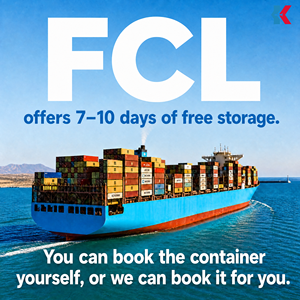
20GP 40HQ 40GP Container FCL Sea Freight Shipping Agent Port to Port Ocean Freight Forwarder International Logistics Service
FCL Sea Freight From China to Spain with Delivery Support With Import Handling Shipping Agent
Ocean Sea Freight Shipping Agent From China To USA UK Czech Ghana Oman Dubai Italy UAE
China Sea Shipping Agents Freight Forwarding Fcl Logistics Service Container Door to Door

Professional Shipping Agent DDP Door To Door Logistics Services Freight Forwarder Air Sea Shipping From China
Executive Summary: Navigating Global Less-Than-Container Load (LCL) Freight
In the contemporary international supply chain landscape, Less-than-Container Load (LCL) shipping serves as the linchpin for agile manufacturing, just-in-time (JIT) inventory strategies, and mid-market global trade expansion. Unlike Full Container Load (FCL) transit, which demands minimum cargo volumes of 15 to 28 cubic meters (CBM) to achieve cost efficiency, LCL enables importers and exporters to share standardized 20GP and 40HQ ocean containers. This democratizes global trade access, lowering working capital requirements while maintaining predictable maritime schedules.
However, selecting the right partner from the ocean of freight forwarders, Non-Vessel-Operating Common Carriers (NVOCCs), and logistics brokers requires rigorous evaluation. A true Tier-1 LCL supplier does not merely aggregate cargo space; they execute complex Container Freight Station (CFS) origin consolidation, optimize volumetric freight ratios, handle automated Importer Security Filings (ISF 10+2), and navigate complex customs clearance, antidumping/countervailing duties (AD/CVD), and final-mile container drayage.
Cost Optimization
Pay strictly for utilized volumetric space (per CBM/Ton). Eliminate container phantom-space costs while securing priority vessel allocations.
C-TPAT & FMC Certified
Protected by licensed NVOCC House Bills of Lading (HBL), C-TPAT supply chain security compliance, and direct CBP broker integration.
Door-to-Door DDP Coverage
Seamless execution from factory pickup in Asia to domestic US/EU bonded warehousing, including complete tax, duty, and drayage management.
Evaluation Matrix: Benchmarking Top LCL Ocean Freight Suppliers
When procuring LCL ocean freight capabilities, enterprise buyers must audit freight forwarders across structural operational metrics rather than relying solely on base ocean freight quotes. Base rates often mask origin CFS handling fees, destination deconsolidation surcharges, and terminal documentation fees.
| Evaluation Parameter | Tier-1 NVOCC Direct Consolidators | Traditional Freight Brokers | Digital Freight Platforms |
|---|---|---|---|
| House Bill of Lading (HBL) Authority | Licensed NVOCC (FMC / Ministry of Transport) | Third-party Agent HBL | Algorithmic Re-seller Contract |
| CFS Warehouse Oversight | Direct / Dedicated Operating Hubs | Sub-contracted Shared Facilities | Third-party Logistics (3PL) Partners |
| Volumetric Weight Ratio Standard | 1 CBM = 1,000 kg (Ocean Standard) | Varies (Frequent hidden min CBMs) | Dynamic Automated Ratio |
| ISF 10+2 & Customs Integration | In-house Licensed Customs Brokers | Outsourced Duty Agents | Automated API Submissions |
| Demurrage & Free-Time Protection | Direct Carrier Allocation (7-14 Days) | Standard Port Free-Time (3-5 Days) | Variable depending on feeder line |
Expert Operational Insight: The CBM vs. Weight Break-Even Point
LCL freight charging is based on the Revenue Ton (RT) principle, calculated as 1 CBM = 1,000 kg (or 1:1,000 ratio). If your cargo volume reaches 13 to 15 CBM within a dense commodity class, the aggregated CFS consolidation and deconsolidation fees often equal the flat ocean rate of a full 20GP container. Always perform a dual-quote audit when cargo exceeds 12 CBM.
Future Procurement Trends in LCL Ocean Freight (2026–2030)
The global ocean freight landscape is undergoing structural realignments driven by environmental regulations, geopolitical diversification, and technological advancements. Enterprise procurement directors must adapt their LCL strategies to reflect four macro trends:
1. AI-Driven Dynamic Co-Loading
Traditional LCL consolidation relies on static weekly sailing schedules, often resulting in delayed container closures. Next-generation LCL suppliers utilize artificial intelligence algorithms to dynamically consolidate cargo from multiple regional suppliers into unified containers. This reduces origin CFS dwell time by up to 35% and improves space utilization rates near 98% capacity.
2. Decarbonization & IMO 2030 Compliance
With the International Maritime Organization (IMO) enforcing stricter Carbon Intensity Indicator (CII) and Energy Efficiency Existing Ship Index (EEXSI) targets, major ocean carriers are penalizing inefficient vessel utilization. LCL consolidators offering eco-skids, route optimization, and biofuel-backed carbon offset tracking are fast becoming mandatory for ESG-compliant enterprise supply chains.
3. Multi-Origin Regional Consolidation Hubs
As manufacturing shifts under "China + 1" and nearshoring models, supply chains are fragmenting across Vietnam, India, Bangladesh, Cambodia, and Malaysia. Modern LCL exporters are establishing centralized offshore CFS hubs (such as Singapore, Port Klang, and Busan) to merge multi-country components into single destination-bound containers, reducing overall landed duty exposure.
4. Digital Bills of Lading & Smart Tracking
Paper Bills of Lading are being phased out in favor of UN/CEFACT compliant e-BL formats, backed by immutable blockchain verification. Coupled with IoT container sensors, enterprise buyers now gain real-time visibility over temperature, humidity, shock, and exact GPS coordinates during transoceanic transit.
Strategic Enterprise Advantages: Why Partner with Airlift USA Inc.
Founded in 1999, Airlift USA Inc. operates as a fully licensed Non-Vessel-Operating Common Carrier (NVOCC) certified by the Federal Maritime Commission (FMC), paired with C-TPAT supply chain security validation and IATA air cargo certification. We bridge the critical operational gap between manufacturing hubs across Asia and destination distribution networks in North America and Europe.
- FMC-Licensed NVOCC Control: We issue our own House Bills of Lading, granting complete legal accountability, direct ocean carrier negotiation privileges, and fixed rate stability across peak shipping seasons.
- Dual-End Global Footprint: Operating our own dedicated corporate offices in the United States (Los Angeles, New Jersey) and across South/Southeast Asia (14 strategic hub offices in India, Vietnam, Bangladesh, Cambodia), ensuring operational control without relying on unverified third-party brokers.
- Customs & Tariff Audit Expertise: Beyond freight execution, our in-house customs brokerage team specializes in HTS code optimization, Antidumping/Countervailing Duty (AD/CVD) compliance, and Section 301 / IEEPA duty refund auditing.
- End-to-End Visibility Platform: Real-time container tracking integrated directly via carrier APIs, paired with proactive automated alerts for demurrage risks, port delays, and ISF compliance checkpoints.
Frequently Asked Questions (FAQ) – LCL Procurement & Compliance
An NVOCC (Non-Vessel-Operating Common Carrier) is licensed by government regulatory authorities (such as the US FMC) to issue their own House Bills of Lading, publish independent freight tariffs, and enter into direct master volume contracts with ocean vessel lines. A freight forwarder acts primarily as an intermediary broker. Airlift USA combines both: operating as an FMC-licensed NVOCC with full carrier pricing authority while providing end-to-end forwarder services including customs brokerage, ISF filings, and drayage.
LCL freight rates are quoted per Revenue Ton (RT), which equals 1 Cubic Meter (CBM) or 1,000 Kilograms (1 Metric Ton), whichever yields higher revenue for the carrier. Hidden destination costs often occur when unethical forwarders offer zero or negative ocean freight base rates to suppliers in Asia, then offset expenses by levying exorbitant destination Container Freight Station (CFS) deconsolidation, documentation, and handling fees on the buyer. To eliminate this risk, always insist on a transparent DDP or DAP quote specifying all destination CFS terminal tariffs upfront.
US Customs and Border Protection (CBP) mandates that ISF data (10 data elements from the importer and 2 from the carrier) must be successfully transmitted at least 24 hours prior to the ocean container being loaded onto the vessel at the foreign port of departure. For LCL shipments, because your cargo is co-loaded with other shippers' goods, a delayed or inaccurate ISF filing on your part can cause CBP to place a hold on the entire container, leading to severe CFS storage fees and potential CBP fines of $5,000 per violation.
The financial break-even point typically occurs between 13 CBM and 15 CBM. While a 20GP container holds roughly 28–29 usable CBM of cargo, the total landed cost of LCL (including origin CFS consolidation, per-CBM ocean freight, and destination deconsolidation) scales linearly. At approximately 14 CBM, the fixed flat rate of booking an FCL container becomes more economical, while eliminating the additional 3 to 5 days required for origin consolidation and destination deconsolidation.
Under Incoterms 2020 DDP terms, the seller/shipping agent assumes total responsibility for the entire transportation process. This includes factory pickup, origin port customs clearance, ocean transit, destination port entry, payment of customs duties, taxes, AD/CVD compliance, and final drayage delivery to your facility. DDP eliminates administrative burdens and unexpected accessorial charges, allowing companies to lock in precise landed product costs upfront.
Conclusion & Strategic Action Plan
Navigating global LCL freight requires a delicate balance of volumetric optimization, strict compliance adherence, and strategic carrier selection. By partnering with an FMC-licensed, C-TPAT certified NVOCC equipped with localized infrastructure at both origin and destination ports, enterprise shippers can convert supply chain volatility into a distinct competitive advantage.
Optimize your landed cost structure, eliminate CFS fee surprises, and streamline your international trade pipeline today.