
Turnkey OEM Logistics & Order Fulfillment Portfolio
Streamline your cross-border supply chain with our FMC-licensed NVOCC services, direct ocean freight contracts, and DDP door-to-door delivery networks.
Top 10 Freight Forwarder China To Usa Uk Spain Ddp Shipping Agent Logistics Services Sea Air Freight Agente De Compras
China Agent Offers Door-to-Door FCL Container Delivery Duty Paid to Samoa Papua New Guinea Marshall Islands Micronesia
20GP 40HQ 40GP Container FCL Sea Freight Shipping Agent Port to Port Ocean Freight Forwarder International Logistics Service
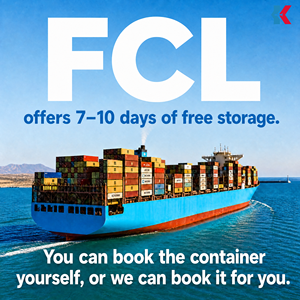
FCL Sea Freight From China to Spain with Delivery Support With Import Handling Shipping Agent
Ocean Sea Freight Shipping Agent From China To USA UK Czech Ghana Oman Dubai Italy UAE
China Sea Shipping Agents Freight Forwarding Fcl Logistics Service Container Door to Door
Professional Shipping Agent DDP Door To Door Logistics Services Freight Forwarder Air Sea Shipping From China
25+
Years of Logistics Leadership (Since 1999)
FMC & C-TPAT
Licensed NVOCC & Certified Security
20+
Owned Global Offices (USA, India, SEA)
600+
Enterprise B2B Import Clients
Enterprise Advantages: Why Partner with Airlift USA Inc.
Navigating global OEM procurement requires vastly more than matching factory line production schedules. It demands a fully integrated logistics architecture capable of mitigating regulatory delays, managing duty exposure, and offering total container visibility from foreign origin points to domestic distribution centers. Founded in 1999, Airlift USA Inc. operates as a family-run, C-TPAT certified, and Federal Maritime Commission (FMC)-licensed Non-Vessel Operating Common Carrier (FMC-Licensed NVOCC #488510).
FMC-Licensed NVOCC Control
Unlike standard unbonded freight brokers, as a licensed NVOCC we issue our own House Bills of Lading (HBL) and negotiate directly with vessel-operating common carriers (VOCCs). This grants our clients priority space allocations during peak shipping seasons and fixed contract rates.
In-House Compliance & ISF 10+2
We eliminate expensive Customs and Border Protection (CBP) penalties by filing Importer Security Filings (ISF 10+2) in-house prior to ocean loading. Our compliance experts oversee HTS tariff classifications, AD/CVD duty evaluations, and Partner Government Agency (FDA, USDA) clearances.
Owned Global Infrastructure
Airlift operates dedicated offices across the primary manufacturing corridors: USA (Los Angeles, New Jersey), India (14 regional hubs including Nhava Sheva, Mundra, Chennai, and Delhi), Vietnam (Ho Chi Minh City), Bangladesh (Dhaka), and Cambodia (Phnom Penh), augmented by WCA partner networks in China.
Custom OEM Order Fulfillment: Navigating Strategic Sourcing & Multimodal Logistics
Original Equipment Manufacturer (OEM) fulfillment is undergoing a paradigm shift. In an era dominated by supply chain volatility, protectionist tariff shifts (such as Section 301 duties and IEEPA anti-circumvention investigations), and hyper-compressed product lifecycles, global brand owners can no longer treat contract manufacturing and international logistics as isolated silos. True operational efficiency requires seamless coordination between assembly line output, port-of-origin consolidation, customs entries, and last-mile container drayage.
1. The Evolution of OEM Supply Chains: From Contract Assembly to Turnkey Fulfillment
Historically, OEM relationships operated under a simple Free on Board (FOB) paradigm: the overseas factory fabricated products according to technical specifications, handed the freight off at the foreign loading port, and shifted all financial risk and logistical friction onto the buyer. Today, enterprise procurement directors require a sophisticated approach: Turnkey OEM Order Fulfillment.
Under this modern model, OEM suppliers and their logistics management partners provide end-to-end integration across multiple distinct stages:
- Sub-Assembly and Component Kitting (CKD/SKD): Goods are categorized into Complete Knock-Down (CKD) or Semi-Knock-Down (SKD) units to optimize freight density, reduce transport volumes, and minimize duty brackets based on Tariff Schedule rulings.
- Custom Packaging & Barcode Compliance: Applying automated Amazon FBA labeling, retail-ready custom packaging, GTIN/SSCC inner carton markings, and RFID pallet tagging at origin manufacturing hubs in China, India, or Vietnam before ocean transit.
- Multimodal Freight Engineering: Strategically blending Full Container Load (FCL), Less-than-Container Load (LCL Consolidation), and time-critical Air Cargo based on factory completion lead times and target retail arrival windows.
- Customs Pre-Clearance & Port Drayage: Transmitting ISF data 24+ hours prior to vessel departure, preparing single-entry or continuous customs bonds, and pre-booking harbor drayage drivers to prevent port demurrage and container detention penalties.
2. Mitigating Tariff Exposure & HTS Classification Risks
Custom OEM product procurement frequently encounters severe customs bottlenecks due to misclassified Harmonized Tariff Schedule (HTS) codes. A single digit discrepancy in product classification can alter base duty rates from 0% to over 25%, or suddenly expose the shipment to crippling Anti-Dumping and Countervailing Duties (AD/CVD).
Our compliance team performs pre-shipment tariff reviews to ensure accurate tariff treatment. For instance, when sourcing OEM electronics, automotive sub-assemblies, or precision plastic components from Asia, we analyze whether multi-country component sourcing qualifies under specific Rules of Origin (ROO) guidelines. Furthermore, for US importers that have historically overpaid tariffs under invalidated IEEPA executive orders, our audit services help execute retroactive duty recovery entries and administrative protests through US Customs and Border Protection.
FCL vs. LCL Optimization Thresholds
While LCL (Less-than-Container Load) offers flexible inventory control for smaller OEM trial runs, handling fees (CFS charges) escalate quickly. When an OEM shipment volume reaches approximately 13 to 15 Cubic Meters (CBM), switching to a 20-foot FCL (Full Container Load) significantly lowers landed per-unit transport costs while reducing port deconsolidation delays by 3 to 5 business days.
Demurrage & Detention Protection
Unanticipated container storage fees at US terminals (Los Angeles/Long Beach, NY/NJ, Savannah) can cost upwards of $300-$500 per day per box. Through our real-time platform tracking and pre-cleared customs documentation, container pickups are systematically booked within initial carrier free-time allowances.
Future Procurement Trends in Custom OEM Order Fulfillment
As corporate procurement officers redesign their global sourcing networks for the next decade, several key operational trends are transforming how OEM order fulfillment manufacturers and suppliers are evaluated:
The "China + N" Diversification Strategy
Global brands are shifting from single-source reliance on mainland China toward multi-node production footprints across South and Southeast Asia. Enterprise supply chains are expanding assembly lines into India, Vietnam, Bangladesh, and Cambodia. Partnering with a logistics provider like Airlift—with physical offices across all these origin nodes—ensures uniform operational SOPs across fragmented trade lanes.
Origin Cargo Management (OCM)
Forward-thinking buyers are relocating traditional domestic warehouse fulfillment operations directly to foreign origin ports. By executing order-level pick-and-pack, barcode tagging, and direct-to-store container loading inside Asian export hubs, importers drastically reduce domestic US labor overhead and expedite final customer delivery timelines.
Predictive Supply Chain Visibility
Manual tracking updates via static spreadsheets are obsolete. Modern OEM procurement workflows demand automated, API-driven container tracking, predictive vessel ETA reporting, and automated milestone notification systems. Importers require instant visibility over ocean transit delays to dynamic reschedule downstream assembly and distribution personnel.
Industry Development & Supply Chain Automation Trends
The convergence of industrial automation, smart warehousing, and digital freight networks is revolutionizing the international custom OEM manufacturing ecosystem. Key technological developments include:
A. IoT-Enabled Smart Container Monitoring
High-value OEM components—such as sensitive medical electronics, automotive microchips, and aerospace assemblies—require environmental control during transoceanic transit. IoT telemetry sensors mounted inside ocean containers transmit real-time data regarding temperature, humidity, shock vibrations, and unauthorized door openings. This safeguards inventory integrity and simplifies marine insurance claim settlements in the event of transit damage.
B. Automated Bonded Warehousing & Cross-Docking
US-based bonded warehouses are increasingly deploying Autonomous Mobile Robots (AMRs) and automated sorting systems to execute rapid container transloading. Upon vessel discharge at port terminals, containers are immediately drayaged to near-port bonded facilities. There, import pallets are stripped, scanned, cross-docked onto domestic FTL (Full Truckload) trailers, and dispatched directly to regional distribution nodes without lingering in ocean terminal storage yards.
C. Digital Customs Integration & AI-Driven HTS Auditing
US Customs and Border Protection is continuously updating electronic entry filing interfaces. Advanced AI classification engines audit commercial invoices against historical customs ruling databases to suggest precise 10-digit HTS code pairings. This dramatically reduces human filing errors, speeds up entry clearance times, and helps prevent post-clearance CBP Form 28 (Request for Information) inquiries.
Frequently Asked Questions (FAQ) for OEM Procurement & Shipping
Essential guidance for corporate procurement officers, supply chain directors, and global sourcing specialists.
What is the difference between an OEM Manufacturer and an NVOCC Logistics Provider?
An OEM (Original Equipment Manufacturer) focuses on physical product fabrication based on buyer specifications. An NVOCC (Non-Vessel Operating Common Carrier), like Airlift USA, acts as the licensed ocean carrier issuing House Bills of Lading, managing international container shipping, customs pre-clearance, and final warehouse delivery. Integrated OEM supply chains require close collaboration between both entities to manage landed costs.
Why is ISF (10+2) filing critical for ocean freight imported from Asia to the USA?
The Importer Security Filing (ISF 10+2) is a mandatory US Customs regulation requiring ten data elements from the importer and two from the ocean carrier. It must be filed at least 24 hours prior to cargo being loaded onto a US-bound vessel at the foreign port. Failure to file on time results in automated CBP fines of $5,000 per violation and causes cargo holds at US arrival ports.
Should I purchase OEM products under FOB, DDP, or CIF Incoterms?
For enterprise buyers, purchasing under FOB (Free on Board) combined with an independent FMC-licensed NVOCC gives you total control over freight rates, carrier routing, and customs entry accuracy. While DDP (Delivered Duty Paid) appears convenient because the seller handles freight, it often hides inflated shipping markups and leaves the buyer vulnerable if the overseas supplier misclassifies goods or underpays US customs duties.
How do I mitigate Anti-Dumping (AD) and Countervailing Duties (CVD) on custom manufactured imports?
AD/CVD duties are applied to goods sold below market value or subsidized by foreign governments. To prevent unexpected duties that can exceed 100% of product value, our compliance team reviews your OEM product composition, steel/aluminum content, and origin manufacturing processes prior to purchase order execution to confirm whether an active AD/CVD order applies.
What shipping modes are recommended for time-sensitive OEM product launches?
For urgent market launches or prototype approvals, IATA-certified Air Freight offers lead times of 3 to 5 days. For standard bulk production, Fast Boat ocean services (such as Matson or premium ocean strings) offer transit times of 11 to 14 days from East Asia to US West Coast ports, providing an optimal balance between air freight cost and slow-steaming ocean transport.
Can Airlift handle warehousing, kitting, and last-mile trucking in the United States?
Yes. Beyond international ocean and air freight, Airlift manages full harbor drayage from major US container terminals (Los Angeles, Long Beach, New York/New Jersey, Savannah, Houston) to our bonded warehouse facilities. We provide short-term and long-term storage, pallet transloading, cross-docking, and final-mile FTL/LTL truck delivery straight to your distribution centers.
How does C-TPAT certification benefit my import supply chain?
C-TPAT (Customs-Trade Partnership Against Terrorism) is a voluntary supply chain security program led by US Customs and Border Protection. Because Airlift USA is C-TPAT certified, our clients' shipments enjoy reduced CBP examination rates, prioritized processing during port inspections, and access to expedited customs clearance lanes.
How can I track my OEM container shipment status in real time?
Our clients receive access to the Airlift online tracking platform. Through direct API integrations with ocean carriers, terminal operators, and rail providers, you can monitor container locations, vessel sailings, customs status, and estimated delivery dates 24/7 without needing manual email updates.
Optimize Your Global OEM Supply Chain Today
Speak with an experienced freight forwarding and customs compliance specialist. Get tailored ocean routing, transparent freight quotes, and expert tariff mitigation advice for your custom OEM products.