
Tariff-Prepaid & Compliance Logistics Infrastructure
Seamless B2B trade execution from origin factories in China to destination fulfillment hubs across North America and Europe.
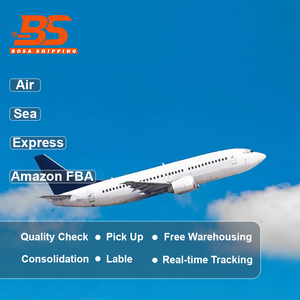
Top Rated Logistic Company for Canada/USA/Australia/Europe Air+Express Freight Forwarder Insurance FBA Prep Labeling Service
Full multimodal air & express freight architecture featuring insured door-to-door transit, automated FBA palletization, compliant barcoding, and real-time customs duty handling.
Get Catalog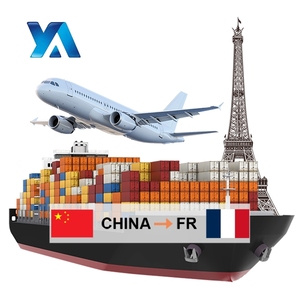
Tariff Prepaid Shipping To France Oversized Cargo Trucking Service Specialized Trade Compliance Forwarder
Specialized industrial oversized cargo transport with integrated EU import VAT deferral, preliminary customs valuation auditing, and tariff prepaid (DDP) logistics options.
Get Catalog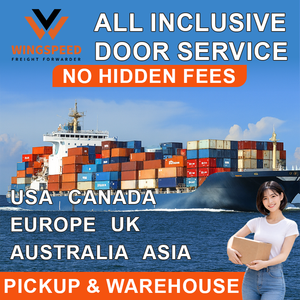
Double Clearance Tax Air And Sea Freight Forwarding Agent DDP China To USA,Canada For Amazon Fba Business Imports
Turnkey DDP ocean FCL/LCL and air freight solutions designed for Amazon Sellers and B2B importers, guaranteeing compliant HTS classification and seamless border release.
Get Catalog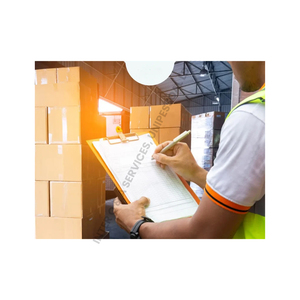
Exporters Professional Quality Assurance International Trade Compliance Pre-Shipment Inspection Service Custom Brand Detailed
Comprehensive factory audit, pre-shipment quality inspection, and country-of-origin verification to satisfy international trade standards and mitigate tariff penalties.
Get Catalog
Shenzhen General Taxpayer Cross Border Ecommerce 9610 9710 9810 Compliance Customs Declaration And Tax Refund
Direct integration with China Customs under codes 9610, 9710, and 9810, supporting legal export tax rebates, formal enterprise compliance, and fast-track clearance.
Get Catalog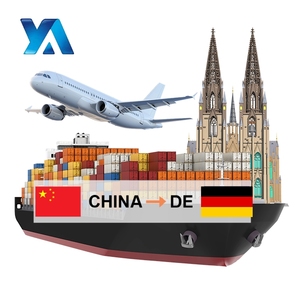
Tariff Prepaid Shipping To Germany Oversized Cargo Trucking Service Specialized Trade Compliance Forwarder
Direct containerized and heavy-lift trucking solutions to Germany, offering full custom clearance paperwork, customs tax pre-payment, and final destination drayage.
Get Catalog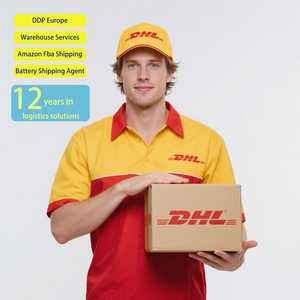
Germany France Buyer Private Logistics Agent Customs Duty Optimization VAT Compliance Tax Refund Services 24/7 Support Insurance
Bespoke logistics stewardship for European importers focusing on fiscal representation, import VAT settlement optimization, marine insurance, and round-the-clock support.
Get Catalog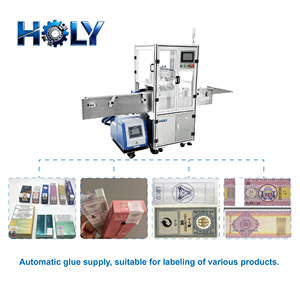
Anti-Counterfeit Tax Stamp Application System with Vision Verification for Excise Duty Compliance
Automated factory-level machinery designed for high-speed serial stamp application and optical character verification to enforce excise duty and regulatory authenticity.
Get CatalogWhitepaper: Managing Section 301 Tariff Exposure in China-to-US/EU Wholesale Sourcing
In an era of dynamic geopolitical trade policy, sourcing from China requires far more than identifying high-capacity factories and negotiating FOB prices. Contemporary supply chain directors must architect end-to-end duty optimization and regulatory compliance models. As an FMC-licensed Non-Vessel Operating Common Carrier (NVOCC) and C-TPAT certified freight organization operating since 1999, our enterprise infrastructure merges origin-level factory oversight with advanced US and European customs compliance mechanisms.
1. Legal Duty Optimization Strategies for Chinese OEM/ODM Procurement
Duty costs under US Harmonized Tariff Schedule (HTS) Section 301 (covering List 1 through List 4A) have shifted tariffs from an operational detail into a major balance-sheet metric. Achieving sustainable compliance while guarding profit margins requires deploying verified CBP (U.S. Customs and Border Protection) customs valuation techniques:
The First Sale Rule (FSR)
For multi-tiered procurement involving buying agents or trading houses, duty is calculated on the manufacturer’s price to the middleman, rather than the higher price charged to the ultimate importer, legally reducing taxable valuation.
Valuation Unbundling
Excluding non-dutiable elements from the declared value—such as international freight, post-importation assembly, insurance, buying commissions, and legal inspection fees—ensures duty is paid exclusively on actual product cost.
HTS Re-Classification Audits
Conducting binding ruling reviews under 19 CFR Part 177 to correct historical misclassifications, ensuring products are not mistakenly categorized under higher-duty HTS chapters or subject to Anti-Dumping/Countervailing Duty (AD/CVD) orders.
2. Structural Compliance: China Cross-Border E-Commerce Modes (9610 / 9710 / 9810)
For global brands and cross-border sellers sourcing from Guangdong, Zhejiang, and Jiangsu, aligning factory export documentation with China State Administration of Taxation guidelines is critical. Modern sourcing factories must support formal digital customs filing:
| Declaration Code | Operational Framework | Customs Advantage | Export Tax Refund Eligibility |
|---|---|---|---|
| Mode 9610 | Direct B2C Parcel Export (Express Air Logistics) | Simplified line-item summary declaration; rapid clearance at air cargo hubs. | Eligible for value-added tax (VAT) exemption and rebate upon formal filing. |
| Mode 9710 | Direct B2B Cross-Border E-Commerce Bulk Export | Priority customs processing; integrated digital invoice auditing for commercial orders. | Full VAT export refund backed by formal foreign exchange receipts. |
| Mode 9810 | B2B Export to Overseas Bonded Warehouse / FBA Hub | Pre-clearance bulk export; seamless storage in overseas fulfillment nodes prior to sale. | Fast-track tax rebate processing prior to final consumer purchase events. |
3. Technical Risk Mitigation: Country of Origin Verification & Pre-Shipment QA
Customs authorities worldwide, particularly US Customs and Border Protection (CBP) under UFLPA enforcement and European customs administrations, have expanded audit rigor concerning transshipment and country-of-origin labeling. Misrepresenting origin via third-party countries to bypass Section 301 tariffs carries severe civil and criminal penalties under 19 U.S.C. § 1592.
Our global QA framework incorporates comprehensive physical and document audits prior to factory dispatch:
- Substantial Transformation Analysis: Ensuring that manufacturing processes executed within primary or secondary processing sites legally qualify under non-preferential rules of origin.
- Supply Chain Traceability: Validating raw material purchase invoices, bills of lading for input components, and factory labor records to guarantee zero exposure to forced labor directives.
- High-Speed Vision Stamp Verification: Integrating automated optical recognition systems on factory packing lines to verify tax compliance marks, serial tracking barcodes, and mandatory country-of-origin marking.
Factory-to-Door Logistics Architecture & Enterprise Advantage
Executing an optimized sourcing strategy requires an integrated logistics network capable of maintaining single-point accountability from cargo pickup in Shenzhen, Ningbo, or Shanghai to final drayage at US/EU distribution centers.
FMC-Licensed NVOCC Authority
As a licensed NVOCC, we issue our own House Bills of Lading (HBL), negotiate directly with ocean carrier alliances for space allocations, and lock in competitive freight rates.
C-TPAT Certified Security Supply Chain
Our C-TPAT certification provides importers with reduced CBP examination rates, front-of-the-line inspection privileges, and dedicated security management across all trade lanes.
Automated ISF 10+2 & Customs Entry
In-house filing of Importer Security Filings at least 24 hours prior to origin vessel loading prevents severe CBP non-compliance fines ($5,000 per violation) and delays.
Future Sourcing & Tariff Compliance Trends (2025–2030)
As the international trade ecosystem moves toward total digitisation, procurement strategies must evolve alongside regulatory shifts. Importers sourcing from China must prepare for three core transformations over the next decade:
1. Automated AI Customs Auditing & Smart Tariff Classification
Customs agencies are deploying machine-learning algorithms to scan entry summary data (Form 7501) against worldwide commercial invoices in real time. Discrepancies in product weight, declared unit values, and classification codes trigger immediate automated hold notices. Compliance-centric factories are adopting automated ERP integration to publish validated product data directly to customs brokers before container dispatch.
2. De Minimis Rule Restructuring & Formal Import Requirements
With legislative efforts underway in both the United States and the European Union to reform or eliminate low-value duty exemptions (such as the US $800 Section 321 De Minimis threshold), e-commerce brands are pivoting back to containerized FCL/LCL ocean imports backed by formal customs declarations. Establishing early relationships with tariff-compliant manufacturing partners ensures a smooth transition to formal DDP logistics models.
3. Carbon Border Adjustment Mechanisms (CBAM) & Environmental Tariffs
Following the European Union’s implementation of CBAM, environmental impact metrics are becoming a direct component of customs duties. China-based factories integrating renewable energy into production lines and providing verified carbon footprint documentation will enable buyers to mitigate environmental tariffs, giving compliant suppliers a significant competitive edge.
Frequently Asked Questions: Sourcing & Tariff Compliance
Direct answers from our trade compliance officers and logistics operational experts.
What is the difference between DDP freight shipping and standard FOB sourcing terms?
Under Free On Board (FOB) terms, the buyer takes full responsibility for ocean/air freight, customs entry, duty payment, and inland drayage once cargo passes the ship's rail at origin. Delivered Duty Paid (DDP) places the full logistics burden on the forwarder and supplier, ensuring that all Section 301 tariffs, import taxes, and harbor maintenance fees are fully pre-calculated and cleared prior to doorstep delivery.
How do China Cross-Border Customs Modes 9710 and 9810 benefit international wholesale buyers?
Modes 9710 (B2B Direct) and 9810 (Overseas Warehouse) allow Chinese suppliers to complete legal digital export customs procedures. This documentation qualifies factories for formal domestic VAT tax rebates, enabling them to offer buyers more competitive wholesale unit pricing while guaranteeing transparent, audit-ready trade compliance.
What documents are strictly required for US Customs Entry and ISF Compliance?
Ocean imports require an Importer Security Filing (ISF 10+2) submitted at least 24 hours prior to loading. Formal customs entry requires a Commercial Invoice, Detailed Packing List, Ocean Bill of Lading (or Air Waybill), Continuous Customs Bond, and verified Harmonized Tariff Schedule (HTS) 10-digit codes. Additional Partner Government Agency (PGA) approvals (such as FDA or USDA) apply depending on commodity type.
How does an FMC-licensed NVOCC protect buyers against hidden logistics charges?
As an FMC-licensed NVOCC, we operate under legally published tariffs and issue official House Bills of Lading. This status eliminates arbitrary middleman markups, secures contractual container space directly with ocean vessel operators, and protects buyers from unexpected terminal handling or demurrage fees through proactive port free-time management.
Can duty payments be legally audited and refunded after customs clearance?
Yes. Importers may file Post Summary Corrections (PSC) or formal Protests under 19 U.S.C. § 1514 within 180 days of liquidation if misclassification, tariff exclusion applicability, or valuation errors are identified. Our audit team conducts historical entry reviews to recover overpaid Section 301 duties.
Optimize Your China Sourcing & Tariff Compliance Today
Connect with our senior logistics architects and customs compliance specialists to review your HTS classifications, audit landed costs, and access factory-direct wholesale catalogs.