
Factory Direct Shipping & Clearance Product Lineup
Select from our specialized international freight forwarding routes, container load options (FCL/LCL), and Duty Delivered Paid (DDP) logistics solutions tailored for global importers.
Best Price Freight Forwarder Fast Boat Sea FCL LCL Shipping Agent From China to Australia/Canada
Get Catalog
Top 10 Freight Forwarder China To Usa Uk Spain Ddp Shipping Agent Logistics Services Sea Air Freight Agente De Compras
Get Catalog
China Agent Offers Door-to-Door FCL Container Delivery Duty Paid to Samoa Papua New Guinea Marshall Islands Micronesia
Get Catalog
20GP 40HQ 40GP Container FCL Sea Freight Shipping Agent Port to Port Ocean Freight Forwarder International Logistics Service
Get Catalog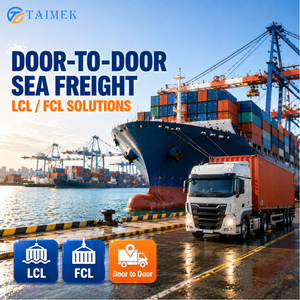
FCL Sea Freight From China to Spain with Delivery Support With Import Handling Shipping Agent
Get Catalog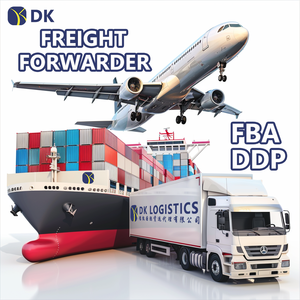
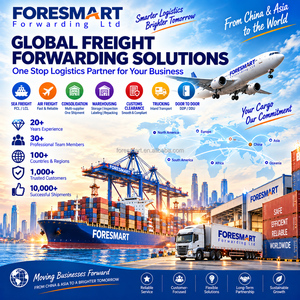
China Sea Shipping Agents Freight Forwarding Fcl Logistics Service Container Door to Door
Get Catalog
Professional Shipping Agent DDP Door To Door Logistics Services Freight Forwarder Air Sea Shipping From China
Get CatalogThe Evolution of China Wholesale Sourcing & Direct Factory Customs Clearance Architecture
In the modern paradigm of global procurement, sourcing directly from Chinese manufacturing clusters (such as the Pearl River Delta, Yangtze River Delta, and Bohai Rim) requires more than just identifying reliable suppliers. For corporate buyers, B2B importers, and enterprise brand owners, the true competitive advantage lies in optimizing the post-production logistics value chain. Integrating factory-direct dispatch with seamless customs brokerage, automated Importer Security Filing (ISF 10+2), and compliant Duty Delivered Paid (DDP) logistics has shifted from an operational back-office detail to a core strategic growth lever.
Navigating global regulatory landscapes—including U.S. Customs and Border Protection (CBP) enforcement, Section 301 tariffs, Antidumping and Countervailing Duties (AD/CVD), and stringent Partner Government Agency (PGA) regulations—demands deep technical expertise. Suppliers and logistics partners must operate not merely as transactional freight brokers, but as fully integrated, FMC-licensed Non-Vessel Operating Common Carriers (NVOCCs) capable of offering complete visibility from factory loading docks to final fulfillment centers.
Information Gain Insight: The Direct-to-Clearance Synergy
Traditional procurement models separate factory production from freight forwarding and customs clearance. Modern enterprise logistics unifies these tiers. By engaging a partner that acts as both a factory-side shipping consolidator and an accredited U.S. customs entry filer, importers reduce dwell times at container terminals by up to 42% and virtually eliminate demurrage liabilities.
Technical Architecture of U.S. Customs Clearance: HTS, AD/CVD, & ISF Compliance
Importing manufactured goods into western markets involves rigid regulatory compliance metrics. Enterprise buyers frequently encounter margin compression due to misclassified Harmonized Tariff Schedule (HTS) codes, unexpected customs holds, or mismanaged customs bond filings. A robust factory-to-door supply chain relies on three structural compliance pillars:
1. Importer Security Filing (ISF 10+2) Pre-Clearance Validation
Under U.S. CBP regulations, ocean container shipments bound for the United States require the submission of ten specific data elements from the importer and two from the ocean carrier at least 24 hours prior to cargo loading at origin ports such as Shanghai, Ningbo, or Shenzhen. Non-compliance results in automatic liquidated damages of $5,000 per violation and mandatory customs holds upon vessel arrival.
2. HTS Classification Auditing & AD/CVD Exposure Controls
A single digit variance in HTS classification can alter baseline tariff rates from 0% up to 25%+ under Section 301. Furthermore, imported steel, aluminum, plastics, and solar components are frequently subject to severe Antidumping and Countervailing Duty (AD/CVD) orders that can exceed 200%. Professional forwarders conduct pre-shipment classification audits to verify whether manufacturing processes qualify for specific tariff exclusions or require PGA clearance (e.g., FDA, USDA, FCC).
3. Continuous Customs Bond & Entry Type Selection
Whether executing formal entries (Entry Type 01) or specialized warehouse entries (Entry Type 21), high-volume importers require a Continuous Customs Bond calibrated to their annual duty obligations. Working directly with FMC-licensed NVOCC agents ensures that customs entries are transmitted electronically via the Automated Commercial Environment (ACE) prior to vessel arrival, facilitating immediate cargo release at destination ports like Los Angeles/Long Beach, New York/New Jersey, and Savannah.
FCL & LCL Optimization
Strategic volume grouping. High-density cargo routes combining 20GP, 40GP, and 40HQ container allocation.
C-TPAT Certified Security
Enrolled in Customs-Trade Partnership Against Terrorism, prioritizing cargo through physical border inspections.
Demurrage Prevention
Automated port free-time tracking and rapid container drayage dispatch within 24 hours of vessel discharge.
Mode Selection Matrix: Ocean FCL/LCL, Fast-Boat Express, and Air Freight
Optimizing landed cost requires selecting the appropriate logistics transit mode based on cargo density, SKU velocity, and inventory holding costs. Below is a strategic operational breakdown utilized by enterprise procurement teams:
Full Container Load (FCL 20GP/40GP/40HQ): The premier standard for volume procurement. Direct factory loading into dedicated containers reduces physical cargo handling, minimizes risk of damage, and provides the lowest landed cost per unit. Ideal for volume shipments exceeding 15 Cubic Meters (CBM).
Less Container Load (LCL Consolidation): For mid-scale inventory replenishment, LCL allows importers to share container space. Origin hub consolidation in Yiwu, Guangzhou, or Ningbo ensures small volume orders are merged efficiently, paying strictly for utilized CBM space while retaining professional customs brokerage support.
Fast-Boat Ocean Express (Matson/Mason Logistics): Operating on dedicated express lanes from Shanghai directly to Long Beach (Port of Long Beach Pier C), fast-boat services deliver ocean transit times of 10 to 11 days. This bridges the gap between conventional ocean freight (18-25 days) and costly air freight, serving as an optimal strategy for seasonal e-commerce restocks and high-turnover consumer electronics.
Air Freight & Charter Services: For high-value, time-critical components, IATA-certified air cargo solutions provide door-to-door delivery within 3 to 5 days globally, backed by pre-cleared electronic documentation.
Future Trends in Global Sourcing & Supply Chain Technology (2025–2030)
The landscape of cross-border procurement is undergoing rapid transformation driven by regulatory shifts, digital infrastructure, and sustainability imperatives. Corporate procurement leads must prepare for several emerging operational trends:
- AI-Driven Customs Compliance Auditing: Machine learning algorithms are increasingly deployed by customs brokers and border agencies to instantly cross-reference commercial invoices against historical HTS classification databases, flag duty anomalies, and predict risk profiles.
- Supply Chain Decoupling & Multi-Origin Hubs: While China remains the dominant global manufacturing hub, secondary manufacturing clusters across Vietnam, India, Bangladesh, and Cambodia are expanding rapidly. Modern logistics providers must operate unified management platforms across all Asian manufacturing hubs to facilitate seamless multi-country consolidation.
- Real-Time Ocean Telematics & Digital Twins: Direct API integrations with ocean carrier networks, port terminals, and GPS-enabled container chassis provide end-to-end milestone tracking, alerting logistics managers to weather delays, port congestion, and gate-out statuses in real time.
- De Minimis Regulatory Tightening: Global tax authorities are tightening scrutiny on low-value direct-to-consumer parcel shipments. B2B bulk import channels utilizing formal DDP ocean container logistics provide a stable, compliant, and cost-predictable route against fluctuating parcel regulations.
Enterprise Edge: Operational Infrastructure & Global Accreditations
Backed by over two decades of global trade excellence, our integrated logistics framework combines licensed regulatory authority with owned infrastructure across both ends of the transpacific and Asia-Europe trade corridors.
Unlike asset-light freight brokers who rely entirely on outsourced third parties, our operational model leverages owned offices across key North American gateways (Los Angeles, New Jersey) and primary manufacturing hubs throughout Asia (India, Vietnam, Bangladesh, Cambodia), supported by vetted partner networks. Importers gain single-point accountability, transparent freight cost structures without hidden accessorial fees, and proactive compliance oversight from booking to final container drayage delivery.
Enterprise B2B Procurement & Customs Logistics FAQ
Expert answers to common operational, regulatory, and financial questions encountered when importing direct from factory suppliers in China and Asia.
What is the operational difference between DDP and DDU/DAP terms?
Under DDP (Delivered Duty Paid), the seller or their logistics agent handles the entire transport chain, including origin clearance, ocean/air freight, import customs entry, duties, tariffs, and final delivery to the buyer's door. Under DDU/DAP (Delivered Duty Unpaid / Delivered at Place), the buyer is responsible for filing customs clearance, paying import duties, taxes, and arranging local terminal handling upon arrival.
Why is an FMC-Licensed NVOCC status critical for ocean freight bookings?
An FMC-licensed NVOCC (Non-Vessel Operating Common Carrier) is regulated by the Federal Maritime Commission in the U.S. They issue their own ocean Bills of Lading (House BOL), publish tariff rates, and hold direct service contracts with ocean container shipping lines. This guarantees legal accountability, rate stability, and secured container space even during peak shipping seasons.
What happens if my Importer Security Filing (ISF) is submitted late?
Submitting ISF data less than 24 hours prior to container vessel loading at foreign ports violates U.S. CBP regulations. This can trigger a minimum $5,000 fine per late filing, issue a hold order at the arrival port, force mandatory non-intrusive container scans, and accumulate heavy demurrage fees at container terminals.
How can importers mitigate unexpected Antidumping & Countervailing Duties (AD/CVD)?
Mitigation begins with pre-production HTS code classification and supply chain tracing. By reviewing raw material origins, manufacturing steps, and precise product composition, customs compliance experts verify whether your SKU falls within the scope of active AD/CVD petitions or qualifies for specific trade exclusions.
What documentation is required to clear factory-direct shipments through U.S. Customs?
Standard import documentation includes: Commercial Invoice (specifying transaction value, terms, currency), Detailed Packing List, Ocean Bill of Lading or Air Waybill, Continuous Customs Bond, HTS Code Classifications, ISF Confirmation Receipt, and any applicable PGA certificates (e.g., FDA registration, EPA forms, or USDA permits).
How are terminal demurrage and detention charges avoided?
Demurrage (charged by port terminals for containers left on site past free days) and detention (charged by ocean lines for late equipment return) are avoided by filing customs entries 5 days prior to vessel arrival, pre-clearing cargo, pre-arranging container drayage trucks, and securing adequate warehouse unloading slots.
When does it become more cost-effective to switch from LCL to FCL shipping?
Generally, when shipment volume reaches 13 to 15 Cubic Meters (CBM), the total cost of LCL (including consolidation, origin handling, CFS deconsolidation fees, and freight charges) equals or exceeds the flat rate of a 20-foot Full Container Load (20GP). FCL also delivers faster transit times as it bypasses container deconsolidation hubs.
Can past duty payments under Section 301 or IEEPA tariffs be audited for refunds?
Yes. Importers have a limited window (typically within 180 days of customs entry liquidation) to file administrative protests (Customs Form 19) or Duty Drawback claims if goods were misclassified, overpaid, or eligible for retroactive exclusions authorized by U.S. regulatory authorities.