
China's Premier Overland & Cross-Border Shipping Services
Explore high-efficiency freight routes, door-to-door DDP services, bonded warehousing, and cross-border haulage backed by licensed NVOCC and C-TPAT frameworks.

Why Global Buyers Choose Our China-Eurasian Logistics Architecture
Founded with a commitment to transparency, regulatory compliance, and end-to-end cargo security, we bridge global supply chains through licensed infrastructure and deep regional experience.
FMC-Licensed NVOCC & C-TPAT Certified
Operating as a fully licensed Non-Vessel Operating Common Carrier (NVOCC) with official C-TPAT security accreditation. We issue verified House Bills of Lading (HBL), maintaining direct contracts with vessel operators and rail networks to guarantee space during peak freight seasons.
Own Network Infrastructure Across Asia
Unlike virtual forwarders who rely entirely on third-party sub-agents, we maintain fully operational company branches across China, India (14 offices including Mumbai, Chennai, and New Delhi), Vietnam (Ho Chi Minh City), Bangladesh (Dhaka), Cambodia (Phnom Penh), and US hubs (Los Angeles & New Jersey).
In-House Customs Brokerage & ISF 10+2
Our dedicated regulatory compliance team pre-audits product Harmonized Tariff Schedule (HTS) codes, handles mandatory Importer Security Filings (ISF 10+2), prevents costly AD/CVD duty penalties, and streamlines smooth customs entries at foreign destination borders.
Executive Summary: The Strategic Evolution of China's Overland Freight Network
Overland freight from China has transitioned from a niche transport alternative into an indispensable pillar of resilient global supply chain management. Accelerated by geopolitical shifts, maritime rate volatility, and the expansion of the Belt and Road Initiative (BRI), cross-border road haulage (TIR Trucking) and Trans-Eurasian Rail Express networks now offer middle-mile logistics speeds that compete directly with air freight at a fraction of the carbon footprint and operational cost.
For international buyers, sourcing managers, and enterprise logistics planners, navigating the landscape of China top overland freight suppliers & exporters requires a granular understanding of modal trade-offs, border crossing customs bottlenecks (e.g., Alashankou, Khorgos, Manzhouli, Pingxiang), tax clearance mechanisms (DDP/DAP), and carrier accountability standards. This whitepaper provides a comprehensive framework to optimize procurement budgets, reduce transit variability, and mitigate risk when routing freight across Eurasian and Southeast Asian land bridges.
Logistics Insights: The "4th Logistics Channel" Advantage
Direct TIR Trucking from inland Chinese manufacturing hubs (e.g., Zhengzhou, Xi'an, Shenzhen) to Western Europe delivers door-to-door transit in 12–16 days. This bridges the critical gap between ocean freight (30–45 days) and air cargo (3–5 days), giving supply chain directors a high-velocity replenishment mechanism for high-value electronics, automotive parts, and seasonal fashion retail.
Modal Architecture: Road vs. Rail vs. Multimodal Sea-Land Corridors
Selecting the optimal overland freight mode depends heavily on cargo density, volumetric weight, budget constraints, and lead-time urgency. Below is an analytical breakdown of China’s three primary land-based export channels:
1. Trans-Eurasian Cross-Border TIR Trucking
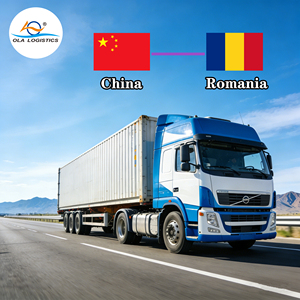
Under the International Road Transport (TIR) Convention, sealed containerized trucks cross international borders without undergoing mandatory customs inspections at transit checkpoints. This allows continuous long-haul driving from China directly to destinations in Germany, France, Spain, Poland, and the United Kingdom.
- Transit Velocity: 12 to 18 days door-to-door (Factory load in Jiangsu/Guangdong to Warehouse unload in Europe).
- Minimum Operational Order Quantity (MOQ): Accessible from 21 KG LCL consol up to 80–120 CBM full truckload (FTL) configurations.
- Key Applications: High-value electronics, lithium-ion battery assemblies (under strict ADR hazardous compliance), time-sensitive industrial spares, and e-commerce peak restocks.
2. China-Europe Railway Express (CR Express)
Operating across Northern, Middle, and Southern Eurasian rail corridors, the CR Express network links over 100 Chinese industrial cities to more than 200 European and Central Asian logistics hubs. Rail shipping provides stable, scheduled departures unaffected by maritime weather disruptions.
- Transit Velocity: 18 to 24 days port-to-rail-hub.
- Container Standards: 40ft High Cube (HC) dry boxes, 20ft heavy equipment, and controlled-temperature Reefer containers.
- Cost Efficiency: Approximately 40%–60% lower cost compared to air freight, with 75% fewer carbon emissions per ton-kilometer than conventional air lifting.
3. China-ASEAN Land Bridge Trucking Corridors
Connecting Southern China (Guangxi and Yunnan provinces) to Vietnam, Laos, Thailand, and Malaysia via highway checkpoints like Youyi Guan and Mohan. The completion of the China-Laos Railway has further amplified overland capacity, enabling seamless cold-chain agricultural and electronic assembly transport throughout Southeast Asia.
| Transport Mode | Avg. Transit Time | Relative Cost Index | Reliability & Schedule | Customs Process | Best For (Cargo Type) |
|---|---|---|---|---|---|
| Direct TIR Trucking | 12 – 16 Days | Medium - High | 95% On-Time Delivery | Sealed TIR Carnet / Rapid | Electronics, Auto Parts, Fashion |
| China-Europe Rail (FCL) | 18 – 22 Days | Medium | 90% Scheduled Fixed Departure | Rail Hub Customs Clearance | Heavy Machinery, Industrial Materials |
| China-ASEAN Road Haulage | 3 – 7 Days | Low - Medium | 92% Border Clearance Dependent | Regional Border Crossings | Components, Textiles, Perishables |
| Standard Ocean Freight | 30 – 45 Days | Low (Base Level) | 75% Vessel Congestion Risk | Seaport Destination Clearance | Bulk Commodities, Low-Value Goods |
| Express Air Cargo | 3 – 5 Days | Very High (5x-8x Ocean) | 98% Fixed Flight Allocation | Airport Terminal Customs | Medical Emergencies, High-Value Tech |
Critical Risk Management & Compliance for Global Importers
Importing goods via overland corridors requires rigorous regulatory oversight to prevent border impoundment, retroactive duty penalties, and severe demurrage accumulation. Importers should enforce strict operational SOPs across the following regulatory domains:
1. Incoterms Optimization (DDP vs. DAP vs. FCA)
While FOB (Free on Board) dominates ocean shipping, overland cross-border transport relies heavily on DDP (Delivered Duty Paid) and DAP (Delivered at Place). Under DDP terms, the exporter/forwarder assumes total financial and operational responsibility for border duties, import VAT/GST, and local customs filings. However, overseas buyers must ensure that their logistics partner utilizes compliant local fiscal representation to avoid VAT refund disqualifications or customs tax audits.
2. Importer Security Filing (ISF 10+2) & US Import Compliance
For multimodal overland shipments feeding into ocean carriers bound for North American ports, strict adherence to US Customs and Border Protection (CBP) ISF 10+2 rules is mandatory. Transmissions must be confirmed at least 24 hours prior to loading at foreign transshipment ports to prevent automated $5,000 fine assessments per clerical infraction.
3. Antidumping & Countervailing Duty (AD/CVD) Pre-Audits
Products containing steel, aluminum, solar cells, or specialized chemicals imported from Asia are frequently subject to AD/CVD tariffs. Leading China overland suppliers conduct preliminary Harmonized Tariff Schedule (HTS) classification audits to identify tariff exposure before goods leave the origin factory floor.
5. Future Sourcing Trends: The Next Era of Overland Procurement (2026–2030)
As corporate supply chains prioritize agility, decarbonization, and digitalization, several macro trends are reshaping how procurement managers select Chinese overland logistics partners:
1. Autonomous Heavy-Duty Fleets & Green Energy Transport
Logistics operators across China are rapidly replacing traditional diesel fleets with battery-swapping Electric Heavy Trucks (EVs) and Hydrogen Fuel Cell Haulers for regional border transfers. Combined with autonomous platooning on dedicated freight expressways, green corridors are significantly lowering Scope 3 carbon emissions for global brand importers.
2. Smart IoT Telematics & Real-Time Cargo Visibility
Modern overland containers are equipped with solar-powered IoT sensors that broadcast real-time GPS coordinates, door-opening alerts, ambient temperature, humidity, and shock vibration data via satellite networks. This continuous data stream eliminates operational blind spots during transshipment through remote Central Asian border nodes.
3. Integration of Cross-Border E-Commerce Direct-Injection Hubs
With the surge in global B2C e-commerce, overland suppliers are developing dedicated consolidated "drop-shipping" and "direct-injection" services. By combining bonded fulfillment centers at border free-trade zones (FTZs) with expedited road transport, exporters can deliver goods directly to European and Middle Eastern consumer doorsteps within 7 to 10 days of online order placement.
Frequently Asked Questions: China Overland Freight Procurement
Expert answers to common operational, regulatory, and financial questions from global procurement directors.
Optimize Your Global Supply Chain with Leading China Freight Experts
Contact our senior logistics engineering team to request customized freight rate quotes, evaluate route transit times, or schedule a comprehensive customs duty pre-audit for your enterprise shipments.
Inquire Now