
High-Performance Ocean & Multimodal Freight Services
Explore our comprehensive portfolio of maritime transport, door-to-door DDP consolidations, and specialized project cargo operations engineered for global enterprise scalability.
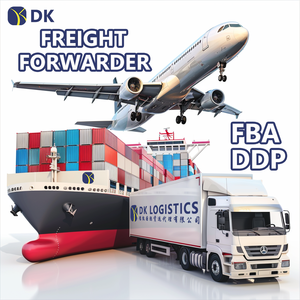
- Direct Carrier Contracting & Allocation
- FCL/LCL Multi-Route Network
- Real-Time AIS Vessel Tracking
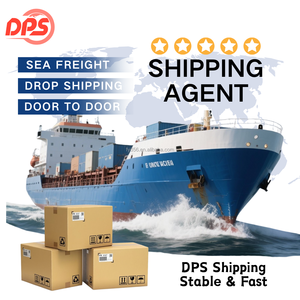
- Breakbulk & Open-Top Containers
- Ro-Ro & Heavy Lift Engineering
- Nordic Port Handling Clearance
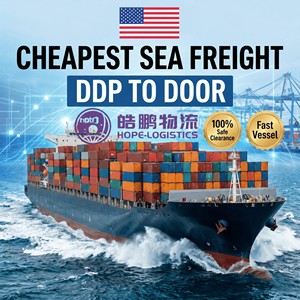
- All-Inclusive DDP/DAP Duties Paid
- Origin Hub Cargo Consolidation
- Express Door-to-Door Fulfillment
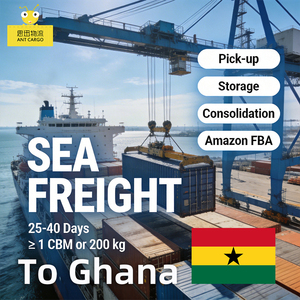
- Pan-African Port Gateway Coverage
- Customs Clearance & ECTN/BESC
- Bonded Warehouse Storage
- IMO Certified Hazmat Handling
- Class 2-9 Dangerous Goods Clearance
- Specialized ISO Tank Solutions
- BNSF/UP Inland Rail Intermodal
- Automated ISF 10+2 Clearance
- Guaranteed Free-Time Port Drayage
- Major Port Origin Hub Direct Express
- FMC & NVOCC Negotiated Space
- Automated Duty Mitigation Audits
- Full Customs Brokerage Integration
- Transpacific Express Sailings
- Last-Mile Drayage Fleet Control
Architecting Resilient Maritime Supply Chains: China to Global Markets
An in-depth analysis of ocean freight dynamics, regulatory compliance, risk mitigation, and technological transformation for global importers.
1. Executive Summary & Market Landscape
The global maritime logistics ecosystem is undergoing a structural paradigm shift driven by geopolitical realignment, fluctuating tariff regimes (such as IEEPA, Section 301, and AD/CVD), and stringent decarbonization mandates under the IMO 2030 framework. As the primary industrial engine of the world, China remains the epicenter of international containerized trade, exporting over 30% of global manufactured goods. However, navigating China's maritime export landscape requires more than basic booking services; it demands an integrated, technology-enabled Non-Vessel Operating Common Carrier (NVOCC) framework capable of mitigating port congestion, securing space guarantees, and executing complex customs compliance.
Top Chinese maritime logistics manufacturers and enterprise exporters are no longer competing solely on freight rates per TEU (Twenty-Foot Equivalent Unit). Instead, market leaders prioritize end-to-end supply chain velocity, predictive inventory visibility, tariff engineering, and seamless regulatory processing at origin and destination ports.
2. Transpacific & Global Maritime Trade Lane Matrix
Optimizing transit times and landed costs from primary Chinese port clusters (Shenzhen, Ningbo-Zhoushan, Shanghai, Qingdao, and Tianjin) requires strategic selection of maritime corridors and intermodal routing options. The table below outlines the core strategic parameters governing main maritime trade lanes from China:
| Trade Corridor | Primary Chinese Origin Gateways | Destination Discharge Hubs | Avg. Transit (Days) | Recommended Mode & Strategy |
|---|---|---|---|---|
| China → US West Coast | Shenzhen (Yantian), Ningbo, Shanghai | Los Angeles / Long Beach, Oakland, Seattle | 12 – 16 Days | Direct Fast-Ship FCL for High-Value Retail; Intermodal Rail to US Midwest. |
| China → US East / Gulf Coast | Ningbo, Qingdao, Shanghai | New York/New Jersey, Savannah, Houston | 24 – 28 Days | Panama Canal All-Water Routes to avoid intermodal rail bottlenecks. |
| China → Northern Europe & UK | Shanghai, Ningbo, Shenzhen | Rotterdam, Hamburg, Felixstowe, Helsinki | 28 – 35 Days | Suez Canal / Cape Route FCL with integrated EU Customs T1 clearance. |
| China → West & East Africa | Guangzhou (Nansha), Qingdao, Tianjin | Tema (Ghana), Lagos (Apapa), Durban, Mombasa | 30 – 40 Days | Breakbulk & DDP LCL Consolidations with full ECTN / BESC documentation. |
| China → Middle East (GCC) | Ningbo, Shenzhen, Shanghai | Jebel Ali (Dubai), Hamad (Qatar), Sohar (Oman) | 14 – 18 Days | Specialized Reefer & ISO Tank containers for industrial and chemical cargo. |
Future Procurement Trends in Chinese Maritime Logistics
Key strategic vectors shaping global ocean freight purchasing, carrier negotiation strategies, and supply chain resilience.
Index-Linked Dynamic Freight Contracting
Procurement models are shifting away from rigid 12-month fixed contracts toward hybrid index-linked agreements tied to the Shanghai Containerized Freight Index (SCFI) or Drewry World Container Index. This enables importers to capture downside rate drops while securing space allocations during peak season spikes.
End-to-End DDP & Duty Optimization
Global buyers increasingly demand Delivered Duty Paid (DDP) structures. Modern logistics manufacturers must handle not only ocean transit, but also foreign port customs entry, HTS code verification, and AD/CVD compliance, transferring regulatory risk away from the buyer.
Tier-3 C-TPAT Security Integration
With heightened international customs scrutiny, ocean shipments tied to C-TPAT (Customs-Trade Partnership Against Terrorism) certified logistics providers experience up to 50% fewer customs inspection holds, reducing terminal dwell times and eliminating expensive examination fees.
Automated AIS & IoT Fleet Tracking
Real-time visibility has evolved from simple point-to-point milestone updates to IoT sensor integration monitoring internal container temperature, humidity, shock, and real-time GPS coordinates via direct carrier API feeds.
IMO 2030 & Green Shipping Corridors
Decarbonization mandates are forcing ocean carriers to adopt LNG, methanol, and biofuel propulsion. Procurement teams now require Scope 3 emissions reporting per TEU as a mandatory KPI in enterprise carrier selection.
Project Cargo & Breakbulk Specialization
As China exports high-tech manufacturing equipment, oversized solar arrays, and heavy industrial machinery, demand for specialized Ro-Ro, Flat-Rack, and Open-Top container logistics is growing faster than standard dry FCL container shipping.
Technological & Operational Advancements in Ocean Logistics
How China's leading maritime manufacturers and exporters leverage digital infrastructure to ensure frictionless international trade.
1. Automated ISF (10+2) & Pre-Clearance Systems
For cargo destined for the United States, timing is critical. United States Customs and Border Protection (CBP) mandates that Importer Security Filings (ISF 10+2) must be transmitted at least 24 hours prior to cargo loading at origin ports in China. Failure to comply results in mandatory $5,000 liquidated damage penalties per violation, alongside severe port hold costs.
Advanced Chinese maritime forwarders utilize automated EDI system integrations that pull commercial invoice data directly from factories, automatically verifying HTS classifications, manufacturer ID codes, and consignee numbers to guarantee 100% compliant filings before container gates close in Shenzhen or Shanghai.
2. Hazardous Goods (IMO/DG) Protocol Standardization
Exporting lithium-ion batteries, chemicals, compressed gases, and dangerous goods requires strict compliance with the International Maritime Dangerous Goods (IMDG) Code. China’s leading maritime logistics operators maintain specialized dangerous goods warehouses in Ningbo and Shanghai equipped with explosion-proof isolation cells, automated temperature monitoring, and dedicated IMO-certified dangerous goods specialists.
• MSDS (Material Safety Data Sheet) verified under UN GHS standards.
• Dangerous Goods Declaration (DGD) issued and approved by Maritime Safety Administration (MSA).
• UN Specification packaging inspection certified for sea transport stress.
Why Partner With Our Global Logistics Architecture
Combining 25+ years of operational excellence with FMC NVOCC licensing, C-TPAT security, and dedicated international office networks.
FMC-Licensed NVOCC & C-TPAT Certified
We operate as a fully licensed Non-Vessel Operating Common Carrier (NVOCC) under the Federal Maritime Commission (FMC), issuing our own House Bills of Lading (HBL). Combined with C-TPAT certification, your cargo receives priority clearance and reduced inspection rates.
Direct Carrier Space Contracts
By negotiating direct volume contracts with ocean alliances (OCEAN Alliance, 2M, THE Alliance), we guarantee vessel space allocations during peak shipping seasons, eliminating mid-transit cargo roll-offs at transshipment ports.
Global Office & Hub Network
With operational headquarters and owned office facilities across the United States (Los Angeles, New Jersey), India (14 key commercial centers), Southeast Asia (Vietnam, Cambodia, Bangladesh), and strategic partnerships across China, we deliver seamless origin-to-destination control.
Frequently Asked Questions: China Maritime Procurement
Expert answers addressing regulatory compliance, incoterms selection, freight optimization, and customs risk management.
• CIF (Cost, Insurance, and Freight): Not recommended for containerized freight, as Chinese suppliers often select low-cost carriers that pass hidden destination terminal handling charges (DTHC) to the buyer.
• DDP (Delivered Duty Paid): Best for buyers seeking hands-off management, where the logistics manufacturer handles all freight, tariffs, customs clearance, and final truck delivery.
Optimize Your China-to-Global Maritime Supply Chain
Speak with an FMC-licensed NVOCC expert today to audit your current ocean freight rates, streamline ISF customs compliance, and secure guaranteed peak-season vessel allocations.
Contact Us