
Best Price Freight Forwarder Fast Boat Sea FCL LCL Shipping Agent From China to Australia/Canada
- Express Fast-Boat Ocean Express
- Full Australia/Canada Brokerage
- Flexible FCL & LCL Space Guarantee
Streamlined international supply chain programs engineered for high-volume manufacturers, B2B importers, and enterprise global traders.
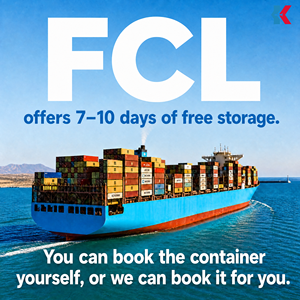
In the contemporary landscape of global trade, cross-border procurement between China manufacturing hubs and major international destinations—such as North America, Europe, Australia, and emerging Pacific markets—demands far more than rudimentary container booking. Modern logistics requires a deeply integrated customs brokerage and freight architecture capable of mitigating regulatory bottlenecks, optimizing tariff classifications, and insulating supply chains against systemic delays.
As a premiere China-based manufacturing logistics powerhouse and an FMC-licensed Non-Vessel Operating Common Carrier (NVOCC) backed by C-TPAT certification, our organization acts as an authoritative operational bridge. We unite origin factory production schedules directly with destination customs clearance procedures, offering complete transparency over landed costs, regulatory compliance, and multimodal transit execution.
Our direct FMC license allows us to negotiate tier-one carrier contracts while C-TPAT security certification streamlines destination customs inspection ratios by up to 60%.
Proactive transmission of Importer Security Filings at least 24 hours prior to loading in Ningbo, Shanghai, or Shenzhen prevents liquid damages and port holds.
Integrated port drayage networks in Los Angeles, NY/NJ, Valencia, and Sydney ensure immediate container pull-out, eliminating costly demurrage and detention charges.
The global trade ecosystem is undergoing a dramatic structural transformation driven by regulatory shifts, technological integration, and geopolitical realignments. Importers sourcing from China must adapt to four pivotal operational trends to maintain competitive advantage:
Customs authorities worldwide—including US Customs and Border Protection (CBP) and EU Customs Administrations—are deploying sophisticated machine learning models to scrutinize tariff declarations. Misclassifying goods under the Harmonized Tariff Schedule (HTS) can trigger severe penalties, retroactive Section 301 duties, or Antidumping/Countervailing Duty (AD/CVD) investigations. Leading customs brokerage practices now employ proprietary AI classification engines paired with licensed customs attorney reviews to ensure 100% classification precision and unlock legitimate duty drawback opportunities.
While China remains the undisputed global manufacturing epicentre, multinational corporations are increasingly adopting "China+1" strategies, distributing component manufacturing across Southeast Asia (Vietnam, Cambodia, Malaysia) and South Asia (India). Modern customs brokers must possess dual-end owned infrastructure capable of managing complex multimodal cross-border routing. Synchronizing origin export clearance in China with intermediate assembly in Southeast Asia and ultimate destination clearance in North America or Europe requires unified supply chain orchestration.
Regulatory scrutiny around supply chain traceability has intensified. Enactments such as the Uyghur Forced Labor Prevention Act (UFLPA) require importers to produce granular proof of origin—ranging from raw material procurement records to bill of lading audit trails. Advanced customs brokers act as compliance strategists, verifying documentation upstream at the China factory level before cargo is loaded aboard ocean vessels.
With International Maritime Organization (IMO) carbon reduction mandates taking effect, global buyers are under pressure to audit and reduce Scope 3 supply chain emissions. Green ocean freight solutions—utilizing dual-fuel LNG vessels, biofuel blends, and optimized slow-steaming routes—are becoming core selection criteria during enterprise freight procurement tenders.
Choosing the correct shipping mode and incoterm structure is essential to balance transit speed against total landed cost. The following table provides an executive comparison framework for enterprise importers:
| Logistics Mode | Target Cargo Profile | Customs Clearance Structure | Average Transit (China to US/EU) | Primary Cost Driver |
|---|---|---|---|---|
| DDP Door-to-Door (Sea/Air) | Small-to-Medium B2B, Amazon FBA, Turnkey Supplies | Pre-paid Broker Duty Clear at Origin/Dest | Sea: 14–22 Days | Air: 3–5 Days | All-Inclusive Volume / Weight Rate |
| Ocean FCL (20GP / 40HQ) | High-Volume Manufacturing & Industrial Freight | Importers' Bond / In-House Broker Entry | 12–28 Days (Route Dependent) | Container Flat Rate + Port Drayage |
| Ocean LCL Consolidation | Partial Container Goods (1 to 15 CBM) | Consolidated Entry with Deconsolidation CFS | 18–30 Days (Includes CFS handling) | Per CBM / Revenue Ton Rate |
| Time-Critical Air Freight | High-Value Electronics, Automotive Samples | Immediate Wheels-Up / Express Airport Clear | 1–3 Days Express | 3–7 Standard | Chargeable Weight (1:167 Vol Metric) |
Navigating global supply chains requires a partner with deep operational roots in China and robust regulatory authority in destination ports. Here is how our enterprise logistics model delivers unmatched Information Gain and financial value:
Expert technical insights regarding China customs brokerage, shipping regulations, and compliance procedures.