
Featured Container Shipping & Freight Solutions
Direct Carrier Ocean Transportation, FCL/LCL Consolidation, Air Cargo, and Express Customs Clearance Services
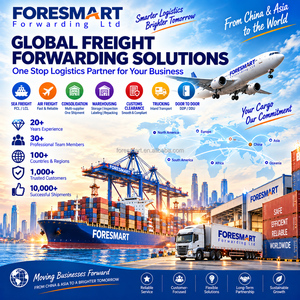
China Sea Shipping Agents Freight Forwarding FCL Logistics Service Container Door to Door
Inquire Now
Air Freight Ningbo/Yiwu Shipping Agent Container Shipping From China to Austria, Belgium, Europe
Inquire Now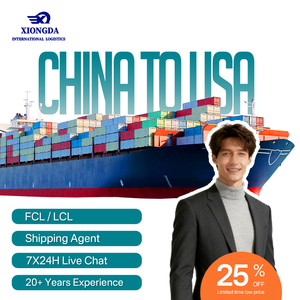
Low Cost Transport Container 20+ Years Experience Sea FCL LCL Agent From China to USA
Inquire Now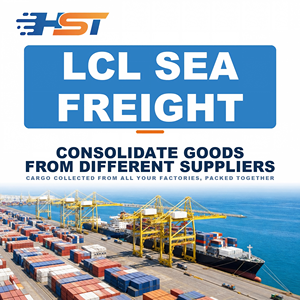
7-10 Days Free Storage LCL Sea Freight From China Container Consolidated Shipping Ocean Freight
Inquire Now
Seaworthy Freight Forwarder 20ft 40ft 40HQ Container Shipping From China to USA Canada Ports
Inquire Now
Sea Shipping Cargo International Logistic Bulk Vessels Container Freight to USA, UK & Europe
Inquire Now
Top Tier Chinese Agent FCL Ocean Freight Door to Door DDP Delivery for Canadian Importers
Inquire Now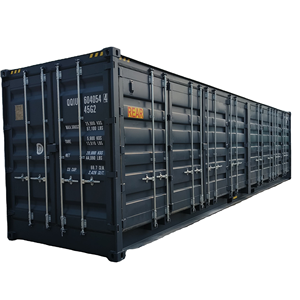
Full FCL Container Load 40HC Service to USA Fast Logistics Agent DDP Sea Shipping Service
Inquire NowLicensed, Certified & Globally Accredited
Compliance and security verified by leading global maritime and customs regulatory authorities
 FMC NVOCC
 C-TPAT Certified
 IATA Certified
 NCBFAA Member
 IAM Member
 LAACA Member
Executive Summary: Navigating China Container Procurement & Global Intermodal Logistics
In today’s volatile macro-economic climate, global buyers, supply chain executives, and enterprise procurement managers face unprecedented challenges in managing ocean freight operations from China. As the world’s undisputed manufacturing powerhouse, China exports millions of TEUs (Twenty-Foot Equivalent Units) annually across key port hubs including Shanghai, Ningbo-Zhoushan, Shenzhen (Yantian/Shekou), Qingdao, Tianjin, and Guangzhou (Nansha). Selecting a qualified China container shipping supplier and exporter is no longer merely a transaction of purchasing vessel space; it is a strategic decision that directly impacts landed cost efficiency, inventory velocity, duty compliance, and supply chain resilience.
This comprehensive enterprise whitepaper provides deep-level analysis and actionable insights into container freight procurement, equipment specifications, regulatory compliance, risk mitigation, and emerging supply chain trends for international trade lanes connecting China to North America, Europe, the United Kingdom, and Australia.
1. Intermodal Container Equipment Technical Specifications & Selection Standard
Optimizing payload capacity and preventing cargo damage during transoceanic transit requires a meticulous understanding of standard intermodal ISO shipping container specifications. Container structural integrity is governed by international standards including ISO 1496, ISO 6346, and the International Convention for Safe Containers (CSC).
A. Standard Dry Container Configurations (20GP, 40GP, 40HQ, 45HQ)
Dry cargo containers are constructed from high-tensile Corten steel (atmospheric corrosion-resistant steel), designed to withstand rigorous maritime environments, ocean spray, and extreme structural stacking weight. Below is a comparative engineering breakdown of export container specifications:
| Container Type | Internal Dimensions (L x W x H) | Cubic Capacity (CBM) | Max Payload Weight | Optimal Cargo Application |
|---|---|---|---|---|
| 20' General Purpose (20GP) | 5.898m x 2.352m x 2.393m | 33.2 CBM (~28-30 CBM usable) | 21,700 kg – 28,200 kg | Heavy, dense cargo (minerals, machinery, liquids, metal hardware). |
| 40' General Purpose (40GP) | 12.032m x 2.352m x 2.393m | 67.7 CBM (~56-58 CBM usable) | 26,600 kg – 28,800 kg | Volumetric general merchandise, textiles, electronics, furniture. |
| 40' High Cube (40HQ) | 12.032m x 2.352m x 2.698m | 76.4 CBM (~65-68 CBM usable) | 26,500 kg – 28,600 kg | High-volume, light-weight manufactured goods, over-height items. |
| 45' High Cube (45HQ) | 13.556m x 2.352m x 2.698m | 86.0 CBM (~74-76 CBM usable) | 27,800 kg – 29,500 kg | Maximum volume consumer goods requiring long-haul intermodal delivery. |
B. Specialized Cargo Equipment: Reefers, Open-Tops & Flat Racks
For specialized industrial requirements, generic dry vans are inadequate:
- Refrigerated Containers (Reefers): Integrated with closed-loop thermal control units maintaining temperatures between -30°C to +30°C, vital for cold-chain food products, pharmaceuticals, and sensitive organic chemicals.
- Open Top Containers (OT): Fitted with removable tarpaulin tops instead of solid roofs, designed for top-loading heavy machinery, glass panels, or over-height industrial equipment via overhead cranes.
- Flat Rack Containers (FR): Collapsible end-wall structures tailored for Heavy-Lift, Out-of-Gauge (OOG) breakbulk cargo, oversized vehicles, and heavy industrial assemblies.
2. Enterprise Core Competencies & Service Architecture
As a premier China Freight Forwarder & FMC-Licensed NVOCC in business since 1999, our enterprise logistics framework is built around operational transparency, end-to-end accountability, and regulatory compliance across Asian export gateways.
FMC-Licensed NVOCC Authority
We issue our own legally binding House Bills of Lading (HBL), establishing direct contract carrier rates with global ocean alliances to protect buyers against middleman markups and sudden spot market spikes.
C-TPAT Security Certification
Certified under the Customs-Trade Partnership Against Terrorism program. Enjoy reduced US Customs inspection rates, priority processing, and fast-track port clearance for high-value container entries.
In-House Automated ISF (10+2) Filing
Seamless transmit Importer Security Filings to U.S. Customs and Border Protection (CBP) 24 hours prior to foreign port loading, guaranteeing 100% compliance and zero late-filing fines.
A. Comprehensive End-to-End DDP (Delivered Duty Paid) Mechanics
Modern enterprise importers increasingly demand DDP (Delivered Duty Paid) execution over traditional FOB (Free on Board) terms. DDP shifts the entire operational burden—export customs clearance in China, ocean transit, destination customs brokerage, duty/tax disbursement, and last-mile container drayage—onto our dedicated logistics teams.
Our DDP service pipeline eliminates hidden destination charges, terminal handling fees (THC), and unexpected demurrage penalties. Importers receive a single consolidated invoice reflecting exact landed costs per unit, streamlining inventory accounting and cash-flow predictability.
B. Origin Hub Consolidation & Warehousing Infrastructure
With proprietary consolidation warehouses located in major Chinese industrial centers—Ningbo, Yiwu, Shanghai, Shenzhen, and Qingdao—we provide 7 to 10 days of free warehouse storage for Less-Than-Container Load (LCL) consolidation. Suppliers across different provinces can ship cargo to our central hubs, where our staff conducts cargo inspection, palletization, shrink-wrapping, and container loading for optimal volumetric utilization.
3. Strategic Procurement & Future Development Trends in Global Container Shipping
The global shipping landscape is undergoing structural transformations driven by environmental policy, digital intelligence, and global supply chain re-alignment. Buyers must adapt their procurement models to maintain a competitive advantage.
A. Decarbonization & Green Shipping Initiatives (IMO 2030 / FuelEU Maritime)
The International Maritime Organization (IMO) has implemented mandatory greenhouse gas intensity reduction targets. Major ocean carriers are rapidly phasing out heavy fuel oil (HFO) vessels in favor of dual-fuel Green Methanol, Liquefied Natural Gas (LNG), and battery-electric hybrid feeder ships. Forward-thinking enterprise buyers should expect:
- Carbon Footprint Accounting: Scope 3 emissions reporting will become mandatory for enterprise importers into Europe (via CBAM) and North America.
- Green Freight Surcharges: Transitional fuel premiums will be incorporated into ocean contracts, favoring suppliers utilizing fuel-efficient modern container fleets.
B. Digitization, Real-Time IoT Tracking & Predictive Logistics
The era of manual tracking via static container numbers is obsolete. Next-generation shipping utilizes IoT-enabled smart containers equipped with GPS, ambient humidity sensors, and real-time shock indicators. Integrated customer portals now leverage carrier API connections to deliver predictive Estimated Time of Arrival (ETA) updates, automatically alerting supply chain managers to port congestion delays, vessel blank sailings, or terminal dwell time spikes.
C. Supply Chain Diversification: The "China + 1" Multimodal Synergies
While China remains the core manufacturing engine, enterprise buyers are establishing supplementary production bases in Vietnam, India, Bangladesh, and Cambodia. Our global network operates owned offices across North America, India, and Southeast Asia, enabling seamless cross-border sea-land transshipments and feeder consolidation routes that preserve unified supply chain visibility under a single management system.
4. Industry Risk Mitigation: Demurrage, Detention & Tariff Optimization
A. Demurrage vs. Detention Risk Avoidance
Uncontrolled port dwell times can severely degrade profit margins due to carrier accessorial fees:
- Demurrage: Charges levied by the ocean terminal when a loaded container remains inside the port beyond allocated free time (typically 4–7 days).
- Detention: Charges incurred when the container is taken out of the port for offloading but is not returned to the marine terminal within designated free days.
Our dedicated container drayage dispatch system monitors port availability windows continuously. By securing pre-pull agreements, off-dock staging facilities, and local chassis access, we guarantee rapid container evacuation, mitigating costly port penalty fees.
B. Tariff Mitigation & HTS Duty Auditing
Importing under incorrect Harmonized Tariff Schedule (HTS) classifications leads to systemic overpayment of tariffs or severe CBP penalty audits. Our licensed customs brokerage partners review commercial documentation prior to shipment booking, assessing Section 301 tariffs, Antidumping/Countervailing Duties (AD/CVD), and qualifying tariff exclusions to ensure duty payments are precisely compliant.
5. Standard Operating Procedure (SOP) for Exporting Containers from China
To provide complete clarity on shipment execution, below is our standardized 6-stage container export workflow:
| Stage | Milestone Phase | Operational Deliverables & Action Items |
|---|---|---|
| Stage 1 | Booking & Routing Planning | Verify product HTS codes, select FCL vs. LCL mode, confirm Incoterms (FOB/CIF/DDP), and lock carrier space contract. |
| Stage 2 | Container Dispatch & Cargo Loading | Dispatch empty container to supplier factory in China or receive factory goods at our origin warehouse for stuffing. |
| Stage 3 | China Export Customs Clearance | Submit export declaration, commercial invoices, packing lists, and export licenses to China Customs (GACC). |
| Stage 4 | Vessel Loading & ISF Transmission | Load container onto ocean vessel; transmit mandatory ISF 10+2 data to US Customs at least 24 hours prior to departure. |
| Stage 5 | Ocean Transit & Customs Entry | Track ocean transit via real-time portal; file formal entry summary with destination customs before vessel arrival. |
| Stage 6 | Destination Drayage & Delivery | Execute immediate container pickup from marine terminal upon clearance, delivering direct to door or DC. |
6. Frequently Asked Questions (FAQ) for B2B Container Buyers
What is the difference between a Freight Forwarder and an FMC-Licensed NVOCC?
A standard freight forwarder acts strictly as an agent arranging transportation. An FMC-Licensed Non-Vessel Operating Common Carrier (NVOCC) acts as a legal carrier, issuing its own House Bills of Lading, assuming cargo liability, and holding direct, negotiated rate contracts with ocean shipping lines. This guarantees enhanced control over space and pricing.
How do I choose between FCL (Full Container Load) and LCL (Less Container Load)?
FCL is most cost-effective when your total cargo volume exceeds 13 to 15 Cubic Meters (CBM), or when shipping fragile, high-value goods requiring exclusive container access. LCL is ideal for smaller shipments (1 to 12 CBM) where you share container space with other shippers, paying strictly for the volume consumed.
What documentation is mandatory for container shipping from China to international ports?
Essential documentation includes the Commercial Invoice, Detailed Packing List, Bill of Lading (HBL/MBL), Certificate of Origin (Form E if applicable), and specific partner government agency filings (such as FDA, USDA, or CE compliance documents depending on cargo type).
What are the consequences of late ISF (10+2) filing for US-bound containers?
Failing to file the Importer Security Filing at least 24 hours before the vessel departs from the Chinese port can result in US Customs imposing liquidated damages of $5,000 per late violation, alongside mandatory customs holds and inspection delays at the port of entry.
How can buyers avoid container demurrage and detention charges?
Ensure import documentation and customs pre-clearance are submitted well before vessel arrival. Work with an integrated logistics partner offering local harbor drayage fleets, flexible free-time terms (7 to 14 days), and rapid container turnaround at inland destination yards.
Optimize Your China Container Procurement & Freight Strategy
Connect directly with our senior supply chain directors for customized freight rate quotes, vessel schedule optimization, and end-to-end DDP logistics planning.
Inquire Now