
CE Certified Project Cargo Products & Shipping Services
Direct manufacturer-backed heavy equipment transport, high-cube containerization, and door-to-door turnkey logistics.

Fast Boat Sea FCL & LCL Express Freight Service
High-priority express ocean transit optimized for heavy equipment and CE-certified industrial components shipped from China to Australia and Canada.
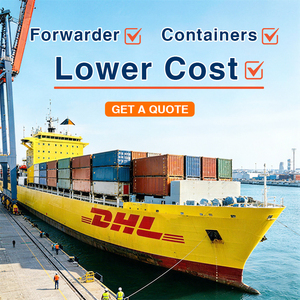
Multimodal Heavy Cargo DDP Logistics & Procurement
Turnkey DDP solutions for project machinery import to the USA, UK, and Spain, including full duty compliance and customs clearance.
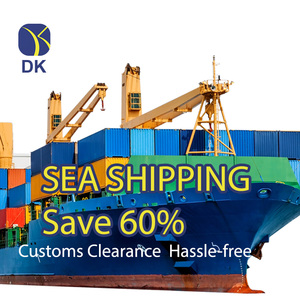
Pacific Islands Island-Corridor Door-to-Door FCL
Dedicated heavy-lift container transport tailored for remote island infrastructure projects in Samoa, Papua New Guinea, and the Marshall Islands.

Standard & High-Cube FCL Ocean Container Fleet
Full container loads (20GP, 40GP, 40HQ) for industrial plant relocations, raw materials, and modular machinery skids with direct carrier allocations.
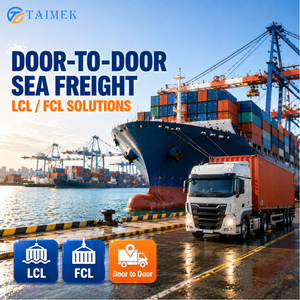
CE Compliant Spain FCL Ocean Freight & Inland Delivery
Comprehensive import logistics into Mediterranean hubs with complete T1 documentation, customs compliance, and heavy-haul drayage across Spain.
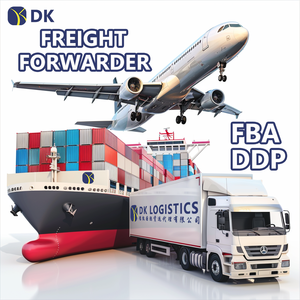
Global Project Cargo Ocean Express (US, Middle East, EU)
Engineered routing for heavy machinery, structural steel, and energy infrastructure destined for North America, Czechia, Oman, and Dubai.
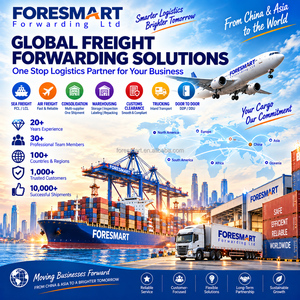
End-to-End Container Forwarding & Port Drayage Services
Full vessel space reservation, container loading supervision, lashing certification, and destination yard handling for heavy engineering assemblies.

Heavy Industrial Air-Sea DDP Multimodal Solutions
Time-critical charter flights combined with ocean heavy lift transport. Ideal for project-critical manufacturing components requiring rapid site delivery.
Why Procurement Leaders Partner With Us
Combining OEM-grade project cargo structural engineering with global FMC-licensed NVOCC freight infrastructure.
FMC & C-TPAT Certified Accountability
As a fully licensed NVOCC (Non-Vessel Operating Common Carrier) and C-TPAT certified logistics engineering platform, we issue direct House Bills of Lading, securing legal control and fast-track US/EU customs processing.
CE Directive Compliance Engineering
Every piece of lifting gear, transport skid, and structural frame manufactured by our facility strictly conforms to Machinery Directive 2006/42/EC and EN 1090-2 standards, backed by third-party mechanical stress load testing.
Direct Carrier Contracts & Space Guarantees
Bypassing third-party brokers, we maintain direct tier-1 contract allocations with top ocean carriers (Maersk, MSC, COSCO) and heavy-lift breakbulk operators, preventing rolled containers during high-demand seasons.
Engineering Standards for CE Certified Project Cargo & Industrial Equipment Supply
In global EPC (Engineering, Procurement, and Construction) operations, project cargo logistics represents the convergence of heavy structural manufacturing, complex mechanical load physics, and stringent international regulatory frameworks. Unlike standard containerized freight, out-of-gauge (OOG) and heavy lift equipment require specialized structural certification, modular transport cradles, and strict adherence to global safety mandates prior to international transit.
Procuring CE-certified project cargo equipment ensures that industrial components—ranging from pressure vessels and heavy crane girders to skidded power generation units—comply with European Union directives including the Machinery Directive 2006/42/EC, the Pressure Equipment Directive (PED) 2014/68/EU, and structural welding standards defined by EN 1090-2 (Execution Class 3). For global procurement directors, verified CE marking serves as a vital benchmark for operational safety, structural fatigue resistance, and compliance during port customs entry.
Key Insight: Non-compliant project cargo gear lacks verified structural Finite Element Analysis (FEA). Using uncertified transport skids or lifting lugs risks immediate port detainment by Maritime Authorities (USCG, EMSA) and invalidates Marine Cargo Insurance policies during heavy transit loads.
Structural Integrity & Load Lashing Specifications
The transport of heavy industrial assemblies requires advanced lashing calculations governed by the IMO/ILO/UNECE Code of Practice for Packing of Cargo Transport Units (CTU Code). Manufactured transport frames must withstand multi-axis g-forces during ocean carriage, specifically up to 0.8g longitudinal, 0.8g transverse, and 1.0g vertical acceleration forces caused by vessel roll, pitch, and heave in open ocean sea states.
Our OEM manufacturing facilities utilize certified EN 10025-2 S355JR structural steel for heavy-duty lifting beams, spreader bars, and custom ocean cradles. Every welded attachment point undergoes non-destructive testing (NDT), including Ultrasonic Testing (UT) and Magnetic Particle Inspection (MPI), ensuring structural reliability under extreme working loads (WLL).
| Equipment / Skid Category | CE Regulatory Standard | Structural Material Grade | Testing Protocol | Optimal Transport Mode |
|---|---|---|---|---|
| Heavy Machinery Skids | 2006/42/EC Machinery Directive | EN 10025-2 S355J2+N Structural Steel | 150% Load Proof Test + NDT Weld Check | Flat Rack (FR) / Breakbulk Vessel |
| Non-Fixed Lifting Beams | EN 13155 / ASME B30.20 | High-Yield Structural Alloy (S460QL) | Magnetic Particle (MPI) & Ultrasonic (UT) | Standard FCL / Open Top (OT) |
| Skidded Pressure Modules | 2014/68/EU (PED) Module H/H1 | ASTM A516 Gr 70 / 316L Stainless | Hydrostatic Pressure + Radiographic Weld | Heavy Lift Breakbulk / Deck Stowage |
| Modular Wind & Power Frames | EN 1090-2 EXC3 Structural Welding | S355JR Heavy Structural Beams | Finite Element Analysis (FEA) Stress Sim | SPMT Transporter + Tug & Barge Corridor |
Future Procurement Trends in Global Project Cargo (2026–2035)
As the international manufacturing landscape undergoes rapid structural evolution, industrial buyers are reshaping their procurement strategies to mitigate supply chain volatility, satisfy ESG (Environmental, Social, and Governance) targets, and comply with automated customs enforcement programs. The following core trends define the future of project cargo manufacturing and transport over the coming decade:
1. Decarbonization & Green Energy Infrastructure Logistics
The global shift toward green hydrogen, offshore wind energy, and carbon capture infrastructure has created unprecedented demand for ultra-heavy, oversized project cargo. Modern procurement managers increasingly require manufacturers to provide low-carbon steel documentation (Scope 1 and Scope 2 emissions tracking) for custom project skids. Furthermore, logistics routing must align with green corridor maritime routes operating under decarbonized dual-fuel methanol and ammonia breakbulk vessels.
2. IoT-Integrated Smart Cargo Securing & Telemetry
Static cargo monitoring is rapidly being superseded by continuous structural telemetry. Advanced project cargo skids now feature embedded IoT strain gauges, multi-axis accelerometers, and satellite GPS beacons. Procurement managers gain real-time visibility into structural stress loads, ambient humidity, and impact forces while cargo is in transit across ocean trade lanes, providing immediate evidence of compliance for marine underwriters.
3. Nearshoring & Skidded Modular Manufacturing Evolution
To reduce field erection lead times and minimize high-cost on-site technical labor, global industrial EPCs are adopting advanced modularization. Rather than shipping loose machinery parts, manufacturers pre-assemble entire processing plants into CE-certified, self-contained skid units. These modules are pre-commissioned, hydro-tested, and factory-certified prior to dispatch, drastically reducing site-erection timelines upon destination arrival.
4. AI-Driven Route Surveying & Digital Twin Heavy Haul
Navigating out-of-gauge (OOG) machinery through complex port terminals and inland highway networks requires precision spatial engineering. Leading logistics forwarders utilize 3D LiDAR scanning and digital twin simulations to model bridge clearances, turning radii, and road bed weight capacities long before heavy transport equipment leaves the manufacturing facility. This prevents costly transit holds and structural routing delays.
Strategic Industry Development: Upgrading the Supply Chain
The traditional separation between heavy equipment manufacturing and global freight forwarding is fast disappearing. Historical procurement models where an industrial buyer separately contracted an equipment fabricator, a packaging supplier, a customs broker, and an ocean carrier resulted in fragmented liability and structural communication gaps.
The modern procurement model relies on Integrated Engineering & Freight Execution. By uniting CE-certified manufacturing capabilities with an FMC-licensed NVOCC freight platform, enterprises eliminate third-party handover risks. Structural cradles are designed with exact container-corner casting dimensions, ensuring seamless crane lifts, precise center-of-gravity (CoG) balancing, and immediate customs clearing under standardized Harmonized System (HTS) tariff classifications.
Customs Compliance Alert: Importers into the United States must submit accurate Importer Security Filings (ISF 10+2) at least 24 hours prior to ocean loading. For heavy project cargo, accurate HTS codes and structural dimensional filings are vital to avoiding U.S. Customs and Border Protection (CBP) penalties of $5,000+ per delayed entry.
Frequently Asked Questions (FAQ)
Expert answers addressing regulatory, logistical, and technical compliance for international project cargo buyers.
Streamline Your Project Cargo Procurement Today
Consult with our structural engineering and FMC-licensed logistics team for tailored project quotes, CE compliance verification, and door-to-door multimodal freight rates.
Inquire Now