
Featured Contract Logistics & Multimodal Solutions
Direct contract rates, CE-compliant cargo packaging, and end-to-end door-to-door execution across global trade lanes.
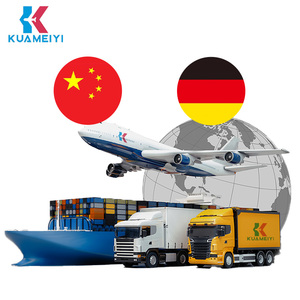
China to Germany & EU DDP Freight Forwarder Truck Railway Express Sea Shipping
- Full EU Customs DDP Clearance
- Multimodal Rail/Truck/Sea Integration
- CE Standard Cargo Handling
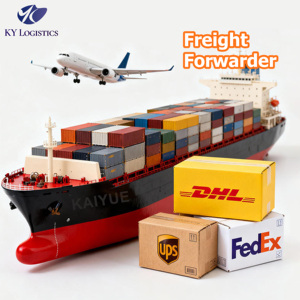
Air & Sea DDP LCL International Logistics Service China to USA, UK & Canada
- LCL Consolidation Hubs
- Top 10 FMC-Licensed NVOCC
- Guaranteed Weekly Sailings
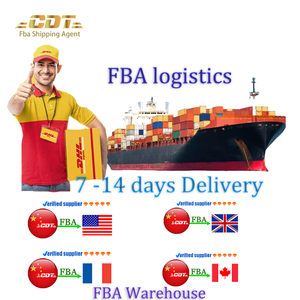
Top Maritime Sea Freight Forwarder Agent DDP Door-to-Door Transport
- Direct Carrier Contracts
- ISF (10+2) Compliance Filing
- Destinations: US, UK, DE, IT, CA
Fast DDP FCL Freight Forwarder with 24/7 Logistics Tracking China to USA
- Dedicated FCL Container Routing
- Real-Time Telematics Tracking
- No Demurrage Guarantee Program

OEM Express Envelope & Tear-Proof Industrial Logistics Packaging Material
- Heavy-Duty Contract Packaging
- Moisture & Tear-Proof Barrier
- Custom Document Protection
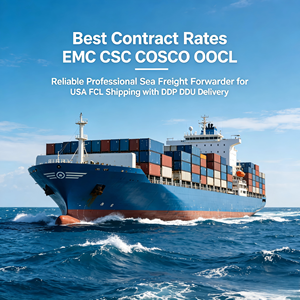
Contract Rates Carrier Alliance (EMC, COSCO, OOCL) FCL/LCL Freight
- Service Agreements with COSCO/OOCL/EMC
- Guaranteed Space Allotments
- DDU & DDP Final Mile Drayage
Contract-Backed Express Air Cargo Logistics China to United States
- 3-5 Day Expedited Transit
- IATA Certified Air Cargo Handling
- Dedicated Customs Brokerage
24/7 Support Express Cargo Spot & Contract Rate Door-to-Door DDP to Canada
- Dynamic Spot & Contract Index
- Customs Pre-Clearance Systems
- Automated Milestone Alerts
FMC-Licensed NVOCC & C-TPAT Certified Logistics Engine
Since 1999, Airlift USA Inc. has provided end-to-end contract logistics, regulatory customs compliance, and global freight forwarding for international enterprises.
FMC-Licensed NVOCC Authority
As a fully licensed Federal Maritime Commission (FMC) Non-Vessel Operating Common Carrier, we issue our own House Bills of Lading (HBL) and maintain direct service contracts with Tier-1 ocean ocean lines including COSCO, EMC, and OOCL.
C-TPAT & IATA Tier-1 Certified
Our customs supply chain security is accredited under C-TPAT (Customs-Trade Partnership Against Terrorism), enabling expedited US Customs inspection clearance, priority processing, and reduced physical examination rates at port of entries.
Global Network Architecture
Operating 20+ owned offices across the United States (Los Angeles, New Jersey), India (14 key commercial hubs), Vietnam, Bangladesh, and Cambodia, paired with elite global network affiliations (NCBFAA, IAM, LAACA).
CE Certified Contract Logistics: Operational Architecture & Regulatory Frameworks
An executive analysis of compliance integration, CE marking standards in contract logistics, risk management, and multimodal infrastructure optimization.
In modern industrial manufacturing and global export logistics, the intersection of CE Certification and contract logistics represents the gold standard for compliance, safety, and supply chain continuity. CE marking (Conformité Européenne) is not merely a product safety label; it dictates stringent requirements on how equipment, machinery, contract packaging materials, and automated handling systems function across international borders. When procurement teams source from contracted factories in Asia and export to North America, the European Union, or GCC countries, alignment between factory production, packaging integrity, and freight execution is paramount.
1. Regulatory Compliance & The Role of CE Marking in Global Logistics
Contract logistics facilities handling CE-certified industrial equipment, medical devices, electronics, or hazardous goods must strictly comply with international directives such as the EU Machinery Directive (2006/42/EC), Low Voltage Directive (2014/35/EU), and Electromagnetic Compatibility (EMC) Directive (2014/30/EU). From a logistics perspective, CE compliance governs:
- Structural Cargo Integrity: Packaging must withstand dynamic mechanical stresses during ocean transit (FCL/LCL) and multimodal railway transfers without degrading product safety barriers.
- Customs Pre-Clearance Validation: EU customs authorities aggressively inspect import documentation for valid Declaration of Conformity (DoC), technical files, and authorized representative verification. Non-compliance can cause immediate container quarantine and severe demurrage liabilities.
- Automated Warehousing & Mechanical Standardization: CE-certified contract logistics factories utilize automated sorters, conveyor systems, and robotic palletizers that meet ISO 12100 safety integration standards, preventing product damage during cross-docking.
2. Comparative Analysis: Mode Optimization & Financial Impact
Strategic procurement directors must balance transit speed against total landed cost (TLC). Below is an operational matrix comparing multimodal freight execution paths optimized by our FMC-licensed NVOCC network:
| Transport Mode | Typical Lead Time | Cost Index ($/CBM) | CE & Regulatory Risk | Ideal Cargo Application |
|---|---|---|---|---|
| Ocean Freight (FCL) | 18 - 28 Days | Low ($$) | Low (Minimal handling) | High-volume industrial manufacturing, heavy machinery, bulk packaging. |
| Ocean Consolidation (LCL) | 22 - 32 Days | Moderate ($$$) | Moderate (CFS handling) | Scheduled stock replenishment, medium batch sizes, flexible ETAs. |
| Eurasia Railway Express | 12 - 16 Days | Medium ($$$$) | Low-Moderate (Border cross) | Automotive parts, industrial electronics bound for Central Europe. |
| Expedited Air Freight | 3 - 5 Days | High ($$$$$) | Very Low (Fast track) | High-value CE electronics, medical prototypes, urgent contract components. |
| Cross-Border Trucking DDP | 7 - 12 Days | Medium-High ($$$$) | Low (Point-to-point) | Intra-regional European distribution & Southeast Asia land bridge. |
3. Risk Mitigation: Customs Bonded Clearance, ISF 10+2 & AD/CVD Audit
Customs non-compliance is the single largest operational bottleneck in contract logistics. Importers transporting goods from China or Southeast Asia to the US market face stringent CBP regulations. Our in-house compliance protocols mandate:
- Importer Security Filing (ISF 10+2): Transmission of mandatory data elements to US Customs at least 24 hours prior to vessel loading at origin ports (Nhava Sheva, Shanghai, Ningbo, Yantian, Cat Lai). Failure triggers automatic $5,000 penalties per violation under 19 CFR § 149.
- Anti-Dumping & Countervailing Duty (AD/CVD) Auditing: Rigorous examination of HTS classification codes to verify whether contract merchandise falls under trade remedy orders. Misclassification can lead to retroactive duty assessments exceeding 200%.
- Tariff Recovery & IEEPA Refund Auditing: Expert review of historical import entries to identify opportunities for duty refunds under Section 301 exclusions or administrative protests.
Future Procurement Trends in Global Contract Logistics
Key technological, geopolitical, and environmental shifts transforming international supply chain sourcing and factory shipping contracts over the next decade.
Nearshoring & Supply Chain Diversification ("China + 1")
Global enterprises are rapidly decentralizing production away from single-source origins toward robust manufacturing hubs in Vietnam, India, Bangladesh, and Cambodia. Contract logistics providers must maintain localized office footprints in both origin factories and destination ports to manage cross-border customs seamlessly.
AI-Powered Predictive Visibility & Telematics
Static tracking numbers are obsolete. Future contract procurement hinges on real-time IoT sensors providing environmental telemetry (temperature, humidity, tilt) alongside AI algorithms that forecast port congestion, vessel blank sailings, and container demurrage risks before bottlenecks occur.
ESG Integration & Scope 3 Carbon Accounting
International regulatory mandates, including the EU Corporate Sustainability Due Diligence Directive (CSDDD), require enterprise importers to document Scope 3 emissions. Leading CE-certified logistics factories are adopting green freight corridors, bio-fueled maritime fleets, and eco-certified packaging materials.
Macro Industrial & Technological Development Trends
How automation, electronic documentation, and direct ocean carrier integration are redefining efficiency in factory-to-door distribution.
1. Electronic Bills of Lading (eBL) & Blockchain Verification
The transition from paper paper negotiable Bills of Lading to DCSA-standardized electronic Bills of Lading (eBL) accelerates document transfer speed from days to seconds. This eliminates courier delays, prevents port storage fees, and provides tamper-proof chain of custody for high-value contract shipments.
2. Automated Micro-Fulfillment & Bonded Cross-Docking
Importers increasingly leverage bonded warehousing strategies where product consolidation occurs in designated free-trade zones (FTZ). Goods are sorted, labeled with CE certification marks, and packaged according to final buyer specs before duty payment occurs upon entry into domestic commerce.
3. Dynamic Rate Indexing & Ocean Contract Flexibility
Rigid annual freight contracts are giving way to hybrid indexing models. Enterprise buyers combine fixed baseline contract volume with dynamic spot-market allocation, hedging against freight rate volatility across major transpacific and Asia-Europe lanes.
Frequently Asked Questions for Enterprise Procurement
Expert insights addressing key regulatory compliance, freight execution, and risk management queries from global trade managers.
Why is CE certification critical when contracting factory logistics in Asia?
CE certification confirms that goods meet stringent European health, safety, and environmental standards. When importing into the EU or associated trade corridors, customs agencies enforce strict documentation checks. Contracting with CE-certified logistics providers guarantees that cargo packaging, industrial labeling, and technical safety files strictly align with customs regulations, eliminating quarantine risks at destination ports.
What is the difference between an FMC-Licensed NVOCC and a traditional freight forwarder?
An FMC (Federal Maritime Commission) licensed NVOCC is legally authorized to issue its own House Bills of Lading, publish tariffs, and enter into direct service contracts with ocean vessel carriers (e.g., COSCO, EMC, OOCL). Traditional freight forwarders act merely as agents. Utilizing an FMC-licensed NVOCC like Airlift USA ensures direct rate leverage, guaranteed space allocation, and accountable legal liability for transpacific and global imports.
How does DDP (Delivered Duty Paid) differ from DDU (Delivered Duty Unpaid)?
Under DDP Incoterms 2020, the seller/exporter assumes total financial and operational responsibility for the cargo, including export clearances, international ocean/air freight, import duties, VAT/taxes, and final-mile delivery to the buyer's warehouse. Under DDU (or DAP), the buyer is responsible for settling import customs duties and local taxes upon entry. DDP offers complete landed cost predictability for buyers.
What documents are mandatory for filing US Customs clearance for contract cargo?
Key documentation includes: Commercial Invoice, Detailed Packing List, Bill of Lading (ocean HBL or Air Waybill AWB), Importer Security Filing (ISF 10+2 for ocean freight), Customs Entry Manifest (CBP Form 7501), Customs Bond, and HTS classification schedule. Commodities regulated by Partner Government Agencies (FDA, USDA, EPA, FCC) require supplemental compliance permits.
What measures prevent expensive demurrage and detention fees at ocean ports?
Demurrage and detention fees accrue when containers linger at port terminals or warehouses past allocated "free time." We prevent these charges by pre-filing ISF data 24+ hours prior to origin loading, securing pre-clearance customs entry 5 days prior to vessel arrival, utilizing dual-end owned office teams for immediate port drayage dispatch, and tracking container dwell time via automated telematics alerts.
When should an enterprise importer choose FCL over LCL ocean freight?
FCL (Full Container Load) is optimal when shipment volume reaches approximately 13 to 15 Cubic Meters (CBM) or when cargo security is paramount. While LCL (Less-Than-Container Load) allows buyers to pay only for utilized volume, it incurs extra consolidation/deconsolidation handling time at origin/destination CFS facilities. FCL provides faster transit, lower per-unit cost at volume, and zero co-loading contamination risk.
How do AD/CVD duties impact contract logistics pricing from China?
Anti-Dumping and Countervailing Duties (AD/CVD) are trade remedies imposed by governments to protect domestic industries from foreign underpricing or subsidies. These duties can range from 10% to over 300% of declared cargo value. Thorough HTS code classification auditing prior to factory booking is critical to identify and legally mitigate AD/CVD liabilities before goods enter customs territory.
Can Airlift USA handle specialized project cargo and heavy machinery logistics?
Yes. Our enterprise logistics team specializes in out-of-gauge (OOG) cargo, open-top containers, flat-rack equipment, and heavy industrial machinery. We provide specialized lashing, CE packaging certification verification, breakbulk transport, and specialized heavy-haul road permits across North America, Europe, and Asia.
What role does C-TPAT certification play in fast-tracking cargo clearance?
C-TPAT (Customs-Trade Partnership Against Terrorism) is a voluntary US Customs security program. Because Airlift USA is C-TPAT certified, our imported shipments enjoy significantly lower CBP examination rates, front-of-the-line inspection priority during customs holds, and expedited processing through green lanes at major US entry gateways.
How do I transition existing factory suppliers into your contract logistics program?
Our onboarding process takes less than 24 hours. We connect directly with your overseas factory representatives, audit your recurring trade lanes, review your HTS customs classifications, establish standardized operational SOPs, and provide your team with a centralized digital portal for real-time tracking, rate booking, and document archiving.
Engineer Your CE Certified Contract Logistics Framework
Speak with an enterprise supply chain Director to audit your existing trade lanes, optimize landed cost structures, and secure guaranteed vessel space contracts.